
Online casino with bonus crab UK: what the regulator and the licence register say in 2026
A “Bonus Crab” is a piece of promotional theatre. The name shows up on casino banners and YouTube thumbnails, sometimes attached to a deposit match, sometimes wrapped around a wheel spin or a “claw-machine” minigame that pays out free-spin bundles, bonus cash or nothing at all. What the marketing rarely admits is that the wrapper changes nothing underneath. The bonus is still a bonus: a sum credited to a player account under conditions the player must clear before it converts to withdrawable cash. The £5 stake cap, the 10x wagering ceiling, the GAMSTOP check, the identity verification — those are the conditions the Gambling Commission writes, and they apply to every licensed operator running this kind of promotion in Great Britain.
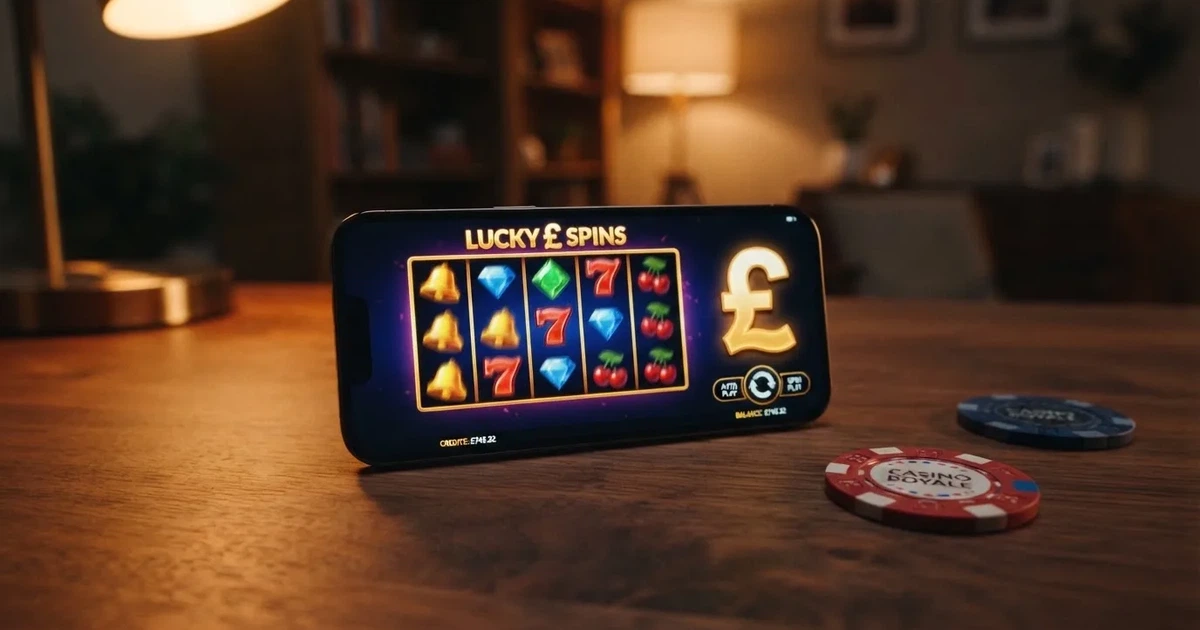
This page is built around the register, not the banners. On 18 September 2026 the Gambling Commission’s public register listed 139 businesses holding an active remote casino operating licence and recorded 1,065 active and 361 white-label domain entries against those accounts. The promotional wrapper a brand chooses to wrap its offer in is invisible to the regulator; the licence behind it is not. That distinction is what the rest of this page works through — what Bonus Crab-style promotions are, what they cost a player once the conditions are laid out, and which licensed brands the register actually names.
Current as of 23 November 2026 and cross-checked against the Gambling Commission’s public register of gambling businesses.
Table of Contents
- Responsible gaming: what a promotional wrapper does not change
- Payments and the deposit that triggers the offer
- Bonuses and free spins: the value behind the wrapper
- The licenced landscape: ten brands, one register
- Overview: what a Bonus Crab casino offer actually is
- Legality and regulation: the frame the register enforces
- The ten licensed brands, by register entry
- Frequently asked questions
Responsible gaming: what a promotional wrapper does not change
A catchy name is the least important thing about a casino promotion. What matters is the structure underneath, and that structure is fixed by law for any operator licensed in Great Britain.

The first thing that does not change is the identity check. Since 7 May 2019, every Gambling Commission-licensed site has had to verify a customer’s name, address and date of birth before accepting a first deposit or allowing play. There is no anonymous tier at a licensed brand, and there is no anonymous path to a Bonus Crab promotion. A player who reaches the claw machine or the wheel has already given a verified name to a licensed operator, and that operator has already run the new-customer screening against GAMSTOP — the national online self-exclusion scheme that became a mandatory condition of every online licence on 31 March 2020.
The second thing that does not change is the stake cap. Online slots in Great Britain carry a maximum stake per game cycle of £5 for players aged 25 and over (from 9 April 2025) and £2 for players aged 18 to 24 (from 21 May 2025). A Bonus Crab minigame that converts its payout into free spins inherits whichever cap applies to the player at the slot it lands on. A reader aged 22 cannot, on a licensed site, stake £5 on the slot those free spins unlock. That is a per-spin ceiling the operator enforces; the promotional wrapper has no override on it.
The third thing that does not change is the 10x wagering cap. Since 19 December 2025 wagering requirements have been capped at 10x, and mixed-product bonuses — a free bet on sport in exchange for a casino deposit, for instance — have been banned. The cap is on the wagering requirement itself, not on the size of the bonus a brand chooses to advertise. A Bonus Crab offer that credits £30 in bonus funds and applies a 10x requirement asks the player to turn over £300 in qualifying play before withdrawal. A Bonus Crab offer that advertises “no wagering” can do so, but only because it is foregoing the bonus in the conventional sense and is paying out real-money rewards instead. Either way, the cap is the ceiling on how heavy the conditions can be, and it is the same ceiling for every licence-holder.
The fourth thing that does not change is the obligation to set a financial limit. From 31 October 2025 the licensed operator must prompt a player to set a deposit limit before the first deposit is accepted. That prompt is the operator’s, not the promotion’s. A reader chasing a Bonus Crab bonus has already been asked, by law, to decide how much of the budget is at risk. The promotional wrapper is what drew them to the cashier; the limit prompt is what tells them how much of the cashier they will actually use.
The fifth thing that does not change is where to get help. The National Gambling Helpline (run by GamCare) and GambleAware are the routes a player in Great Britain has if the promotional terms become a financial problem. GAMSTOP itself, once triggered, blocks the player from every GB-licensed online site for six months, one year or five years — and the period cannot be cancelled early. None of this is contingent on which promotion the player was claiming when they decided to stop.
A reader’s sensible posture is to treat the name as marketing copy and the conditions as the offer. The claw machine is the part the banners show; the wagering terms are the part the balance sheet knows.
Payments and the deposit that triggers the offer
Bonus Crab-style promotions tend to be marketed at small deposits. The smallest deposit that triggers one is, in most cases, £10. The deposit is the entry ticket; it is also the line at which every payment rule the operator enforces starts to bite.
What the deposit has to clear
Every GB-licensed site accepts debit cards and bank transfers. Credit cards have been banned for gambling in Great Britain since 14 April 2020, including credit cards routed through e-wallets — that ban covers online and offline gambling and was put in place because, by the Commission’s own estimate from 2018, around 800,000 UK consumers used credit cards to gamble and 22% of online gamblers who did so were classed as problem gamblers. A Bonus Crab promotion that the player tries to fund with a credit card will be refused at the cashier, regardless of what the offer page says about minimum deposits.
Bank transfers within the UK typically move through the Faster Payments Service, which launched in 2008 and is operated by Pay.UK. The service runs 24 hours a day, seven days a week, and most payments arrive instantly or within a couple of minutes; transfers can occasionally take up to two hours. The Faster Payments scheme sets a £1,000,000 per-transaction limit, though individual banks can and do impose lower limits on their customers. A £10 deposit is well below either ceiling, but the deposit itself is not the slow part of the experience — the verification and the wagering turnover are.
Apple Pay
Apple Pay was developed and operated by Apple Inc. and launched on 20 October 2014, initially supporting only US-issued payment cards before beginning to support UK-issued cards on 14 July 2015. Apple Pay protects card data through tokenization, replacing the actual card number with a device-specific tokenised Device Primary Account Number and generating a dynamic security code for each transaction. In-store payments use near-field communication (NFC) to communicate wirelessly with contactless payment terminals; on an iPhone with Face ID, Apple Pay in-store purchases are authenticated by double-clicking the side button; on models with Touch ID, by double-clicking the Home button. Apple states that a supported card from a participating card issuer is required to use Apple Pay, and that Apple Pay is not available in all markets.
Two regulatory notes. The US Consumer Financial Protection Bureau finalised a rule in November 2024 bringing large nonbank digital wallet operators, including Apple Pay, under bank-like federal oversight. The European Commission opened an investigation in 2020 into whether Apple abused its control of iPhone NFC hardware to block rival payment apps’ access to contactless payments. The relevance here is not the regulatory fight itself but the data model: Apple Pay sits between the bank card and the casino, and the licensed operator receives a token rather than the card number. That is helpful for fraud and chargeback exposure, and it is also why some licensed operators will route an Apple Pay deposit as a debit-card transaction — and so comply with the credit-card ban by construction, because the underlying funding instrument is the bank card, not credit.
AstroPay
AstroPay was founded in 2009 and is headquartered in Uruguay. The company operates as a global digital wallet offering online payments, virtual and physical debit cards, and peer-to-peer transfers. It spun off its payment-processing business, dLocal, as a separate company in 2016.
AstroPay’s UK entity, Larstal Limited, is an electronic money institution authorised by the Financial Conduct Authority under the Electronic Money Regulations 2011. Its Isle of Man entity, AstroPay Global (IOM) Limited, is licensed by the Isle of Man Financial Services Authority for money transmission. Its Brazilian entity, Astro Instituição de Pagamento Ltda, is authorised by the Brazilian Central Bank as an electronic currency issuer. Its Danish entity, Larstal Denmark ApS, is authorised as an electronic money institution by the Danish Financial Supervisory Authority. AstroPay serves users across markets including Argentina, Australia, Brazil, Canada, Colombia, Denmark, Spain, the United Kingdom, the United States and Uruguay.
The relevant question for a UK reader is whether AstroPay’s e-money authorisation counts as a payment route into a licensed casino. E-money institutions are not banks, and a licensed casino will still run its own affordability and source-of-funds checks on any deposit. Whether the operator accepts AstroPay at all is a per-brand decision and is not visible in the Commission’s licence register — only the operator’s own cashier lists the deposit methods it actually allows.
Bank transfer
Bank transfer deposits go straight into the operator’s account and arrive through Faster Payments. The casino side of the deposit is the same whether the player moves the £10 by debit card or by bank transfer; the only difference is the rail the money travelled on. The licensed operator does not see Apple Pay, AstroPay or Faster Payments as three different “sources” of the £10 — it sees £10 to be credited to a verified account.
The £10 deposit as a marketing line
The £10 deposit is what the Bonus Crab banner advertises because it is the smallest deposit the operator is willing to credit a bonus against. A reader should treat it the way they would treat a “from £X” hotel rate: the £10 is the floor, not the average, and the wagering turnover that follows is set against the bonus amount, not against the deposit. A £10 deposit unlocking a £30 bonus under a 10x wagering cap asks for £300 in qualifying play before withdrawal. The arithmetic is mechanical, and it is mechanical because the regulator requires it to be.
Bonuses and free spins: the value behind the wrapper
The promotional genre covers three shapes, and a reader needs to know which one they are looking at before they can judge the offer.
The deposit-gated bonus. A player deposits £10 (or £20, or whatever the floor is) and receives a bonus credit plus, in some cases, a batch of free spins. The bonus credit has a wagering requirement — the multiple of the bonus that must be turned over in qualifying play before withdrawal — and that multiple is capped at 10x for any GB-licensed operator. The free spins may carry their own wagering requirement, or they may pay out as bonus funds at the slot’s stated return-to-player.
The no-deposit variant. Some promotions credit a small bonus or a handful of free spins without requiring a deposit. The Commission’s wagering cap applies just the same; the difference is that the player is risking nothing of their own to trigger the offer, only their identity.
The “claw machine” or wheel minigame. A player deposits, opens the bonus, and gets to “play” a themed game for the chance to win a larger bonus, free spins or a small cash prize. Underneath, this is still a bonus. The minigame is a presentation layer over the same wagering arithmetic; the prize it dispenses is a bonus credit subject to the same terms the cashier would have offered without the theatre.
What the wrapper does not change, on any of these shapes, is the 10x ceiling. Since 19 December 2025 wagering requirements have been capped at 10x. A promotion that asks for 20x, 30x or 40x on a GB-licensed site is in breach. A promotion that asks for 10x is at the new ceiling and is the heaviest a licensed operator can lawfully go.
What the wrapper can change is the size of the bonus and the games the bonus can be played on. A £30 bonus on a high-volatility slot with a 96% return-to-player carries a different expected cost than a £10 bonus on a low-volatility slot with the same 96% return-to-player. The expected loss scales with the bonus amount and the wagering turnover, not with the promotional name.
A reader who wants a quick read on the offer should ask three questions, in this order. First: what is the wagering multiple, and is it at or below 10x? Second: what is the bonus amount, and what does it convert to in required turnover? Third: which games contribute to that turnover, and at what weighting? A 100% weighting on slots is standard; a 10% weighting on table games turns a £300 turnover into a £3,000 turnover for a blackjack player. Those three numbers tell a reader most of what the marketing does not.
The arithmetic the page does not let a reader skip
The 10x cap is the headline, but it is the turnover it produces that decides whether an offer is worth the time. Take a £30 bonus at 10x: the required turnover is £300. At a £0.10 stake per spin, that is 3,000 spins; at a 5-second interval between spins, that is 15,000 seconds, or roughly 4 hours 10 minutes of play. At a 96% return-to-player, the expected loss on that turnover is £12 — £300 × (1 − 0.96). The £30 bonus has, in expectation, cost the player £12 to clear. A £50 bonus at the same multiple and the same RTP costs £20 to clear. The promotional name changes the wrapper, not the arithmetic.
These figures move with the inputs. A £20 bonus at 10x is £200 of turnover, or 2,000 spins at £0.10, or about 2 hours 47 minutes of play; the expected loss at 96% RTP is £8. A £100 bonus at 10x is £1,000 of turnover, or 10,000 spins, or about 13 hours 53 minutes of play; the expected loss at 96% RTP is £40. The band — not a single figure, because no two promotions have the same bonus amount — runs from low double digits in expected loss for the small-deposit end of the genre up to mid double digits for the larger-bonus end. The band is the honest answer; a single figure would be a guess the page is not in a position to make.
Two things sharpen that band. The first is volatility. The turnover figure is the same whether the slot is high or low variance, but the player’s experience of clearing the turnover is not — high variance means long stretches of zero and the occasional big hit, low variance means a steadier climb. Both finish with the same expected loss in the long run. The second is the max-cashout cap some bonuses carry. If a £30 bonus credits a maximum of, say, £100 in winnings, the expected loss stays £12 in the long run but the upside a single lucky session can reach is capped at £100. That cap matters more than the wagering multiple does for some readers, because it tells them the most a session can be worth.
What a “no wagering” Bonus Crab actually is
A small number of brands market their claw machine or wheel spins as “no wagering”. This is a different offer, not a relaxed version of the same one. A bonus with wagering credits bonus funds that the player turns over before they become cash; a “no wagering” promotion pays out real money or real-money free spins directly. The credit is smaller — there is no multiplier on the player’s favour because there is no wagering cushion — but the cash that lands is the player’s to withdraw.
The honest read on a no-wagering bonus is that the offer is a smaller sum with no rollover, and that the household value of “no rollover” depends on how the player would otherwise have spent the time. A reader who would have played through the rollover anyway loses nothing by taking the no-wagering version; a reader who would have quit halfway through and lost the unconverted bonus gains by taking it. Either way, the offer is what it says, and the page that wraps a no-wagering bonus in claw-machine theatre is selling a smaller bonus with a clearer condition.
The licenced landscape: ten brands, one register
The Bonus Crab promotion does not live outside the Gambling Commission’s oversight. It lives on the public register, against an account number, and against a remote casino operating licence that begins with the same six digits as the licence-holder’s account number followed by an “R”. The “R” is what marks the licence as a remote (online) one. A reader who knows how to read a licence number can verify, in a minute, that the brand they are about to deposit with is who it says it is.
The table below sets the ten featured brands against the register’s four matters: the brand, the licence holder and remote casino licence number, the status the register gives the brand’s domain, and whether the register confirms the brand as supporting the Bonus Crab promotional format. The fourth column is empty across the board. The register does not record which promotions a brand runs; it records which licence and which domain a brand sits behind. What that means in practice is that a reader cannot verify a Bonus Crab promotion by reading the register alone. They can only verify that the brand behind the promotion is licensed, and they can read the bonus terms to see what the wagering requirement is.
The register at a glance
| Brand | Licence holder and GB remote casino licence | Domain status on the register | Subject support |
|---|---|---|---|
| Kwiff | Eaton Gate Gaming Limited · 044448-R-323408-017 | Active | — |
| Unibet | Platinum Gaming Limited · 045322-R-324275-019 | Active | — |
| Virgin Games | Gamesys Operations Limited · 038905-R-319430-022 | White-label | — |
| PokerStars | Stars Interactive Limited · 039108-R-319334-026 | Active | — |
| Jackpotjoy | Gamesys Operations Limited · 038905-R-319430-022 | Active | — |
| Gala Bingo | LC International Limited · 054743-R-330863-014 | Active | — |
| Paddy Power | PPB Games Limited · 039411-R-319335-010 | Active | — |
| Midnite | Dribble Media Limited · 042647-R-321653-022 | Active | — |
| Betfair | PPB Games Limited · 039411-R-319335-010 | Active | — |
| MrQ | Tek Fox Ltd · 060629-R-337532-004 | Active | — |
Two notes on what the table contains. First, two licence holders run more than one of the featured brands: Gamesys Operations Limited runs Virgin Games as a white-label domain and Jackpotjoy as an active domain, and PPB Games Limited runs both Paddy Power and Betfair as active domains. A reader comparing the brands should compare the licence holder, not the marketing wrapper. Second, the “Subject support” column is empty for every row, and that emptiness is the point. The register does not record which bonus formats a brand runs. A reader who wants to know whether a brand offers a Bonus Crab promotion has to ask the brand; the register confirms only that the brand is licensed to offer online casino games at all.
The wagering band the table sits next to is the practical answer to “what does this cost me?”. For a £30 bonus at the 10x ceiling, the turnover is £300, the spins are 3,000 at £0.10, the play time is roughly 4 hours 10 minutes, and the expected loss at a 96% return-to-player is £12. For a £50 bonus at the same ceiling, the figures double. For a £20 bonus, they halve. The band — £8 of expected loss at the small end up to £40 at the larger end, with the play time scaling from under three hours to nearly fourteen — is the honest description of what a Bonus Crab-style promotion actually costs at the operator’s terms, before any single spin changes it.
Overview: what a Bonus Crab casino offer actually is
A Bonus Crab promotion is a casino welcome offer — usually deposit-gated, occasionally no-deposit — wrapped in a piece of themed presentation: a claw machine, a wheel spin, a treasure chest, a fishing reel. The wrapper exists because the inner offer is the same one every other welcome bonus on a licensed UK site is: a bonus credit plus, often, free spins, with a wagering requirement on the credit and a game weighting that determines where the requirement can be cleared.
| Bonus element | Typical term |
|---|---|
| Wagering cap | 10x |
| Stake cap (25+) | £5 |
| Stake cap (18-24) | £2 |
| Financial limit | Pre-deposit |
The first is that the offer has the same legal frame as any other welcome bonus on a GB-licensed site. The 10x wagering cap, the £5 or £2 stake limit per game cycle, the auto-play ban, the no-fast-spin rule (a slot spin may not be faster than 2.5 seconds), the ban on losses disguised as wins, the financial-vulnerability check at £150 net deposits in a rolling 30 days, the mandatory pre-deposit financial limit prompt — none of these are negotiable features of the bonus. They are conditions of the licence. A reader who is being told that a “Bonus Crab” offer comes with looser terms than a normal welcome offer is being told something that is not true on a licensed site.
The second is that the offer’s value is the bonus, not the wrapper. The claw machine pays out a bonus amount that the player must turn over a fixed multiple of before withdrawal. The wrapper does not change the multiple, the bonus amount, the eligible games or the max cashout. It changes how the player feels about clicking through to claim it. That is a marketing distinction, not a value one.
The third is that the smallest deposit that unlocks the offer is set by the operator and not by the genre. £10 is the common floor because £10 is the smallest deposit most operators will credit a bonus against, but a brand can set the floor at £20 or £25 without the offer ceasing to be a Bonus Crab promotion in any meaningful sense. A reader who sees two Bonus Crab offers with different deposit floors should read the bonus amounts and the wagering terms, not the floor.
The reader who takes the genre seriously is the reader who reads the terms.
Where the genre came from
Bonus Crab-style promotions have been most heavily advertised by casino brands targeting European and Latin American markets, where the bonus terms historically sat at 30x or 40x and the wrapper was a way to soften the player’s first impression of those multiples. In the UK market, where the multiple has been capped at 10x since 19 December 2025, the wrapper does less work than it did in higher-multiplier jurisdictions — the terms are tighter at the top end, and the player can read them more easily. The genre persists on UK-facing sites partly because the banners travel well across markets, partly because the wheel or claw minigame is a familiar mobile-game shape that converts well in advertising, and partly because a familiar wrapper lowers the perceived cost of clicking through.
What a reader should look for
The genre has no single canonical bonus amount, wagering requirement or game weighting, and the register does not record any of them. The things a reader can check before claiming an offer are these. The licence, against the Gambling Commission’s public register, to confirm the brand is licensed at all. The wagering multiple, which on a licensed UK site cannot exceed 10x. The eligible games and the contribution weighting, which determine where the turnover can be cleared. The minimum deposit, which determines whether the offer is reachable on a £10 budget or only on a larger one. The bonus expiry, which determines how long the player has to clear the turnover. The max-cashout cap, which determines the most a single session of the bonus can be worth.
A reader who runs through that list before claiming is, in practice, the reader who is harder to disappoint.
Legality and regulation: the frame the register enforces
The framework is the Gambling Act 2005, sponsored by the Department for Culture, Media and Sport and enforced by the Gambling Commission. The Act covers Great Britain — England, Scotland and Wales — and not Northern Ireland. Since the Gambling (Licensing and Advertising) Act 2014 any operator taking customers in Great Britain needs a Commission licence, wherever the operator is based. A Curaçao, Maltese or Gibraltar licence is not a substitute; an operator without a GB licence is committing an offence under section 33 of the Gambling Act 2005 by serving British customers.
Online casino is a licensable activity. The Commission’s public register is the test of whether a brand holds the licence it claims to hold. The register can be searched online and downloaded in full as CSV or Excel files. On 18 September 2026 the register listed 139 businesses holding an active remote casino operating licence and recorded 1,065 active and 361 white-label domain entries against those accounts. A white-label site is one that trades under another company’s licence — Virgin Games, for example, is listed as a white-label domain of Gamesys Operations Limited, sharing that licence holder with Jackpotjoy.
How to read a licence number
A remote casino licence number has the form account-R-number-suffix. The leading six digits repeat the licence holder’s account number; the “R” marks the licence as a remote (online) one; the suffix is a sequence that increments as additional permissions are added to the account. Reading a brand’s licence is, in effect, reading its licence holder’s account number. Two brands under the same account number are under the same licence holder.
Player protections the licence enforces
Minimum age: 18. Identity check: name, address and date of birth verified before first deposit or any play, in force since 7 May 2019. Stake cap: £5 per game cycle for players aged 25 and over from 9 April 2025, £2 for 18-24 from 21 May 2025. Auto-play: banned since 31 October 2021. Spin interval: a slot spin may not be faster than 2.5 seconds. Losses disguised as wins: banned. Pre-deposit financial limit prompt: required since 31 October 2025. Financial vulnerability check: at £150 net deposits in a rolling 30 days, using public data only, from 28 February 2025. GAMSTOP: mandatory condition of every online licence since 31 March 2020, with periods of six months, one year or five years that cannot be cancelled early.
Payments and bonuses under the licence
Credit cards banned for gambling since 14 April 2020, including credit cards routed through e-wallets. Wagering requirements capped at 10x since 19 December 2025. Mixed-product bonuses (a sports bet in exchange for a casino deposit) banned from the same date. Anonymous play is not possible at a licensed site — there is no path to a real-money game without verified identity.
What an unlicensed site costs the player
The Commission’s enforcement is against the operator, not the player: cease-and-desist notices, search-engine delisting, payment and hosting referrals. There is no ISP-blocking power and no penalty aimed at the player. What the player loses on an unlicensed site is protection — no GAMSTOP, no Commission complaints route, no approved alternative dispute resolution. A Bonus Crab promotion on an unlicensed site is not “the same offer, looser terms”; it is the same wrapper with none of the consumer safeguards.
Tax
Players pay no tax on gambling winnings in the UK. Operators pay Remote Gaming Duty, raised from 21% to 40% from 1 April 2026. The rate change does not affect the player’s return on a single session; it affects the operator’s margin on every session they run.
The ten licensed brands, by register entry
Each operator below is set against what the public register actually says about it. None of the entries claim the brand runs a Bonus Crab-style promotion; the register does not record that, and the page does not invent it. The verdict at the foot of each entry is the register’s reading, not a recommendation.
Kwiff
Eaton Gate Gaming Limited holds active remote casino operating licence 044448-R-323408-017, and Kwiff.com is an active domain for account 44448. The licence holder is a single-account operator, so a deposit at Kwiff is direct with Eaton Gate Gaming. The register does not record specific Bonus Crab offers. Kwiff is a standalone, GB-licensed operator.
Unibet
Platinum Gaming Limited holds active remote casino operating licence 045322-R-324275-019, with unibet.co.uk serving as an active domain for account 45322. Unibet operates within the larger Platinum Gaming group, managing several GB-facing brands. This multi-brand group provides a structured regulatory standard.
Virgin Games
Gamesys Operations Limited holds active remote casino operating licence 038905-R-319430-022, and Virgin Games is a white-label domain of account 38905. A white-label entry means the brand trades under Gamesys’s licence rather than as a separately licensed entity. It operates under the Gamesys infrastructure.
PokerStars
Stars Interactive Limited holds the active remote casino operating licence 039108-R-319334-026, and Pokerstars.uk is an active site under account 39108. All UK-facing Stars Group brands run under this consolidated account. PokerStars is GB-licensed and compliant.
Jackpotjoy
Gamesys Operations Limited holds the active remote casino operating licence 038905-R-319430-022, and Jackpotjoy.com operates under account 38905. Unlike the white-label Virgin Games, this site operates in the licence holder’s own name. It is fully licensed.
Gala Bingo
LC International Limited holds the active remote casino operating licence 054743-R-330863-014, and Gala Bingo functions as an active domain under account 54743. As the Ladbrokes Coral group’s remote entity, this brand benefits from a large group’s high-street and online infrastructure. It is a GB-licensed multi-brand entity.
Paddy Power
PPB Games Limited holds the active remote casino operating licence 039411-R-319335-010, and Paddy Power is a domain under account 39411. PPB Games also operates Betfair; therefore, regulatory standings for both are aligned. Paddy Power maintains a current licence status.
Midnite
Dribble Media Limited holds the active remote casino operating licence 042647-R-321653-022, and Midnite.com acts as an active domain for account 42647. Operating solely this brand, Dribble Media treats deposits as a direct transaction. Midnite holds a single-account GB licence, distinct from multi-brand entities.
Betfair
PPB Games Limited holds the active remote casino operating licence 039411-R-319335-010, and Betfair.com is a registered domain for account 39411. Because it shares the licence holder with Paddy Power, regulatory actions against PPB Games affect both. Betfair maintains active GB licence status.
MrQ
Tek Fox Ltd holds the active remote casino operating licence 060629-R-337532-004, and Mrq.com is a domain for account 60629. Given the account number, this is a relatively recent licence issuance. MrQ is a compliant GB-licensed operator, managed independently.
Frequently asked questions
What is a Bonus Crab-style casino offer?
A Bonus Crab promotion is a casino welcome bonus — usually deposit-gated, sometimes no-deposit — wrapped in a claw-machine, wheel-spin or similar minigame presentation. Underneath the wrapper it is the same as any other welcome bonus on a GB-licensed site: a bonus credit with a wagering requirement, eligible games and a max-cashout cap. The wrapper does not change the terms.
Can I get a Bonus Crab no-deposit bonus without paying in first?
Some brands offer a small no-deposit bonus or a handful of free spins without requiring a deposit, but the GB-licensed operator will still verify the player’s identity and run the GAMSTOP check before crediting anything. No-deposit offers tend to be smaller and to carry the same 10x wagering cap that deposit-gated offers do.
What is the smallest deposit that unlocks a Bonus Crab offer?
The £10 deposit is the common floor because it is the smallest deposit most operators will credit a bonus against, but the minimum is set by the operator and varies by brand. A reader comparing two Bonus Crab offers should read the minimum deposit alongside the bonus amount and the wagering requirement.
Are Bonus Crab-style promotions run by licensed UK casinos?
Yes, in the sense that any operator accepting British customers must hold a Gambling Commission licence. The licence register does not record which promotions a brand runs, only that the brand is licensed. A reader who wants to confirm a brand’s licence can search the Commission’s public register against the brand’s domain.
Do these offers come with wagering requirements?
Yes, and on a GB-licensed site the wagering requirement is capped at 10x of the bonus. A reader comparing offers should read the requirement against the cap; any offer above 10x on a licensed site is in breach. A “no wagering” Bonus Crab promotion pays out real money instead of bonus funds and is a different offer, not a relaxed one.
How do I know if a Bonus Crab promotion is genuine?
The licence, against the Gambling Commission’s public register, is the only test that confirms the brand is licensed at all. The register does not record which bonus formats a brand runs. The terms page — wagering multiple, eligible games, max cashout, bonus expiry — is the test of whether the offer is what the banner says it is.