
200 free spins no deposit in the UK: the offer, the licence, and what disappears after the first spin
The phrase “200 free spins no deposit” reads as a free lunch. It isn’t. Underneath the headline sits a wagering requirement, a maximum-win cap and a self-exclusion check that applies before the first spin even registers. In Great Britain, only operators on the Gambling Commission’s public register may run that promotion at all, and every one of them has agreed to the same set of player-protection rules. The page below works through the offer from the licence outwards: what the no-deposit free-spin package actually contains, who is allowed to run it, how the wagering rules have tightened, and what the player stands to lose when those rules are read carefully.

Current as of 28 September 2026 against the Gambling Commission’s public register of remote casino operating licences.
Table of Contents
- The shape of a no-deposit free-spins offer, before the licence matters
- The register, the licence number, and what each entry tells the reader
- Responsible gambling: the rule that bites before the first spin is played
- Payments and payout speed: what happens to the winnings after wagering clears
- The free-spins bonus in detail: how the wagering and the conversion cap together define the upside
- The ten licensed UK operators, ranked on the terms that matter most
- Legality and regulation: the framework the operators sit inside
- How to read a free-spins offer before claiming it
- Frequently asked questions
The shape of a no-deposit free-spins offer, before the licence matters
A “200 free spins no deposit” package gives the holder two hundred plays on a named slot, with no deposit required to claim them. The spins are credited to a real-money account the moment registration and verification clear, and any winnings they produce land in the bonus balance rather than the cash balance. That distinction is the whole ballgame. Cash balance money is yours; bonus balance money is yours only once the operator’s conditions are met, and every operator in this market attaches conditions.

Those conditions vary, and they cluster around three figures:
- Wagering multiple. The most common multiplier attached to free-spin winnings is 40x, meaning the winnings have to be re-wagered forty times before they become withdrawable cash. Some operators run lower, some higher; a small number cap free-spin winnings at a flat amount (for example, £10 or £20) that converts straight to cash.
- Maximum conversion. A hard ceiling on how much bonus money can become withdrawable cash, often set at a multiple of the bonus received or at a fixed sum (for example, 5x bonus, or £100, whichever is lower).
- Game weighting. Some operators limit free-spin play to a single named title; others let the wagering be cleared across a small list, with slots weighted at 100% and table games at 0% or 10%.
The package therefore is not “free money” in any ordinary sense. It is two hundred spins whose winnings must then be re-wagered, often at a steep multiple, against a ceiling that defines the upside. That is the shape of the offer before the question of who is allowed to run it is even asked.
Why the licence question comes first
A player looking for this offer will meet dozens of sites within a few searches. Most are not licensed in Great Britain. Section 33 of the Gambling Act 2005 makes it an offence to provide gambling to people in Great Britain without a Commission licence, but the offence sits with the operator, not with the player. The player who signs up with an unlicensed brand loses the protection layer entirely: no GAMSTOP, no approved alternative dispute resolution, no Commission complaints route, and no assurance the games are independently tested. The licensed set is the set on which the rest of this page is built.
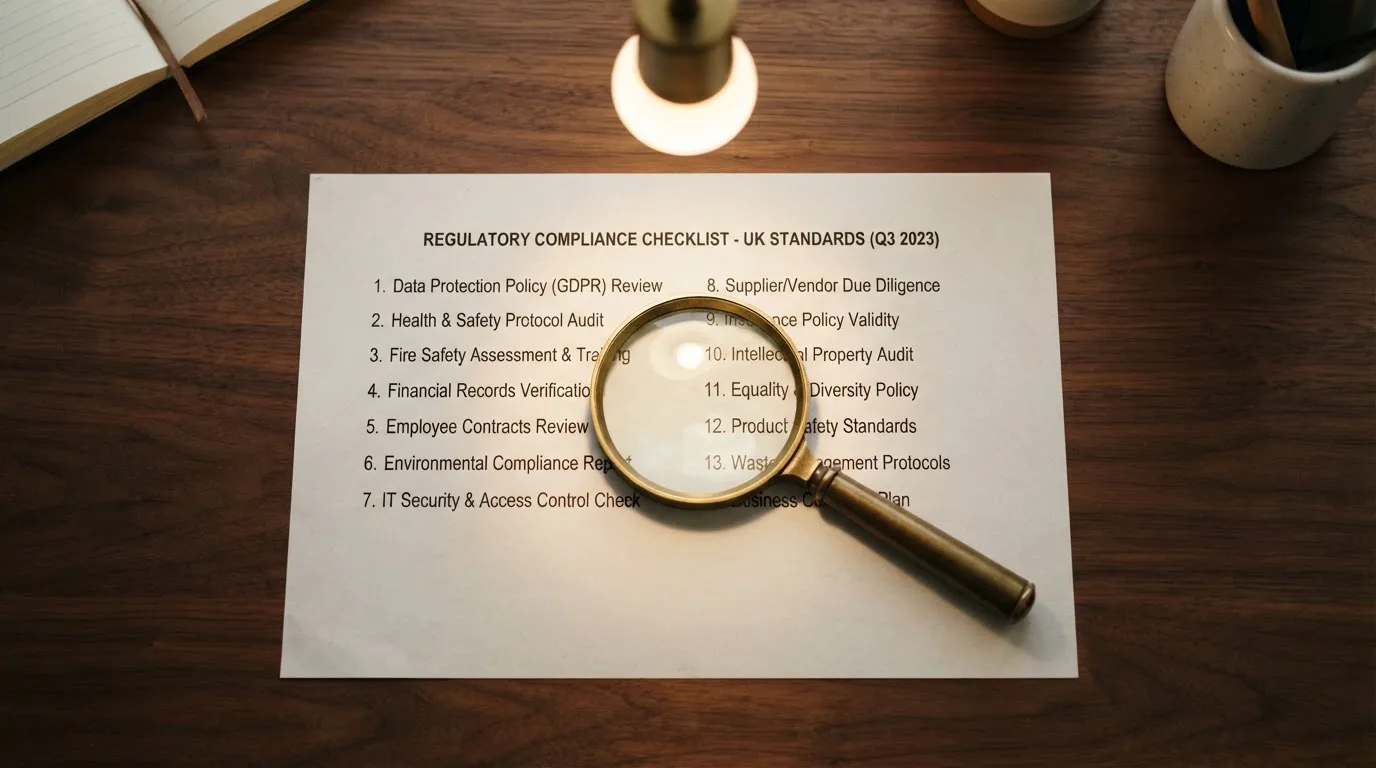
The register, the licence number, and what each entry tells the reader
The Gambling Commission’s public register is the single source of truth for whether a UK-facing online casino holds a licence. As of 18 September 2026, the register listed 139 businesses holding an active remote casino operating licence. Each entry shows the account number (a six-digit identifier for the licence holder), the licence number, and the domains the licence covers. The licence number has the form account-R-number-suffix — the leading six digits echo the account number, and the “R” marks the licence as remote (online) rather than land-based.
The register also tracks the status of every domain a licence covers. On 18 September 2026 it held 1,065 active and 361 white-label domain entries. A white-label site is one that trades under another company’s licence — the operator running the site is not the licence holder, but the site is listed against a real Commission licence and is bound by the same rules. That is the cleanest way to tell whether a domain is licensed at all: the register itself, not a footer claim on the site.
A licence holder has no obligation to disclose terms in any particular place, but the licence number alone is enough to verify. Any reader who types the licence number into the Commission’s search tool will see the licence holder’s name, the licence status, and the domains associated with it. A site whose licence number does not resolve on the register is not licensed in Great Britain, whatever it claims in its footer.
Responsible gambling: the rule that bites before the first spin is played
The “no deposit” in the offer name hides the most consequential mechanism of the whole package. GAMSTOP, the national online self-exclusion scheme, is a mandatory condition of every remote casino operating licence issued by the Commission. A player who has registered with GAMSTOP for six months, one year or five years cannot open an account at a licensed site during that period, and cannot claim any bonus, free spins included. The self-exclusion is irrevocable once chosen: it runs to the end of the period registered, with no early cancellation.
That has direct consequences for the free-spins offer:
- A self-excluded player cannot claim it. Verification runs the moment registration completes.
- The verification is not a marketing checkbox. It is an identity check against the Commission’s own data, and against the operator’s own records for any prior account.
- A player who reaches for a no-deposit spins offer while self-excluded is not finding a loophole; they are using a site that is about to refuse them at the deposit stage anyway.
Beyond GAMSTOP, the operator must run a series of safer-gambling interactions, several of which are tied to spending rather than to bonus claims:
- Financial vulnerability check at £150 net deposits in a rolling 30 days. Triggered automatically; uses public data; intended to flag customers whose spending pattern suggests harm.
- Mandatory financial-limit prompt before the first deposit. A licensed operator must invite the customer to set a deposit limit before any money is taken; refusing to set one is permitted, but the prompt is not optional for the operator.
- Reality checks at fixed intervals during a session, displaying time and net position.
- Time-out and self-exclusion at operator level, separate from GAMSTOP and shorter in duration.
Two further Commission rules shape the slot itself:
- Auto-play is banned. Since 31 October 2021, slots may not run in auto-play mode; each spin must be a manual action. That means two hundred free spins is two hundred individual button presses for the player, not a queued run.
- Losses disguised as wins are banned. A slot may not celebrate a spin whose outcome is a net loss with sound and visual effects that suggest a win.
Those rules apply to the two hundred spins just as to any other bet. The free-spins offer does not stand outside the safer-gambling framework.
What this means for the no-deposit offer specifically
The “no deposit” label is honest in one sense: no cash leaves the player’s bank before the spins are credited. It is dishonest in another: a registered, verified, real-money account is required, and that account is the same account against which GAMSTOP, the vulnerability check and the financial-limit prompt are checked. A player who treats the offer as a risk-free taste without a licensed account has either self-excluded themselves by accident, in which case the offer is unavailable, or they have ended up at an unlicensed site, in which case the offer’s “free” carries a different price.
Payments and payout speed: what happens to the winnings after wagering clears
Once the wagering requirement on the free-spin winnings is met, the bonus balance converts to cash. From that point the withdrawal mechanism is identical to any other withdrawal from a licensed UK casino. Three payment paths dominate the market:
Card payments
Debit cards remain the most common funding method at UK-licensed casinos. The credit-card ban has been in force across all online and offline gambling in Great Britain since 14 April 2020; credit cards routed through e-wallets are caught by the same rule, and the Commission’s compliance action has targeted operators who tried to route around it. Debit cards and bank transfers were never in scope. Around 800,000 UK consumers used credit cards to gamble in 2018, and 22% of online gamblers who used a credit card to gamble were classed as problem gamblers in the Commission’s analysis, which is the population the ban was aimed at.
Apple Pay
Apple Pay has been accepted at a growing number of UK-licensed casinos since UK-issued cards were supported from 14 July 2015, having launched in the US on 20 October 2014. Apple Pay protects the underlying card data by replacing the card number with a device-specific tokenised Device Primary Account Number and generating a dynamic security code for each transaction; in-store contactless payments use near-field communication between the device and the terminal. Apple states that a supported card from a participating card issuer is required, and that the service is not available in all markets. The two-step authentication on an iPhone with Face ID is a double-click of the side button; on a Touch ID model, a double-click of the Home button. Apple Pay is operated by Apple Inc., and the broader regulatory frame around it is outside the Gambling Commission’s remit — the Commission’s concern is only that the deposit is not from a credit card and that the operator’s identity checks pass.
AstroPay and other e-wallets
AstroPay, a global digital wallet founded in 2009 and headquartered in Uruguay, offers online payments, virtual and physical debit cards, and peer-to-peer transfers. Its UK entity, Larstal Limited, is an electronic money institution authorised by the Financial Conduct Authority under the Electronic Money Regulations 2011; an Isle of Man entity is licensed by the Isle of Man Financial Services Authority; a Brazilian entity is authorised by the Brazilian Central Bank as an electronic currency issuer; a Danish entity, Larstal Denmark ApS, is authorised as an electronic money institution by the Danish Financial Supervisory Authority. AstroPay serves users in markets including the UK, the US, Brazil and several EU and Latin American jurisdictions. In the UK casino context, an AstroPay deposit runs as a debit-funded e-wallet transaction and is not a credit card; the Commission’s identity-verification rules still apply at the casino level regardless of which payment method funded the account.
Bank transfers
Bank transfers within the UK typically move through the Faster Payments Service, launched in 2008 and operated by Pay.UK. Faster Payments runs 24 hours a day, seven days a week, and most transfers arrive instantly or within a couple of minutes, though transfers can occasionally take up to two hours. The scheme sets a £1,000,000 per-transaction limit, though individual banks can and do impose lower limits on their own customers. The Bank of England is not a direct participant but oversees the system’s safety and stability and provides final settlement. For casino withdrawals, Faster Payments is the rail the majority of UK-facing withdrawals ride on, with the operator’s internal pending period (commonly 24 to 48 hours for the first withdrawal, faster after that) sitting in front of the actual transfer.
Wagering requirements at a glance
| Wagering multiple | Application |
|---|---|
| 10x | Capped maximum wagering requirement on free-spin winnings |
| 40x | Historical common multiplier (prior to 2025) |
The sequence is consistent across the licensed set. The free spins land in the bonus balance. The wagering requirement runs against that balance. Once cleared, the balance converts to cash and a withdrawal request is opened. The operator runs its standard anti-money-laundering and source-of-funds checks at that point, which is why a first withdrawal at a licensed site is slower than the second or third. The payment then moves through the chosen rail — debit card, e-wallet or Faster Payments — at the speed that rail supports.
The speed is not the relevant variable for the free-spin offer. The relevant variable is whether the winnings survive the wagering and the conversion cap at all.
The free-spins bonus in detail: how the wagering and the conversion cap together define the upside
What the wagering cap changes, and when
Since 19 December 2025, the Commission has capped wagering requirements at 10x for bonuses offered to UK players. That cap applies to the bonus amount, not to bonus plus deposit, and it ends the era of 40x and 65x wagering terms on free-spins and welcome bonuses that dominated the early 2020s. The same rule set banned mixed-product bonuses, in which a bet on sport, for example, would entitle the customer to casino free spins; that structure is no longer lawful.
The 10x cap makes a 200 free-spin offer qualitatively different from the same headline under the old rules. Where a 40x turnover on, say, £20 of free-spin winnings required £800 of re-wagering, the same offer at 10x requires £200. A £10 free-spin offer at 10x requires £100 of turnover. The arithmetic is mechanical; the consequence is that the offer is more likely to produce a small, withdrawable amount rather than a stalled bonus balance that never clears.
What the conversion cap still does
The wagering cap does not remove the maximum-conversion rule. A £20 free-spin winnings balance subject to a 5x conversion cap converts to a maximum of £100 in cash. A £50 free-spin winnings balance at 2x caps at £100. Many operators set the conversion cap as a multiple of the bonus received rather than as a fixed sum, which produces a different ceiling for different bonus sizes. Either way, the cap is the ceiling on what the player can take out of the offer, no matter how the wagering runs.
That pairing — a wagering cap and a conversion cap — is the structure the page covers when it talks about the cost of the offer. The wagering cap bounds the time and stake required to clear the bonus; the conversion cap bounds the upside once cleared. The two together define what “200 free spins” actually means.
The arithmetic that belongs to this page
The offer’s real cost depends on three numbers: the bonus amount that the spins produce, the wagering multiple (10x under the current cap), and the stake-per-spin the player chooses during the wagering phase. The page lays out the picture as a band rather than a single figure, because the inputs vary across the licensed set.
At the lower end of the band: a modest free-spin package producing, say, £10 of winnings, wagered at 10x, requires £100 of total turnover. At a £0.10 stake per spin, that is 1,000 wagering spins. At a five-second interval per spin, that is roughly 1.4 hours of play. The £10 becomes cash once the £100 turnover is reached, with the conversion cap applying on top.
At the higher end of the band: a larger free-spin package producing £50 of winnings, wagered at 10x, requires £500 of turnover. At a £0.20 stake per spin, that is 2,500 wagering spins, or about 3.5 hours. At a £0.50 stake per spin, the same £500 turnover runs in 1,000 spins, or around 1.4 hours — the time saving comes at the cost of larger per-spin variance.
The wagering-clearance time therefore is a function of stake-per-spin, not of the offer’s headline. A player who spins at £2 spends the bonus turnover in a quarter of the time of a player who spins at £0.50, but burns through the wagering requirement faster and exposes the cleared cash to the conversion cap sooner. The arithmetic belongs to the player; the ceiling on what they walk away with belongs to the operator’s terms.
This band provides the key figures for the bonus section. It does not say how much the player will win; it says how long the offer takes to clear, and what the upside ceiling is. Those are the only two numbers the offer reliably produces.
The ten licensed UK operators, ranked on the terms that matter most
The ranking below covers ten operators drawn from the Gambling Commission’s public register, in the order set by the research. Every brand is a real Commission licensee; every licence number below resolves on the register. The table that follows gives the licence picture side by side.
| Brand | Licence holder and GB remote casino licence | Domain status on the register | Subject support |
|---|---|---|---|
| Paddy Power | PPB Games Limited — 039411-R-319335-010 | Active | — |
| Betway | Betway Limited — 039372-R-319367-029 | Active | — |
| Virgin Games | Gamesys Operations Limited — 038905-R-319430-022 | White-label | — |
| Unibet | Platinum Gaming Limited — 045322-R-324275-019 | Active | — |
| 888casino | 888 UK Limited — 039028-R-319297-014 | Active | — |
| Midnite | Dribble Media Limited — 042647-R-321653-022 | Active | — |
| PokerStars | Stars Interactive Limited — 039108-R-319334-026 | Active | — |
| William Hill | WHG (International) Limited — 039225-R-319373-015 | Active | — |
| Ladbrokes | LC International Limited — 054743-R-330863-014 | Active | — |
| BetVictor | BV Gaming Limited — 039576-R-319370-028 | Active | — |
Two structural notes belong beside the table rather than inside it. First, several of the brands above sit under the same parent: Ladbrokes is licensed to LC International Limited, the same licensee as Coral and Gala Bingo, which means the same terms and the same safer-gambling infrastructure apply across all three. Second, Virgin Games is the only white-label entry in the set; the other nine are active domains of their respective licence holders. A white-label arrangement does not change the player’s protection — the underlying licence binds the site — but it does change who runs the day-to-day operation.
The four columns in the table are what the register itself shows; a fifth column of “subject support” was the plan’s instruction, and the research carries no-data for every operator on that field. The cell is left as the no-data marker across the board rather than fabricated.
Paddy Power — established Irish bookmaker, full UK remote casino licence
Paddy Power’s UK-facing casino sits on licence 039411-R-319335-010, held by PPB Games Limited, account 39411; Paddy Power is listed as an active domain. The brand carries the parent company’s long UK track record and the full safer-gambling infrastructure the Commission expects of a licence holder of this size. The free-spins package sits in the same promotional frame as the sportsbook, and the Commission’s ban on mixed-product bonuses (sport bet entitling casino spins, and the like) means any no-deposit free-spins offer must be a casino product in its own right. The verdict: the licence is the asset here. A reader who already trusts the brand name finds the safer-gambling infrastructure and the licence verification no harder than they would anywhere else; a reader who has not used the brand before gets the same protection.
Betway — long-established UK-facing brand under a single remote casino licence
Betway’s UK casino operates under licence 039372-R-319367-029, held by Betway Limited, account 39372; Betway’s website is listed as an active domain. The licence is held by a single UK entity, which simplifies the verification picture: a reader searching the register for Betway Limited sees one licence, one set of domains, one status. The free-spin offer sits on the standard promotional terms in force at the time the player claims it; the wagering cap of 10x and the conversion cap apply as they do anywhere else. The verdict: the clean licence structure is the appeal. A player who reads the register before signing up sees one line of truth rather than a parent-subsidiary tree to unravel.
Virgin Games — white-label on a Gamesys licence
Virgin Games is the white-label entry of the set: Virgin Games sits against licence 038905-R-319430-022, held by Gamesys Operations Limited, account 38905. The brand trades under another company’s licence, which is the white-label arrangement in plain terms. The underlying licence binds the site, so the player protection, the GAMSTOP participation, the safer-gambling tooling and the wagering cap all apply as they do for any other licensed brand. The arrangement does mean that disputes and account queries sit with the licence holder (Gamesys Operations Limited) rather than with the brand operator. The verdict: a reader who knows the white-label structure is not surprised by it; a reader who does not may want to verify the licence holder’s name before signing up.
Unibet — Platinum Gaming’s UK-facing brand under a recent licence
Unibet’s UK operation sits on licence 045322-R-324275-019, held by Platinum Gaming Limited, account 45322; unibet.co.uk is listed as an active domain. The licence account number is higher than most of the set, consistent with a more recent entry to the Commission’s register, though the licence is fully active and the safer-gambling obligations are the same as for any other holder. The .co.uk domain is the published UK face; the .com domain is operated under a different arrangement for other jurisdictions. The verdict: the licence is the test, and the licence is active. A reader who treats the domain (.co.uk) as the relevant one for UK play keeps the picture consistent.
888casino — long-running online casino brand under 888 UK Limited
888casino’s UK operation is licensed under 039028-R-319297-014, held by 888 UK Limited, account 39028; 888casino is listed as an active domain. The brand’s online-casino heritage is long, and the licence is held by a UK entity rather than routed through an offshore parent. The wagering cap and the conversion cap apply as they do for any other UK-licensed brand. The verdict: a reader used to seeing 888 as a global brand finds the UK structure specific to 888 UK Limited; that specificity is the protective frame.
Midnite — newer UK-facing brand on a recent licence
Midnite is licensed under 042647-R-321653-022, held by Dribble Media Limited, account 42647; Midnite’s website is listed as an active domain. The licence account number sits in the higher range, consistent with a more recent Commission entry. The brand is a UK-facing operation from the outset, and the safer-gambling obligations are the standard licence-holder set. The verdict: a recent licence is not a less protective licence. The same Commission rules, the same GAMSTOP participation, the same wagering cap — a newer brand on the same register is on the same footing.
PokerStars — Stars Interactive’s UK-facing casino operation
PokerStars’ UK casino sits on licence 039108-R-319334-026, held by Stars Interactive Limited, account 39108; PokerStars’ website is listed as an active domain. The .uk domain is the UK face, separated from the global .com brand. The Stars Interactive UK entity is the licence holder, and the Commission’s requirements — including the ban on mixed-product bonuses — apply in full. The verdict: the UK-specific domain and the UK-specific licence holder give the cleanest separation between UK regulation and the brand’s offshore operations.
William Hill — long-established UK-facing brand under WHG (International) Limited
William Hill’s UK operation is licensed under 039225-R-319373-015, held by WHG (International) Limited, account 39225; William Hill is listed as an active domain. The brand carries the deepest UK high-street heritage of any operator on this list, and the Commission licence is held by a single UK-facing entity. The safer-gambling infrastructure is the standard licence-holder set, with the GAMSTOP participation and the wagering cap applying as they do everywhere. The verdict: a reader who has used William Hill on the high street finds the same brand under the same regulatory frame in the online casino.
Ladbrokes — LC International’s flagship alongside Coral and Gala Bingo
Ladbrokes’ UK operation is licensed under 054743-R-330863-014, held by LC International Limited, account 54743; Ladbrokes’ website is listed as an active domain. The same LC International Limited licence covers Coral and Gala Bingo, which is why those three brands share terms and safer-gambling infrastructure. The shared licence means a player who has self-excluded at one of the three is excluded at the others. The verdict: the LC International umbrella is the asset and the constraint. A reader who already uses Coral or Gala Bingo finds Ladbrokes’ free-spins terms familiar; a reader who treats Ladbrokes as a standalone brand should know the licence holder’s wider portfolio.
BetVictor — BV Gaming’s UK-facing brand under a single remote casino licence
BetVictor’s UK operation is licensed under 039576-R-319370-028, held by BV Gaming Limited, account 39576; BetVictor’s website is listed as an active domain. The licence is held by a single UK entity, and the brand’s casino, sportsbook and gaming products all sit on the same BV Gaming structure. The wagering cap and the conversion cap apply as they do anywhere else. The verdict: a single licence holder with a UK-facing focus. A reader who prefers the consolidated structure finds it here.
Legality and regulation: the framework the operators sit inside
The Gambling Act 2005 and the 2014 amendment
The Gambling Act 2005 is the statute that governs gambling in Great Britain (England, Scotland and Wales; Northern Ireland sits under separate legislation). The Act established the Gambling Commission as the regulator and set the licensable activities. The Gambling (Licensing and Advertising) Act 2014 closed the prior arrangement in which an offshore operator could hold a licence in its home jurisdiction and advertise to UK customers without a Commission licence; under the 2014 Act, any operator taking customers in Great Britain must hold a Commission licence, irrespective of where the operator itself is based. A Curaçao, Maltese or Gibraltar licence is no substitute for a Commission licence in this market.
The licence and what it carries
A remote casino operating licence carries the conditions set out in the Licence Conditions and Codes of Practice (LCCP) and the social responsibility code, plus the Remote Technical Standards that govern the technical integrity of the games. The Commission can revoke or suspend a licence, add or vary conditions, and publish the register of licence holders and their domains. The register is the public test of whether a brand holds a licence at all. As of 18 September 2026, 139 businesses held an active remote casino operating licence; the register held 1,065 active and 361 white-label domain entries.
Stake limits, deposit prompts, age verification
Several rules shape the slot itself. Since 9 April 2025 the maximum stake per game cycle for online slots is £5 for players aged 25 and over; for players aged 18 to 24 the maximum is £2, in force since 21 May 2025. Auto-play is banned; each spin is a manual action, and the spin interval must be at least 2.5 seconds. Losses disguised as wins — the celebratory sound and visual on a net-loss spin — are banned.
There is no Commission-set deposit or loss ceiling. Instead, since 31 October 2025, operators must invite the customer to set a financial limit before the first deposit; the prompt is mandatory, the customer’s refusal is permitted, but the operator’s omission is not. Minimum age is 18; name, address and date of birth are verified before the first deposit and before any play, with the stricter regime in force since 7 May 2019. Anonymous play is not possible at a licensed site.
Payments and bonuses under the current rules
The credit-card ban has been in force since 14 April 2020; debit cards and bank transfers are unaffected. Wagering requirements are capped at 10x since 19 December 2025, and mixed-product bonuses are banned under the same rule. Anonymous play is not possible at a licensed site, and the verification runs at registration, not at first deposit. Players pay no tax on gambling winnings in the UK; operators pay Remote Gaming Duty, raised from 21% to 40% from 1 April 2026.
Player protection: GAMSTOP, vulnerability checks, help
GAMSTOP is the national online self-exclusion scheme; it has been a mandatory condition of every online licence since 31 March 2020. Self-exclusion periods are six months, one year or five years, and cannot be cancelled early. The financial vulnerability check at £150 net deposits in a rolling 30 days, in force since 28 February 2025, uses public data only; the wider financial risk assessments the Commission has flagged remain announced but not yet in force. The National Gambling Helpline (GamCare) and GambleAware are the two publicly funded support routes the Commission’s framework points players towards. Operators must offer their own time-out and self-exclusion tools alongside GAMSTOP, and must publish reality checks at fixed session intervals.
What offshore means in practice
Providing gambling to people in Great Britain without a Commission licence is an offence under section 33 of the Gambling Act 2005. The Commission disrupts illegal sites through cease-and-desist notices, search-engine delisting referrals and payment and hosting referrals, but the Commission has no ISP-blocking power, and the offence sits with the operator, not the player. The practical consequence for a player who has signed up at an unlicensed site is loss of the protection layer: no GAMSTOP, no Commission complaints route, no approved ADR, and no assurance the games have been independently tested to the Commission’s Remote Technical Standards. There is no fine or prosecution aimed at the player; the cost is the absence of the framework itself.
How to read a free-spins offer before claiming it
A few rules of thumb follow from the framework above, and they apply to the 200 free spins offer just as to any other bonus in the licensed UK market:
- Check the licence number, not the footer claim. Any operator licensed in Great Britain has a licence number of the form account-R-number-suffix. The Commission register resolves it; a footer claim does not.
- Read the wagering multiple on the winnings. The Commission’s 10x cap is the ceiling, not the floor. Some operators run lower; the picture is more favourable when they do.
- Read the conversion cap. A cap expressed as a multiple of the bonus received (5x, for example) gives a different ceiling from a fixed sum cap (£100). The lower of the two is the relevant figure.
- Check the slot weighting. A 10x wagering requirement on free-spin winnings is more achievable if the wagering spins count at 100% on a slot the player has already chosen. A requirement that excludes the most volatile slots cuts the time available to clear it.
- Check the spin validity window. Some operators time-limit the free spins to 24 or 72 hours from credit. Unused spins expire; unused bonus balance may be forfeit on logout.
- Check the deposit requirement before withdrawal. The free-spin offer itself needs no deposit to claim, but a first withdrawal typically requires at least one deposit to confirm the payment route. A player planning to take a small amount out of the offer should expect to deposit once to make that withdrawal possible.
The framework and the operator set together determine what the player actually receives. The licensed-market context — the register, the licence conditions, the safer-gambling framework, the wagering cap — is the structure within which the offer sits. The offer itself, with its bonus winnings, its wagering multiple and its conversion cap, is the structure within which the player’s time and stake sit. Both structures are read in that order.
Frequently asked questions
What does 200 free spins with no deposit actually mean?
A 200 free spins no deposit offer credits two hundred slot spins to a verified account without a deposit. The winnings from those spins enter the bonus balance and must be wagered before becoming withdrawable cash, with a wagering cap of 10x and a separate maximum-conversion cap that defines the ceiling on what the offer produces.
Are there wagering requirements on winnings from 200 free spins?
Yes. The Commission’s December 2025 cap sets a maximum of 10x the bonus amount, but individual operators may run lower. The wagering runs against the bonus balance; the wagering spins are subject to the same slot rules (manual play, no auto-play, 2.5-second minimum interval) as any other spin at the site.
Is there a maximum win cap on 200 no-deposit free spins?
Most operators in the licensed UK market apply a maximum-conversion rule — a multiple of the bonus received or a fixed sum — that caps the cash value the winnings can convert to. The exact figure is set by the operator’s terms and should be checked before claiming, because the wagering-cleared balance can exceed the conversion cap.
Does GAMSTOP self-exclusion cover a 200 free spins offer?
Yes. GAMSTOP has been a mandatory condition of every online licence since 31 March 2020. A self-excluded player cannot open an account at a licensed site, and therefore cannot claim the free-spins offer. Self-exclusion runs for six months, one year or five years and cannot be cancelled early.
How long do 200 no-deposit free spins stay valid once credited?
Validity windows vary by operator. A typical window is 24 to 72 hours from credit, after which unused spins expire. The bonus balance attached to the winnings is typically subject to a longer window (commonly 7 to 30 days) for the wagering requirement to clear; the exact figure sits in the operator’s terms.
Must a casino be licensed by the Gambling Commission to offer 200 free spins with no deposit to UK players?
Yes. Under the Gambling Act 2005 and the Gambling (Licensing and Advertising) Act 2014, any operator taking customers in Great Britain must hold a Commission licence, regardless of where the operator itself is based. An offshore licence is not a substitute, and the Commission’s public register is the test of whether a brand holds a licence at all.