
What a 100% deposit match bonus actually delivers at a UK casino in 2026
A 100% match bonus doubles the first deposit, pound for pound, up to a ceiling the operator sets in its terms. That is the headline. What follows the headline is where the offer earns its keep, or stops earning it. A doubled balance is not twice the playing time, not twice the withdrawal and not a free bet: it is bonus money that has to be turned over before any of it becomes cash, on a slot the operator picks, with a clock already running. The mechanics sit on top of a regulatory floor that tightened in 2025. This page is the layer between the marketing line and the deposit slip.

Current as of 7 November 2026 and checked against the Gambling Commission’s public register of gambling businesses.
Table of Contents
- What a 100% match bonus really adds to a session
- How UK rules changed what a 100% bonus can ask of a player
- How a 100% bonus is actually triggered: payment methods and the cashier flow
- The 10x wagering cap: what it caps and what it doesn’t
- Reading the small print: six terms that decide what a 100% bonus is worth
- What the wider UK licensed landscape looks like in 2026
- GAMSTOP, the deposit limit prompt and what a 100% bonus actually sits on
- Ten UK-licensed casino brands on the register, and what the licence number behind each one tells a player
- The licence holder and the licence number: how to read them
- How to compare two 100% bonuses without taking the marketing at face value
- The arithmetic in a worked example
- The wider frame: what a 100% bonus sits on top of
- When the offer is not the offer
- Frequently asked questions
What a 100% match bonus really adds to a session
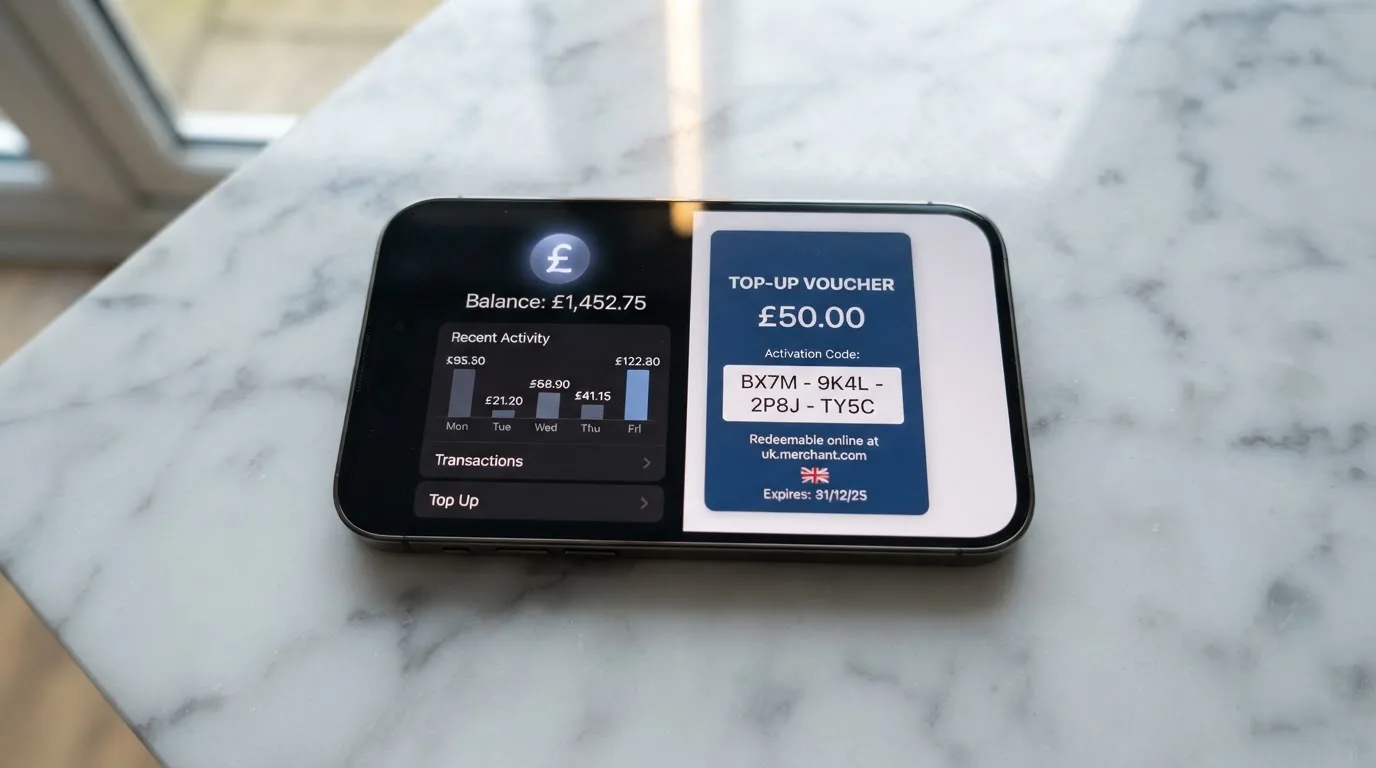
The mechanic looks generous and works like a loan. A player deposits £50; the operator credits another £50 as bonus funds; the account now shows £100. The £50 of real money can be withdrawn at any time, but the £50 of bonus money stays locked until the wagering requirement is satisfied. At a UK-licensed site the requirement is capped at 10 times the bonus amount — a rule introduced on 19 December 2025. A £50 bonus therefore means £500 of qualifying play before any winnings derived from the bonus convert to cash. A £200 bonus means £2,000.
The doubling sounds like it doubles the budget. It does not, and the gap is the whole point of the offer. Two things eat the bonus before the wagering clears: the house edge on every spin, and the wagering clock. A standard online slot returns something in the mid-90s as a percentage, which means roughly 4p to 6p of every pound wagered stays with the operator over a long session. Run that house edge against a £500 turnover and the bonus has already given back around £20 to £30 of its headline value before a single hand-paid line lands. The remaining balance then has to clear the rest of the requirement.
The arithmetic of “doubled” money
Three numbers decide whether a 100% offer is worth the deposit. The first is the match ceiling. The second is the wagering multiple. The third is the stake the player is willing to play at, because turnover is the multiple multiplied by the bonus, and the time to clear it depends on how much is wagered per spin. At a £1 stake on a slot, the £500 turnover needed to clear a £50 bonus is 500 spins. At a 2.5-second spin cadence, that is 1,250 seconds, or roughly 21 minutes. At a 10p stake the same clearance takes 5,000 spins and over three and a half hours of continuous play. The headline “£100 to play with” describes the bankroll. It does not describe the time.

The wagering cap changed the shape of the UK market. Before 19 December 2025 a 100% bonus could carry a 30x, 40x or even 65x turnover multiple. Many sites still advertise those numbers in the small print of legacy promotions, but any offer taken out under UK rules from that date cannot ask for more than 10x. That single line in the Gambling Commission’s social responsibility code is the reason a 100% match in 2026 is closer to its face value than it has been for years. A £50 bonus with a 65x multiple would have demanded £3,250 of play; under the current cap it demands £500. The offer has not become more generous. The ceiling has come down to where the offer was always supposed to be.
Why the wagering clock matters more than the wagering figure
A bonus that expires in seven days is not the same bonus as one that expires in thirty. The turnover figure is the same; the time to complete it is not. UK sites vary on this window, and the variation is one of the few places a player can meaningfully compare two offers side by side. A £50 bonus at 10x with a thirty-day window is a different proposition from a £50 bonus at 10x with a three-day window, because the second one effectively forces a stake level that the first one does not. The wagering figure is what the regulator controls. The window is what the operator controls. Players learn to read the second before they trust the first.
How UK rules changed what a 100% bonus can ask of a player
The Gambling Commission sets the floor. Operators can offer better terms than the floor; they cannot offer worse. The rules that bind a 100% match in 2026 came in three waves and each wave cut a specific cost off the player’s side of the deal.
The credit card ban and what it removed
From 14 April 2020 the Commission banned credit cards for gambling across all online products in Great Britain. The Commission’s own estimate put around 800,000 UK consumers as credit-card gamblers in 2018, and its research found 22% of online gamblers who used credit cards to fund play sat in the problem-gambling category. The ban closes the path where a 100% bonus was effectively being paid for with the operator’s own money at the end of the month: deposit on the card, clear the bonus, withdraw the cash, pay the statement. That mechanic still exists for debit cards and bank transfers, but the credit card layer of it is gone. Paysafecard, prepaid vouchers and bank transfers have replaced the credit card on most cashier pages; Apple Pay and Google Pay sit alongside them as wallet-fronted debit.
The stake cap on online slots
A 100% match is overwhelmingly cleared on slots, and the slots themselves carry limits set in 2025. From 9 April 2025 the maximum stake per game cycle for players aged 25 and over is £5. From 21 May 2025 the maximum for players aged 18 to 24 is £2. A “game cycle” includes the spin, any gamble feature that follows it, and any bonus round triggered by the spin — a stake that looks like £1 per spin can still exceed the limit once the gamble and the bonus round are added in. The stake cap is a hard ceiling. The £5 figure is also the practical ceiling on the time calculation earlier: even a player who wants to clear a bonus quickly cannot bet £20 per spin to do it. The ceiling and the wagering cap together set the speed at which any 100% bonus can reasonably be cleared.
The 10x wagering cap and the ban on mixed bonuses
Since 19 December 2025 no UK-licensed casino can attach a wagering requirement above 10x to a bonus, and mixed-product offers — deposit on the casino and receive sportsbook free bets, or vice versa — are not allowed. The first rule means the arithmetic in the previous section is the worst case. The second rule removes the cross-product promotion that used to turn a 100% casino match into a sportsbook hook. A player who wants to clear the bonus has to clear it on casino games, with the games counted at the weights the operator publishes. Slots almost always count at 100%; table games frequently count at 10% or 0%. The 10x cap does not flatten that weighting. It only caps the multiple.
The financial limits prompt and vulnerability checks
Since 31 October 2025 an operator must prompt a player to set a financial limit before the first deposit. The deposit itself can still go through; the prompt is a screen the player has to engage with. The limit a player sets is theirs alone, and the operator cannot raise it without a cool-off period. A separate check, in force from 28 February 2025, runs a financial vulnerability screen against public data when net deposits cross £150 in a rolling 30 days. Wider financial risk assessments have been announced but were not in force at the time of writing. A 100% bonus does not change the mechanics of either check — the bonus is not a separate deposit for vulnerability purposes — but the prompt sits in the cashier flow where the bonus terms are accepted, and a player who wants the deposit limit raised later will need to go through the operator’s process rather than just raising it on the deposit screen.
How a 100% bonus is actually triggered: payment methods and the cashier flow
A 100% match is gated by two things: a minimum deposit and a list of eligible payment methods. Both live in the cashier, and both have become more uniform across UK sites since the credit card ban.
The minimum deposit and what it does to the offer
UK match offers typically start at a £10 minimum deposit, occasionally at £20. Below the minimum, no bonus is credited. The ceiling — the maximum the bonus will match — is set in absolute pounds and runs from £50 on the smaller welcome packages to several hundred pounds on the larger ones. A £10 deposit on a 100% match up to £100 gives the player £20 to play with. A £100 deposit on the same offer gives £200 to play with. The ceiling is where the offer’s headline value stops scaling, and the wagering time keeps scaling: the larger the matched amount, the larger the turnover requirement, and the longer the clearance window has to be to make the offer realistic.
Eligible methods: debit, bank transfer, e-wallets, paysafecard and crypto
The cashier accepts a narrower set than the player might expect. UK rules allow debit cards, bank transfers through Faster Payments, e-wallets such as PayPal, Skrill and Neteller, paysafecard and prepaid vouchers, Apple Pay and Google Pay, and — at a smaller subset of sites — crypto. Credit cards are out, regardless of the wallet they are routed through. Some sites exclude Skrill and Neteller from welcome bonus eligibility; the exclusion sits in the small print of the bonus terms rather than on the cashier page itself. A deposit that comes in through an excluded method credits the cash balance but not the bonus, and a player who has already accepted the offer cannot retroactively switch methods to recover the bonus.
Faster Payments, which most UK banks are signed up to, runs 24 hours a day and most transfers clear within seconds. Bank transfers into a casino therefore behave like debit cards on the cashier screen; they show up almost immediately, then the bonus credit lands on top. The same is true of Apple Pay and Google Pay: both tokenise the underlying debit card and the cashier treats them as a debit deposit. A paysafecard deposit is a one-shot voucher purchase, the 16-digit code typed into the cashier, and the bonus is credited against the voucher’s face value. Crypto deposits, where accepted, are converted to sterling at the operator’s quoted rate at the time of deposit, and the conversion is the moment the bonus-eligibility test runs. A £50 deposit in Bitcoin is treated as £50 of bonus-eligible deposit if the cashier accepts it; a £50 deposit that is worth £48.40 after the conversion may not be.
The cashier order: deposit, accept, play
The order matters because of the way the bonus is “opted in”. On some UK sites the bonus is auto-applied to the first deposit and a player has to actively decline it. On others the player has to tick a box or enter a code before depositing. The second model is the friendlier one for a player who wants to play cash-only and skip the bonus, because the second deposit can carry the bonus and the first one can play through normally. The first model has to be declined at the deposit screen, and the decline has to be the active choice rather than a missed tickbox. A player who lets the bonus auto-credit and then changes their mind generally cannot have it removed after the fact.
The 10x wagering cap: what it caps and what it doesn’t
The 10x cap is the headline regulatory change of late 2025 and the single most important number on a UK 100% bonus in 2026. It deserves its own framing because it has changed the comparison a player can make.
What the cap caps
The cap limits the wagering requirement attached to a bonus. The wagering requirement is the multiple of the bonus amount that has to be wagered before bonus-derived winnings convert to cash. A £100 bonus at 10x requires £1,000 of qualifying play. The cap also covers the maximum stake that can be in play while a bonus is being cleared, with the £5 / £2 game-cycle limits on top. Any “deposit + bonus” calculation that produces a higher turnover figure is now non-compliant with the LCCP and the relevant social responsibility code, and the Commission can take enforcement action against an operator that offers one.
What the cap does not cap
The cap does not cap game weighting. A site can still offer a 100% match and then attach 10% weighting to roulette, blackjack and most table games, with slots at 100%. A player who clears a £500 turnover on slots has not cleared anything if they have spent it on roulette. The cap also does not cap the expiry window. A 100% match can still be offered with a three-day, seven-day or thirty-day expiry, and the wagering figure is the same but the time to complete it is not. Finally, the cap does not cap the maximum cashout on free-spin-derived winnings, although several sites set their own free-spin cashout ceilings voluntarily. A 100% bonus that is “deposit match plus free spins” can carry two different turnover regimes: 10x on the matched bonus and a separate cashout ceiling on the spin-derived winnings. A player reading the terms has to follow both.
How 10x compares to where the UK market used to sit
Before the cap the typical UK wagering multiple sat between 30x and 50x, with some sites pushing past 60x on headline offers. A £100 bonus at 40x meant £4,000 of play; at 10x it means £1,000. The reduction is not a marketing change. It is a regulatory floor, and the operator cannot go above it. That makes offers across different sites easier to compare than they used to be, but it also makes the other terms — the game weighting, the expiry, the minimum deposit — relatively more important, because the wagering multiple is no longer the place where one offer beats another.
The bonus cost, plain
The “cost” of a bonus to a player is the expected loss on the turnover the wagering requirement demands, calculated against the house edge of the game used to clear it. At a 96% return slot, a £1,000 turnover has an expected loss of £40. At a 94% return slot it is £60. The same £100 bonus, the same 10x cap, the same headline. The £20 swing between slots is a single RTP percentage point and is the gap between a player finishing a session roughly where they started and finishing it £20 lighter. The wagering cap does not control that. The slot choice does.
Reading the small print: six terms that decide what a 100% bonus is worth
The headline figure and the wagering multiple are the front of the card. The other six lines are the back, and they are where a comparison either earns or loses.
Maximum bet while a bonus is active. Most UK sites cap this at £5 per spin for over-25s and £2 for 18-24s, in line with the Commission’s slot stake limit. A few sites set the bonus-active cap lower — sometimes £4 — and the lower cap effectively lengthens clearance time at a given stake.
Game weighting. Slots typically count 100% toward wagering. Roulette, blackjack, baccarat and most live casino games count 10% or 0%. Some sites carve out exceptions for specific slots, and a few progressive jackpot slots count 0% even when other slots count 100%. The weighting table is the only place the operator publishes which games can actually clear the bonus.
Expiry. A 100% match in 2026 typically expires between seven and thirty days from the credit date. After that, the bonus balance and any winnings derived from it are removed from the account. The expiry does not pause for inactivity, and it does not extend when the player makes a further cash deposit.
Maximum cashout on bonus-derived winnings. Most UK sites do not cap cashout on bonus-derived winnings from a deposit match. Some sites attach a cap to free-spin-derived winnings even when the matched bonus itself has no cap. The cap, where it exists, is usually a multiple of the bonus amount — for example, 4x or 10x the bonus.
Eligible games list. A 100% match can be cleared on most slots but not all of them. Some sites exclude the highest-volatility titles, the highest-RTP titles, or titles from specific providers. A player who has a preferred slot for clearing bonuses needs to check it sits on the eligible list before depositing.
One-bonus-at-a-time rule. Most UK sites do not allow a second welcome offer to be claimed while a first bonus is still active. A player who has accepted one 100% match has to complete or forfeit it before a second site’s welcome offer is eligible. The rule also covers “related” bonuses on the same account — reload bonuses, free spins credited on top of an active match.
What the wider UK licensed landscape looks like in 2026
The Commission’s public register of gambling businesses is the only test of whether a brand holds a UK licence. The register can be searched online and downloaded as a CSV or Excel file. The numbers below come from that register as it stood on 18 September 2026.
The licence population
The register listed 139 businesses holding an active remote casino operating licence.
| Brand | Licence holder and GB remote casino licence | Domain status on the register | Subject support |
|---|---|---|---|
| Sky Vegas | Bonne Terre Gaming Limited (065519-R-339675-002) | Active | — |
| Midnite | Dribble Media Limited (042647-R-321653-022) | Active | — |
| PokerStars | Stars Interactive Limited (039108-R-319334-026) | Active | — |
| Unibet | Platinum Gaming Limited (045322-R-324275-019) | Active | — |
| Ladbrokes | LC International Limited (054743-R-330863-014) | Active | — |
| BetVictor | BV Gaming Limited (039576-R-319370-028) | Active | — |
| Jackpotjoy | Gamesys Operations Limited (038905-R-319430-022) | Active | — |
| 888casino | 888 UK Limited (039028-R-319297-014) | Active | — |
| Gala Bingo | LC International Limited (054743-R-330863-014) | Active | — |
| Casumo | Recro Limited (061549-R-336718-002) | Active | — |
A separate list on the same register records each website against the licence account that runs it, with the entry marked Active, Inactive or White Label. On the same date the domain list held 1,065 active entries and 361 white-label entries. A white-label site is one that trades under another company’s licence rather than its own; the player deposits at the white-label site but the licence holder behind it is the operator on the register. Both counts sit in the same CSV; the active column is the live casino population, and the white-label column is the population running under someone else’s licence.
A licence number on the register has the form account-R-number-suffix — six digits for the licence holder’s account number, an “R” to mark a remote (online) licence, then the running number and the suffix. The “R” is what separates a remote licence from a non-remote one; the suffix changes as the licence is renewed or varied.
What the register tells a player that a homepage does not
A homepage shows the brand. The register shows the licence holder behind it. Several consumer-facing brands sit under one licence holder. Ladbrokes, Coral and Gala Bingo are all operated under LC International Limited’s licence, and the same licence number — 054743-R-330863-014 — appears against all three. A player who files a complaint or queries a self-exclusion is dealing with one operator across all three brands, not three separate ones. The register is also where the player can confirm a brand is still active. An entry can move from Active to Inactive without the homepage changing, and an Inactive entry is the moment a brand should be treated with caution rather than as a current UK operator.
GAMSTOP, the deposit limit prompt and what a 100% bonus actually sits on
A 100% match at a UK-licensed site is a product wrapped in player-protection infrastructure. The infrastructure is the same on every site because the conditions are mandatory; the way it presents itself to a player varies. A player who understands what each piece of the wrap does gets through the welcome flow faster and avoids the few traps it can still hold.
GAMSTOP before the first deposit
Every UK-licensed online operator has to take part in GAMSTOP, the national self-exclusion scheme. The check runs when the player registers and again when the player logs in from a new device. A player who has registered with GAMSTOP for six months, one year or five years cannot deposit at a participating site for the duration of the exclusion — the GAMSTOP period cannot be cancelled once started. The exclusion is enforced at the cashier, not at the bonus-acceptance screen, which means a player who has self-excluded is rejected at the deposit step rather than at the bonus-acceptance step.
The deposit limit prompt
The operator must prompt the player to set a financial limit before the first deposit. The prompt sits in the registration flow, and the limit the player sets is theirs to choose — daily, weekly or monthly. The prompt is mandatory; the limit is not. A player who declines to set a limit can still deposit, but the cashier has to record that the prompt was shown. The operator cannot raise the limit without a cool-off period, and a player who wants to lower a limit can do so at any time and have the lower limit take effect immediately.
Reality checks and time-out
A reality check is an on-screen notification that interrupts play after a set period and shows the player how long they have been in session and what they have won or lost. The check is mandatory on UK slot sites and the period is set by the operator, typically every 30 or 60 minutes. Auto-play is banned: a slot spin may not be faster than 2.5 seconds and the spin button cannot queue a series of automatic spins. A player who wants to step away from a session can set a time-out of 24 hours, seven days or any period the operator offers; the time-out is shorter than a GAMSTOP exclusion and is intended to break a single session rather than to commit to a longer exclusion.
The financial vulnerability check
The vulnerability check runs against public data when net deposits cross £150 in a rolling 30-day window. The check looks at public records — county court judgments, IVAs, bankruptcies — and flags the account for a soft interaction with the operator. The flagged player is contacted by the operator and asked about their play; the deposit itself is not blocked at the £150 mark. The £150 figure is the trigger for the check, not a cap on deposits.
Ten UK-licensed casino brands on the register, and what the licence number behind each one tells a player
The brands below are taken from the Commission’s public register as it stood on 18 September 2026. Each one is a GB-licensed online casino operating under a remote casino operating licence; each one’s entry on the register was active at that date. The list is descriptive of who holds which licence, not a ranking of which bonus to take.
The table below pairs each brand with the licence holder and the licence number it operates under, and shows the register status of the domain the player actually visits.
| Brand | Licence holder | GB remote casino licence | Domain status | Subject support |
|---|---|---|---|---|
| Sky Vegas | Bonne Terre Gaming Limited | 065519-R-339675-002 | Active | — |
| Midnite | Dribble Media Limited | 042647-R-321653-022 | Active | — |
| PokerStars | Stars Interactive Limited | 039108-R-319334-026 | Active | — |
| Unibet | Platinum Gaming Limited | 045322-R-324275-019 | Active | — |
| Ladbrokes | LC International Limited | 054743-R-330863-014 | Active | — |
| BetVictor | BV Gaming Limited | 039576-R-319370-028 | Active | — |
| Jackpotjoy | Gamesys Operations Limited | 038905-R-319430-022 | Active | — |
| 888casino | 888 UK Limited | 039028-R-319297-014 | Active | — |
| Gala Bingo | LC International Limited | 054743-R-330863-014 | Active | — |
| Casumo | Recro Limited | 061549-R-336718-002 | Active | — |
Two of the ten brands — Ladbrokes and Gala Bingo — sit under the same licence holder and the same licence number. A player who moves between them is dealing with one operator at the back end; a complaint filed against one is filed against LC International Limited in both cases. Several other major UK brands sit under the same licence accounts but are not in the ten above. The register is the source for both the licence number and the licence holder; the homepage is not.
What “active” on the register actually means
Active on the domain list means the Commission has been notified that the domain is in use under that licence and the operator has paid the relevant annual fee. It does not mean the bonus is current; it does not mean a particular welcome offer is running on that brand today; and it does not mean the brand has not changed its small print since the register was last updated. It means the licence is live and the domain is one the operator is using. The player still has to read the bonus terms at the cashier before depositing. A licence being live is the floor of the comparison, not the ceiling.
The licence holder and the licence number: how to read them
A licence number on the register has the form account-R-number-suffix. The first six digits are the licence holder’s account number. The “R” marks a remote licence. The middle digits are the running number of the licence within the holder’s account. The suffix at the end is a variation or renewal counter. The structure is fixed by the Commission’s record format and is the same on every licence number a UK player will see.
The account number and what it groups
The account number groups every licence a single operator holds. A single operator can hold multiple licence types at once — a remote casino operating licence, a remote betting operating licence, a non-remote licence, a software licence. The same six-digit prefix appears on each. A player who wants to check what other licences a brand operates under can search the prefix on the register and see them all on one page. The grouping is administrative; the player’s protection is the same on each licence type because the LCCP and the social responsibility code apply across the licence holder’s UK operation, not licence by licence.
The remote marker
The “R” is what tells a player the licence is the online one. A non-remote licence covers land-based operations — bookmakers’ shops, casinos, arcades — and an online operator without the “R” is a site that should not be taking UK players. The Commission does grant non-remote licences to operators that also have a remote licence; the remote marker is the one that matters for an online casino.
The suffix and the variation
The suffix changes when the licence is renewed, varied or has a condition attached. A change in suffix is the moment the operator has done something licence-side that the Commission has recorded — typically a renewal, a change of control, a new condition, or an administrative update. A player does not need to track suffix changes in real time; the Commission’s own search results show the current suffix on the licence and the date the variation was made.
How to compare two 100% bonuses without taking the marketing at face value
Two 100% match offers on the same site at different times can look identical in headline form and cost the player different amounts. The comparison is mechanical and the inputs are mostly in the small print.
The three numbers that matter
A side-by-side comparison of two offers collapses to three numbers: the maximum match, the wagering multiple, and the expiry window. At the same match ceiling and the same expiry, a lower wagering multiple is the better offer. At the same match ceiling and the same wagering multiple, a longer expiry window is the better offer. At the same wagering multiple and the same expiry, the higher match ceiling is the better offer, although it carries the higher turnover cost. Below those three numbers the comparison does not go; everything else is operator presentation.
The four numbers underneath
Underneath the three, four more decide the offer in practice: the minimum deposit, the eligible game list, the game weighting, and the maximum stake while a bonus is active. A higher minimum deposit gates the offer behind a bigger commitment. A short eligible game list limits the slots that can clear the bonus. Heavy table-game weighting pushes the player back to slots. A lower max stake lengthens the clearance time at a given spin cadence. These four are not in the headline; they are in the bonus terms page and in the cashier.
The cost in time, not pounds
Two offers with the same wagering multiple and the same match ceiling can require different amounts of time to clear. The wagering is the same; the stake level is not. A site that caps the stake at £2.50 during bonus play forces the player to clear the bonus at half the speed of a site that allows £5. At a £100 bonus and 10x, the turnover is £1,000 either way; the spins needed are 400 at £2.50 and 200 at £5; the time at a 2.5-second cadence is 16 minutes versus 8 minutes. The headline is the same; the offer is not.
The arithmetic in a worked example
A £100 deposit on a 100% match up to £200, wagering requirement 10x, played at a £1 stake on a slot at 96% return, with a thirty-day expiry and slots counting at 100% toward wagering.
The bonus credited is £100. The turnover required is £100 × 10 = £1,000. At a £1 stake, the number of spins is £1,000 ÷ £1 = 1,000 spins. At a 2.5-second cadence, the time to clear is 1,000 × 2.5 ÷ 60 = roughly 42 minutes. The expected loss on £1,000 of turnover at 96% return is £1,000 × (1 − 0.96) = £40. The bonus has therefore cost the player an expected £40 of the £100 face value, in time spent and house edge, before any winnings are considered.
The same bonus at a 10p stake on the same slot: turnover still £1,000, but spins required are 10,000, time to clear is 10,000 × 2.5 ÷ 60 = roughly 417 minutes, or just under seven hours. The expected loss on the turnover is still £40; the time cost is seven times higher.
Why the band, not the figure
The expected loss depends on the slot the player picks, and the player picks the slot from the eligible list. The £40 figure is the expected loss at 96%; at 94% it would be £60; at 98% it would be £20. The offer’s real cost is a band, not a number, and the band is set by the RTP of the eligible slot rather than by anything in the bonus terms. The page presents the figure as a band for that reason: any single figure would be lying about the slot the player will actually pick.
What the calculation does not show
The calculation assumes only the bonus amount is wagered. A player who deposits more than the match ceiling, or who plays beyond the wagering requirement once it has cleared, is playing outside the model. The calculation also assumes no free-spin component is layered on top of the matched bonus; a “100% match plus 50 free spins” carries a second turnover regime on the spin-derived winnings, and the player’s effective cost is the sum of the two. Finally, the calculation assumes a flat stake across the clearance window. A player who raises the stake after a win and lowers it after a loss is changing the time cost without changing the expected loss in a predictable way.
The wider frame: what a 100% bonus sits on top of
A 100% match is one promotion in a market the regulator has been quietly re-flooring for five years. The 10x cap is the latest change; the credit card ban is one of the older ones. The pattern is consistent: each change has removed a cost the player used to bear.
The cumulative effect on the offer
Before the credit card ban, a 100% match could be cleared using credit and the player’s effective cost was interest plus the bonus turnover. After the ban, the same offer has to be cleared using debit, bank transfer or e-wallet funds. Before the wagering cap, the same headline could carry a 40x or 65x multiple; after the cap, the multiple is fixed at 10x. Before the stake limit, the same offer could be cleared at a £20 spin on a high-volatility slot; after the limit, the maximum is £5 for over-25s and £2 for under-25s. Each change has narrowed the gap between the marketing line and the offer’s real cost.
Where the regulator has not stepped in
The regulator has not capped the maximum match ceiling, the expiry window, the game weighting or the maximum cashout on bonus-derived winnings. A 100% match up to £1,000 with a 10x multiple is legal; a 100% match up to £50 with a three-day expiry is also legal. The 10x cap is a floor on the multiple, not a ceiling on the offer. The player-facing consequence is that the comparison between two offers has shifted from “which has the lower multiple” to “which has the friendlier combination of match ceiling, expiry, weighting and stake”. The comparison is more layered than it was, not less.
What offshore sites cannot offer
A site operating outside the UK licence regime cannot offer a 100% match to a player in Great Britain without committing an offence under section 33 of the Gambling Act 2005. The Commission’s enforcement route is the operator: cease-and-desist notices, search-engine delisting, payment-blocker referrals and hosting-provider referrals. The player is not penalised for playing at an unlicensed site. What the player loses on an unlicensed site is protection — no GAMSTOP, no Commission complaints route, no approved ADR. The “100% bonus” headline on an unlicensed site may sit on terms the UK rules do not allow, and the player has no UK regulator to complain to if the terms are breached.
When the offer is not the offer
Three situations where the headline 100% match is not the offer the player ends up holding.
The reload bonus in disguise
Some sites present a recurring weekly or monthly promotion as a “100% match” but cap it at a small absolute amount — £20 or £50 — and exclude the most popular slots from the eligible list. The headline reads as a 100% offer; the actual matched amount is small enough that the wagering turnover clears in minutes rather than hours, and the eligible games are low-volatility titles with low hit rates. A player who reads only the headline takes the offer; a player who reads the cap and the eligible games walks.
The “up to” trap
“100% up to £500” can mean the player has to deposit £500 to get the full £500 of matched bonus, with a smaller deposit matched at a smaller amount. A player who deposits £50 gets a £50 bonus, not a £500 bonus. The wagering turnover on the £50 bonus is £500; on the £500 bonus it is £5,000. The “up to” wording is honest; the player’s read of it is sometimes not. The minimum deposit that triggers the maximum match is in the bonus terms; the player who does not check the terms before depositing gets the smaller bonus.
The auto-credit default
On sites where the bonus is auto-applied, a player who wants to play cash-only has to actively decline the bonus at the deposit screen. A player who lets the bonus auto-credit and then changes their mind cannot usually have the bonus removed after the fact. The cash balance can be played through; the bonus cannot be uncredited once it has been. Players who want the option of declining should pick the operator that requires a tickbox to opt in, not the one that requires a tickbox to opt out.
Frequently asked questions
How does a 100% casino bonus work?
A 100% casino bonus matches your deposit pound-for-pound up to a stated ceiling. A £50 deposit on a 100% match up to £100 credits another £50 as bonus funds, giving you £100 in your account. The bonus has to be wagered before any winnings become cash; under current UK rules the wagering multiple is capped at 10x. Your original £50 stays withdrawable as cash at any time, but the £50 of bonus funds does not convert until the wagering is complete.
Is there a maximum amount a 100% match bonus will cover?
Yes. Every 100% match bonus carries a ceiling in absolute pounds, written into the bonus terms. A “100% up to £200” offer matches pound-for-pound up to a £200 deposit and credits at most £200 in bonus funds. The ceiling is not the same as the match — a smaller deposit gets a smaller bonus, even on the same offer. The maximum match is the amount that triggers the full headline value, not the amount every player receives.
Can I claim a 100% bonus using paysafecard?
Often, but not always. Paysafecard is a UK-licensed payment method and is widely accepted at UK-licensed casinos, but some sites exclude paysafecard deposits from welcome bonus eligibility. The exclusion sits in the bonus terms rather than at the cashier. A deposit made with paysafecard where paysafecard is excluded credits the cash balance but not the bonus, and the player cannot retroactively switch methods to recover the missed bonus. Check the eligible payment methods list before depositing.
What wagering requirement applies to a 100% deposit match under current UK rules?
Since 19 December 2025 the wagering requirement on any UK-licensed casino bonus is capped at 10 times the bonus amount. A £50 bonus therefore requires £500 of qualifying play, and a £200 bonus requires £2,000. The cap applies to all UK-licensed operators and to all UK players. The wagering requirement is the multiple of the bonus, not the multiple of the deposit plus the bonus. The original deposit is not itself subject to wagering; the bonus is.
Do crypto deposits qualify for the same 100% welcome offer?
Sometimes, depending on the operator. A subset of UK-licensed sites accept crypto deposits and credit the bonus against the sterling value at the time of deposit. Crypto-friendly UK sites are a smaller population than the credit-card-friendly UK sites used to be; the cashier’s accepted methods list is the only place to confirm. The bonus is governed by the same UK rules — 10x wagering cap, game weighting, expiry — regardless of the funding method.
How long do I have to use a 100% bonus before it expires?
It depends on the operator. UK 100% match offers typically expire between seven and thirty days from the credit date, and the expiry does not pause for inactivity. The wagering figure is the same across windows; the time to complete it is not, and a three-day window effectively forces a higher stake than a thirty-day window at the same turnover. The expiry is set by the operator and is published in the bonus terms; the regulator does not set a minimum window.