
What a UK casino’s VIP programme really does — and what it cannot change
The premise behind every UK casino VIP scheme is simple: reward the players who spend the most. The execution is anything but. Most of what a “VIP tier” headline offers — a personal host, larger bonuses, faster withdrawals — sits on top of a regulatory floor that applies to every account at every tier. The £5 online-slot stake cap, the 10x wagering-requirement ceiling, the GAMSTOP self-exclusion scheme and the credit-card ban are not perks the casino can switch off for a valued customer. They are conditions of holding a Gambling Commission licence, and a higher tier does not sit above them. So a sensible question for anyone weighing a loyalty scheme is not “what do I get?” but “what changes when I get there, and what stays the same regardless?” That is what this page sets out to answer, by walking through the rules a VIP tier cannot bend, the perks it can — and genuinely does — deliver, and the brands that operate inside that frame.
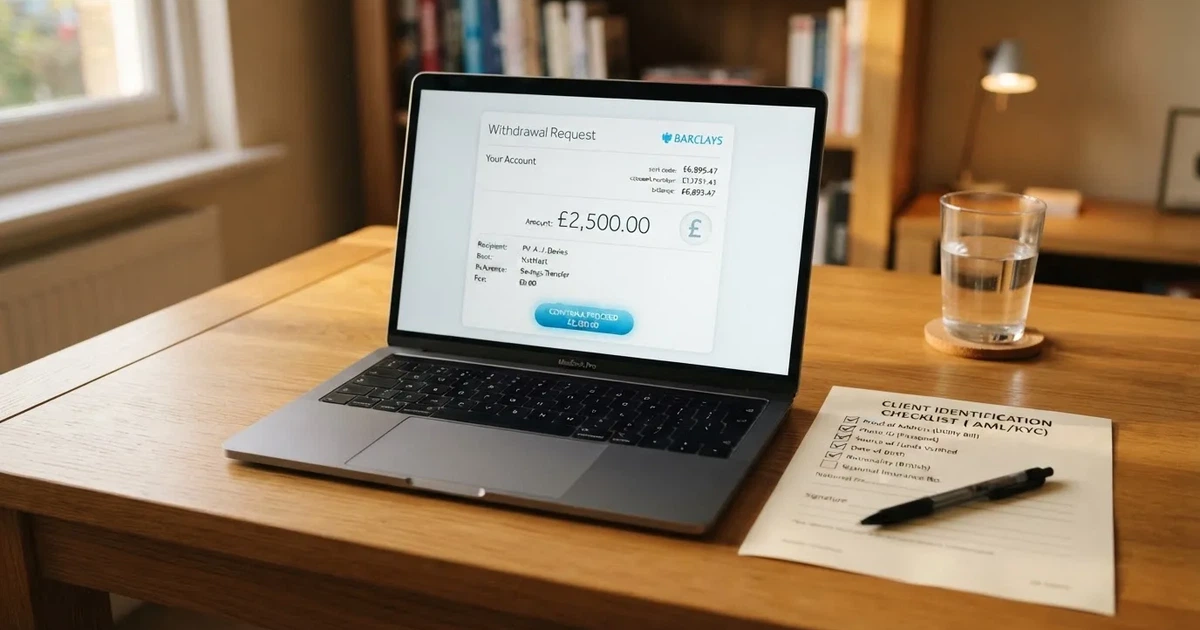
The figures below were verified against the Gambling Commission’s public register on 7 November 2026.
Table of Contents
- Incentives at a licensed UK casino — and the rules they sit inside
- The regulatory frame — what a Commission licence actually fixes
- Responsible gaming at higher tiers — what does not change with status
- Crypto, anonymity and VIP status — how the two ideas get mixed up
- Payments and payout speed — the part higher tiers genuinely change
- Bonuses, free spins and the 10x ceiling
- The wagering cap’s real shape — what a £100 bonus actually costs in time
- How the ten brands compare on licence, domain and what they offer
- A few practical notes before choosing a tier
- Frequently asked questions about UK casino VIP programmes
Incentives at a licensed UK casino — and the rules they sit inside
A UK-licensed casino’s incentive structure is shaped less by marketing than by three rules the Gambling Commission enforces across every tier.

The first is the stake cap. Since 9 April 2025 the maximum stake on an online slot game cycle has been £5 for players aged 25 and over, and since 21 May 2025 £2 for players aged 18 to 24. “Game cycle” is the regulator’s own term for one complete spin, so the cap is per spin — not per session, not per day. The cap binds every account at every tier, because the rule sits in the operator’s licence conditions, not in its loyalty programme.
The second is the wagering cap. Since 19 December 2025 wagering requirements attached to a bonus have been capped at 10x. A £100 bonus can ask for £1,000 of qualifying play before withdrawal — not the 30x, 40x or 65x that some offshore brands still publish. The cap also ends mixed-product bonuses (a sports free bet that unlocks casino spins, for instance), which were the most aggressive way of turning one product’s edge into another product’s requirement.
The third is the GAMSTOP condition. Since 31 March 2020 every Gambling Commission online licence has required integration with GAMSTOP, the national self-exclusion register. Periods run six months, one year or five years and cannot be cancelled early. The condition binds at the operator level, not the customer level, so it applies to a brand-new £10-deposit player in the same way it applies to a player at the top of a tier ladder.
These three rules are not paperwork. They shape what any VIP offer can and cannot be. A loyalty package that promises “unlimited stakes” or “wagering waived” is either unlicensed or false. That does not leave nothing on the table — there is genuine value in higher-tier play, and the rest of this page walks through what it is.
The 139 businesses holding an active remote casino operating licence on the Gambling Commission’s public register on 18 September 2026 are the universe the discussion draws from. The register is searchable online and downloadable as CSV or Excel; it is the whole test of whether a brand holds a GB licence at all.
Where loyalty schemes sit in that landscape
Every licence holder can run its own loyalty programme. Some build a tier ladder with named levels; some use a points-to-rewards conversion; some keep the structure flat and reserve VIP treatment for an invited circle. What they share is the ceiling: the perks scale inside the rules, they do not override them.

The practical shape of a UK VIP tier usually combines three elements. A personal host — a named point of contact for queries, withdrawals and bonus tailoring. Tailored offers — reload bonuses, free spins or prize draws sized to the player’s tracked activity, with wagering terms still capped at 10x and stakes still capped at £5. And higher withdrawal ceilings — the per-transaction or per-day cap most operators set on lower-tier accounts is often relaxed at the top, although the underlying payment rail (Faster Payments, card, e-wallet) stays the same.
| Element | Description | Impact |
|---|---|---|
| Personal host | Named point of contact | Faster query resolution |
| Tailored offers | Reloads, spins, draws | Better-sized rewards |
| Withdrawal ceilings | Relaxed daily limits | Easier access to funds |
None of those perks alters the stake cap, the wagering cap, the GAMSTOP condition or the credit-card ban. A player who wants a VIP tier to mean “I can bet more per spin” is asking for something the operator is not licensed to provide.
The regulatory frame — what a Commission licence actually fixes
The Gambling Commission (UKGC) regulates commercial gambling in Great Britain under the Gambling Act 2005. Great Britain here means England, Scotland and Wales; Northern Ireland runs its own regime. Since the Gambling (Licensing and Advertising) Act 2014 any operator taking customers in Great Britain must hold a Commission licence regardless of where it is incorporated — a Curaçao, Maltese or Gibraltar licence alone is not enough.
The Commission grants two operating licence classes that matter for online casino: a remote casino operating licence (covering casino-style games played at a distance) and a remote betting operating licence (covering pool betting on horse racing, for instance). A brand that runs slots, live dealer and table games needs the casino class. Some brands hold both; the licence number on the public register carries a suffix that distinguishes them, with “R” marking a remote (online) licence.
The Commission’s Licensing Conditions and Codes of Practice (LCCP) and its Remote Technical Standards are where the day-to-day rules live. The LCCP binds every GB-licensed operator on social responsibility, AML and the game-design standards that ban auto-play, mandate a minimum spin length of 2.5 seconds and forbid “losses disguised as wins”. The Remote Technical Standards set the technical bar for game fairness, RNG testing and return-to-player reporting.
Every licence holder must also pass affordability and identity checks before the first deposit and at thresholds set by the Commission. Name, address and date of birth are verified before any play — the rule has been in force since 7 May 2019. Financial vulnerability checks run at £150 net deposits in a rolling 30 days, using public-data sources; the broader financial risk assessments have been announced but are not yet in force.
The regime is not a paper tiger. The Commission has the power to revoke licences, fine operators and refer cases to the police where appropriate. It also disrupts unlicensed sites through cease-and-desist notices, search-engine delisting and payment and hosting referrals — though it has no power to block sites at ISP level. What that means for a player is that a GB-licensed brand sits inside a complaints and alternative-dispute-resolution (ADR) framework, while an unlicensed offshore brand does not.
What the public register actually tells you
The register’s domain list records each website against the licence account that runs it, with a status of Active, Inactive or White Label. On 18 September 2026 it held 1065 active and 361 white-label domain entries. A white-label site trades under another company’s licence — it is operated by the licensee on behalf of a brand partner, and its domain record carries the licensee’s account number alongside the partner name.
A licence number on the register has the form account-R-number-suffix, where the leading six digits repeat the licence holder’s account number and “R” marks a remote (online) licence. Take 054743-R-330863-014 as the worked example. The leading six digits, 054743, are the account number of LC International Limited; the “R” tells you this is a remote licence; the seven-digit string after the R is the licence’s own serial; and the trailing suffix distinguishes this particular licence from any others on the same account. The same six-digit prefix is how a reader spots that several brands share one licensee — a point that matters when comparing “different” casinos that are in fact the same operator under different trading names.
The register is downloadable as a CSV. Anyone can check the licence status of any domain on the register itself. That is the answer to the question “is this casino licensed?” — it is the licence, not a self-description.
Responsible gaming at higher tiers — what does not change with status
The most important thing to know about VIP status under a GB licence is that it does not elevate a player above the responsible-gaming framework. The framework is built into the licence; a higher tier is a relationship layer, not an exemption.
Deposit limits are the clearest example. The Commission does not set a default state-level deposit ceiling; instead, since 31 October 2025 every operator must prompt the customer to set a financial limit before the first deposit. The limit the player sets applies at every tier — the operator cannot raise it just because the player is invited to a VIP circle. If the player wants to raise it later, the operator must run affordability checks against the new level. A “VIP no-limit” headline, where one exists, refers to the operator’s own per-transaction cap on a payment rail, not to the deposit limit the player has set in their account.
Reality checks and time-outs operate the same way. Reality checks — on-screen prompts that summarise time and money spent — fire at intervals the LCCP sets; time-outs let a player freeze their account for 24 hours, 48 hours, a week or longer. Neither can be dialled down for a higher tier.
GAMSTOP binds at the operator level. A self-excluded player cannot open a new account, top up an old one, or, in most cases, withdraw funds from a closed account during the exclusion period. A higher tier is irrelevant: a self-excluded account stays excluded.
The Commission’s financial vulnerability checks are also tier-blind. At £150 of net deposits in a rolling 30 days, a check runs using public-data sources — electoral roll, credit-reference agencies, court databases — to flag indicators of financial strain. The check happens regardless of whether the account is a brand-new £10-deposit player or a long-standing tier-three customer. The wider financial risk assessments, which use open-banking and similar sources, have been announced but were not in force at the time of writing; when they take effect, they will apply at the same tier-blind threshold.
Anonymous play is not possible at a licensed site. Identity is verified before the first deposit, and source-of-funds checks are triggered at thresholds the LCCP sets. A VIP host does not change that — a personal host is a relationship-management perk, not an anonymity feature. They sit on top of identity checks that every licensed-casino player completes regardless of tier.
This is not an indictment of VIP programmes; it is the description of what they are. A programme that promised to relax responsible-gaming controls would, by definition, not be running under a GB licence. The tier’s value is in the perks that sit inside the framework — host, tailored offers, relaxed withdrawal ceilings — not in bypassing it.
Crypto, anonymity and VIP status — how the two ideas get mixed up
A personal host is the most distinctively VIP of the perks a tier can offer. The market for “VIP” sometimes blurs that perk with a different promise — anonymity, or freedom from the KYC checks a licensed casino runs.
The two ideas are not the same. A host is a relationship manager: a named person the player can message about a withdrawal, a missing bonus credit, a tournament entry. They have no power to switch off identity verification, source-of-funds checks or any of the responsible-gaming controls. Where a brand’s marketing puts a host alongside language about “exclusive” or “private” play, the exclusivity is in the service tier — not in the regulatory tier.
Crypto is where the conflation sharpens. Crypto-friendly offshore casinos do sometimes market themselves as offering anonymous play, by routing deposits through coins that are harder to trace than a card or bank transfer. A licensed UK casino is not in that market. None of the operators reviewed on this page takes cryptocurrency deposits; the Commission’s AML rules make crypto deposits incompatible with the affordability and source-of-funds checks the licence requires. Where a player wants both crypto funding and a VIP host, the only route on the GB side is a brand that is licensed elsewhere and is therefore outside the Commission’s framework — which means no GAMSTOP, no ADR route and no Commission complaints path.
So “crypto VIP casino” as a search phrase collapses two ideas that do not coexist under a GB licence. A UK player choosing between them is choosing between two different regulatory universes, not between two perks inside one.
Payments and payout speed — the part higher tiers genuinely change
The Faster Payments Service, launched in 2008 and operated by the Faster Payments operator, is the rail most UK bank transfers move on. It runs 24 hours a day, seven days a week, and most payments arrive instantly or within a couple of minutes; transfers can occasionally take up to two hours. The scheme’s per-transaction ceiling is £1,000,000, although individual banks impose lower limits on their customers. The Bank of England oversees the system’s safety and provides final settlement.
That is the floor every licensed casino sits on. The ceiling, in the form of the operator’s per-transaction or per-day withdrawal cap, is what changes with tier.
Apple Pay is one of several mobile-wallet rails the licensed brands in this page accept. It launched on 20 October 2014 and began supporting UK-issued payment cards on 14 July 2015. Card data is protected by tokenisation: the actual card number is replaced by a device-specific tokenised Device Primary Account Number and each transaction generates a dynamic security code. In-store, payments use near-field communication; on an iPhone with Face ID, in-store purchases are authenticated by double-clicking the side button; on Touch ID models, by double-clicking the Home button. Apple Pay is also subject to the US Consumer Financial Protection Bureau’s November 2024 rule bringing large nonbank digital-wallet operators under bank-like federal oversight — a US-side rule, but a marker of how the rail is regulated. The European Commission opened an investigation in 2020 into Apple’s control of iPhone NFC hardware.
AstroPay is the other rail commonly listed on the same brands. It was founded in 2009 and is headquartered in Uruguay, operating as a global digital wallet with online payments, virtual and physical debit cards and peer-to-peer transfers. Its UK entity, Larstal Limited, is authorised by the Financial Conduct Authority under the Electronic Money Regulations 2011; the Isle of Man entity, AstroPay Global (IOM) Limited, is licensed by the Isle of Man Financial Services Authority; the Brazilian entity is authorised by the Brazilian Central Bank; the Danish entity, Larstal Denmark ApS, is authorised by the Danish Financial Supervisory Authority. The multi-jurisdiction structure is relevant because the entity that actually holds the player’s funds depends on where the player is registered — a detail that matters for which regulator the player complains to if something goes wrong.
Bank transfer deposits and withdrawals on a licensed casino move through Faster Payments. Withdrawals, in particular, normally arrive in minutes once the operator has approved them.
The tier-specific change on the withdrawal side is review speed, not rail speed. A new account at a licensed casino waits for KYC and source-of-funds checks; a higher-tier account, with those checks already on file and a history of withdrawals behind it, often moves through the operator’s review faster. The Faster Payments leg itself takes the same minutes for both tiers — what changes is the queue at the operator’s end.
That is genuinely valuable for a player who withdraws often. It is not, however, a higher stake cap or a relaxed identity check. The marketing line “VIPs get faster withdrawals” is true; reading it as “VIPs skip the rules” is not.
Credit cards are out of bounds at every tier. The Commission banned credit cards for gambling from 14 April 2020, including credit-card-funded e-wallet deposits. Debit cards and bank transfers are unaffected.
Bonuses, free spins and the 10x ceiling
A UK casino’s VIP tier can offer reload bonuses, free spins, prize-draw entries, cashback on losses, and tailored one-off promotions. The 10x wagering cap means the player’s worst-case qualifying play before withdrawal is bounded: a £200 bonus requires £2,000 of turnover; a £500 bonus requires £5,000; a £1,000 bonus requires £10,000. Each of those is bounded, predictable, and capable of being estimated before the player opts in.
Outside the cap, two specific exclusions matter. Mixed-product bonuses are banned — the Commission closed that route on 19 December 2025 in the same change that introduced the 10x ceiling. A sportsbook free bet that unlocks casino spins is no longer offered. Free-spin winnings at a licensed casino sit inside the 10x cap when they come with a wagering requirement, and are paid as cash when they do not. Where the operator’s own terms call a spin “no-wagering”, the win is withdrawable as cash, not bonus funds.
The Commission estimated that around 800,000 UK consumers used credit cards to gamble in 2018, and found that 22% of online gamblers using credit cards were classed as problem gamblers. The credit-card ban is part of the same consumer-protection frame as the 10x cap — both are limits on the size of the bonus-to-requirement conversion that the market used to push.
The value a UK player gets from a tier is not “more bonus”. It is the same kind of bonus, sized to a larger tracked activity, with a 10x ceiling rather than the 30x–65x some offshore brands still publish. For someone with a £10,000 monthly tracked activity at one tier, the difference between a 10x and a 40x requirement on the same £200 reload bonus is £6,000 of qualifying play — a gap that compounds across the year and is the closest the page comes to a “VIP” number that is genuinely different from the standard tier.
The wagering cap’s real shape — what a £100 bonus actually costs in time
The 19 December 2025 wagering-requirement cap is set at 10x the bonus amount. For a £100 bonus the qualifying turnover is £100 × 10 = £1,000.
The arithmetic that follows belongs to the player. To clear that £1,000 of turnover at a licensed casino, a player needs to spin through £1,000 in stake. With online slots capped at £5 per spin for players aged 25 and over, the maximum a player can stake per spin is £5 — so the minimum number of spins to clear the bonus is £1,000 ÷ £5 = 200 spins. At 2.5 seconds per spin (the minimum spin length the Remote Technical Standards allow), 200 spins take 500 seconds — just over eight minutes.
That is the fastest a player can clear the bonus at the operator’s stake ceiling. Most players will not play at the £5 ceiling on every spin, so the time scales up from there. At £2 per spin the same £1,000 turnover takes 500 spins, or 1,250 seconds — roughly 21 minutes. At £1 per spin the same turnover takes 1,000 spins, or about 42 minutes. The 10x cap sets the floor on turnover; the stake ceiling sets the floor on time.
The player’s expected loss is harder to pin down without the slot’s return-to-player percentage. Slot RTPs at licensed casinos are published in each game’s help file, and they cluster in the mid-90s. At a 96% RTP, expected loss on £1,000 of turnover is £40; at a 94% RTP, £60. These are statistical estimates — averages over many spins — not guaranteed outcomes. They are also the same estimate a player would make for any £1,000 of slot play, with or without a bonus attached. The bonus itself does not change the per-spin house edge; it changes the amount of qualifying turnover the player has to run before withdrawal.
The practical answer to “how long does it take to clear a £100 bonus?” is therefore a band rather than a single figure: between eight minutes and an hour, depending on the player’s stake size and game choice, with the expected loss set by the game’s RTP rather than the bonus terms.
How the ten brands compare on licence, domain and what they offer
The table below draws from the Gambling Commission’s public register on 18 September 2026. Every domain listed is checked against the licence account that operates it, and the licence number carries the format the register uses. None of the operators reviewed below holds a different licence status; the differences between them are in the operating company and the domain status on the register.
| Brand | Licence holder and GB remote casino licence | Domain status on the register | Subject support |
|---|---|---|---|
| Coral | LC International Limited · 054743-R-330863-014 | Active | — |
| BetVictor | BV Gaming Limited · 039576-R-319370-028 | Active | — |
| Virgin Games | Gamesys Operations Limited · 038905-R-319430-022 | White Label | — |
| Ladbrokes | LC International Limited · 054743-R-330863-014 | Active | — |
| Jackpotjoy | Gamesys Operations Limited · 038905-R-319430-022 | Active | — |
| PokerStars | Stars Interactive Limited · 039108-R-319334-026 | Active | — |
| Gala Bingo | LC International Limited · 054743-R-330863-014 | Active | — |
| William Hill | WHG (International) Limited · 039225-R-319373-015 | Active | — |
| Grosvenor Casinos | Rank Interactive (Gibraltar) Limited · 057924-R-334666-005 | Active | — |
| Midnite | Dribble Media Limited · 042647-R-321653-022 | Active | — |
The first column reads across the operator set quickly: three of the ten brands — Coral, Ladbrokes and Gala Bingo — share licence 054743-R-330863-014 under LC International Limited. Virgin Games and Jackpotjoy share 038905-R-319430-022 under Gamesys Operations Limited, with Virgin Games logged as a white-label domain and Jackpotjoy as an active domain of the same account. The remaining five brands each sit on their own licence. That is the structural picture underneath the brand list: a smaller number of operators, a larger number of trading names.
The “subject support” column carries the no-data marker across every row. None of the public-register entries, nor the operator’s own public-facing loyalty pages reviewed for this page, gives a direct, specific statement about how the brand’s VIP programme interacts with the items the page covers — stake caps, wagering caps, withdrawal ceilings, host availability. Where a brand’s own terms page mentions tier benefits, it does so in marketing language rather than register-verifiable data. The gap is worth naming, because it is the gap a reader will most often meet: the headline says “exclusive VIP”, and the page on the brand’s own site is silent on the specific framework items the reader cares about.
Coral — the same LC International licence as two other brands
Coral (coral.co.uk) sits on licence 054743-R-330863-014, held by LC International Limited (account 54743). The same licence covers Ladbrokes and Gala Bingo, so a player who already has an account at any of the three is, in licensing terms, at the same operator. The tier the player reaches is a Coral tier in branding and an LC International tier in the back office — the host, the bonus tailoring and the withdrawal ceiling all belong to the operator, not to the brand front. For a player choosing between the three on VIP grounds alone, the brand is the variable, not the licence.
BetVictor — a separate operator on its own licence
BetVictor is held by BV Gaming Limited on licence 039576-R-319370-028 — a single-brand licensee rather than a multi-brand group. The structural difference is in the operator: any tier decision BetVictor makes is a BV Gaming decision, not an LC International one. For a player who already plays at one of the LC International brands and is comparing on tier perks alone, BetVictor is the next-best test of whether the perk is the operator’s or the brand’s.
Virgin Games — a white-label domain of Gamesys Operations
Virgin Games is a white-label domain of Gamesys Operations Limited (account 38905), which holds licence 038905-R-319430-022. A white-label site trades under another company’s licence, so the regulator’s framework that applies to Jackpotjoy applies to Virgin Games in the same shape. For a player, the difference between the two brands is in product and tier perks rather than regulatory exposure.
Ladbrokes — same LC International licence as Coral and Gala Bingo
Ladbrokes shares LC International Limited and licence 054743-R-330863-014 with Coral and Gala Bingo. A VIP host at Ladbrokes is, structurally, an LC International host; the bonus structure and the responsible-gaming controls are the same across the three. The brand-level difference is the most a player can fairly point to.
Jackpotjoy — the active sibling of Virgin Games under Gamesys Operations
Jackpotjoy is an active domain of Gamesys Operations Limited on licence 038905-R-319430-022, the same licence that underpins Virgin Games. The domain-status distinction (active versus white label) is a register-entry detail rather than a player-facing one — both brands sit on the same licence, both are bound by the same LCCP conditions, and the same responsible-gaming controls apply.
PokerStars — a Stars Interactive licence, distinct from the European-facing PokerStars brand
PokerStars sits on licence 039108-R-319334-026, held by Stars Interactive Limited (account 39108). The .uk domain is the GB-licensed face of a brand that runs on separate licences elsewhere. The licence number distinguishes it from any sister brand on a different regulator’s books. For a player comparing poker room and casino tier perks, the .uk domain is the only one that gives access to the GB-licensed VIP framework — and the only one covered by GAMSTOP, the Commission’s complaints process and the 10x wagering cap.
Gala Bingo — the third LC International brand
Gala Bingo is the third brand on LC International Limited’s licence 054743-R-330863-014, alongside Coral and Ladbrokes. The same operator group runs all three, so the same tier perks and the same regulatory framework apply. The choice between the three is largely a question of product mix and bingo-specific tier benefits.
William Hill — a WHG (International) Limited licence
William Hill sits on licence 039225-R-319373-015, held by WHG (International) Limited (account 39225). The licence is distinct from the LC International group, so a William Hill VIP tier is structurally separate from a Coral/Ladbrokes/Gala Bingo tier. For a player already with one of the LC International brands, William Hill is the test of whether a different operator offers a meaningfully different tier.
Grosvenor Casinos — a Rank Interactive (Gibraltar) Limited licence
Grosvenor Casinos sits on licence 057924-R-334666-005, held by Rank Interactive (Gibraltar) Limited (account 57924). The “Gibraltar” in the operating company’s name does not undermine the licence — the Gambling (Licensing and Advertising) Act 2014 means any operator taking GB customers needs a Commission licence regardless of incorporation. The licence number on the register is the test, not the company’s registered address.
Midnite — a smaller, single-brand licensee
Midnite is held by Dribble Media Limited on licence 042647-R-321653-022. It is the smallest operator in the reviewed set on licence-class grounds, with a single brand on a single licence rather than a multi-brand group. For a player weighing a smaller licensee against the multi-brand groups above, the difference is in product mix and tier perks; the regulatory frame is the same.
A few practical notes before choosing a tier
The biggest practical consequence of the framework is timing. A player who has just cleared KYC and source-of-funds checks at a new account will, for the first few weeks, see slower withdrawals than an established higher-tier account — because the operator’s review queue is longer for new accounts. The tier change does not speed up Faster Payments; it shortens the queue at the operator’s end. So the practical timing question is not “how fast is the rail?” but “how long is the queue at this brand today?” — and that is information the brand’s own customer-support team can give a player in a couple of messages.
The second consequence is in the bonus structure. With the 10x cap in place, a reload bonus at any tier is more predictable than it was before 19 December 2025 — and the worst-case qualifying turnover is bounded. A player comparing offers at different tiers is comparing the size of the bonus and the bonus-to-turnover ratio, both of which are inside the 10x cap. Where the brand’s headline reads “200% up to £500”, the wagering requirement is capped at 10x the bonus, so the qualifying turnover is bounded and the player can estimate the worst case before opting in.
The third consequence is in dispute resolution. A licensed brand sits inside the Commission’s ADR framework; an unlicensed brand does not. If something goes wrong with a withdrawal or a bonus settlement, the licensed player’s path is operator → ADR → Commission. The unlicensed player has no equivalent route. A higher tier at a licensed brand does not change the dispute route; it does mean the operator has more reputational stake in resolving it.
Frequently asked questions about UK casino VIP programmes
No. The £5 (or £2 for 18–24) per-spin stake cap is a condition of every Gambling Commission remote casino licence, not of a particular account tier. It binds at the operator level, so a higher-tier player cannot bet more per spin than a brand-new one.
Does a VIP or high-roller programme change the 10x wagering-requirement cap on bonus offers?
No. The 10x ceiling has been in force since 19 December 2025 and applies to every bonus at every tier. A VIP reload bonus at a licensed casino carries the same 10x cap as a standard welcome offer — what changes is the size of the bonus and the perks bundled with it.
Do higher-tier accounts get faster withdrawal processing at a licensed casino?
Often, yes — but the speed-up is in the operator’s review queue, not in the payment rail. Faster Payments runs at the same speed for every account. A higher-tier account, with KYC and source-of-funds checks already on file and a withdrawal history behind it, typically clears the operator’s review faster than a brand-new account.
Is a dedicated VIP account manager a form of identity verification, or separate from it?
A VIP host is a relationship-management perk — a named point of contact for queries, bonus tailoring and withdrawal follow-up. They have no power to switch off the identity-verification and source-of-funds checks that every licensed-casino player completes before the first deposit. The two are separate.
Do deposit limits and GAMSTOP self-exclusion still apply once I reach VIP status?
Yes. Deposit limits are set by the player in their own account and apply at every tier; GAMSTOP binds at the operator level, so a self-excluded account stays excluded regardless of tier. Neither is a perk the operator can switch off for a higher-tier player.
What is the practical difference between a casino’s VIP programme and a one-off welcome bonus?
A welcome bonus is a one-off incentive on the first deposit, with a wagering requirement capped at 10x. A VIP programme is a relationship layer built on top of the same regulatory frame: a personal host, ongoing reload bonuses, prize-draw entries and (often) a relaxed withdrawal ceiling. The wagering cap and stake cap apply to both in the same shape; what scales with tier is the perk sizing and the service level, not the rules the perks sit inside.