
Casinos that accept Litecoin in the UK in 2026: what the licence register shows, and what changes the moment you walk through the door
Currency checked on 23 November 2026 against the Gambling Commission’s public register of gambling businesses, downloaded as a CSV the same day.

British players asking whether a casino takes Litecoin land on a stranger collision than they expect. The currency settles on a public blockchain in roughly two and a half minutes; the casino sits on a server in a UK-approved data centre, runs age and identity checks before the first deposit, applies the £5 or £2 online slot stake cap to every spin regardless of how the account was funded, and joins GAMSTOP the moment a customer registers. The first question — can a licensed casino even take Litecoin — has a sharper answer than the marketing suggests, and the second question — what changes for me — has none at all.
Table of Contents
- How the Litecoin option actually sits inside a licensed British casino
- What the Gambling Commission’s register actually lists
- The £5 and £2 stake caps, the 10x wagering cap, and where Litecoin makes no difference
- Identity verification, GAMSTOP and the limits a Litecoin account cannot escape
- What crypto regulation in the UK adds on top of the gambling licence
- How a Litecoin-eligible casino actually differs from a pound-eligible one
- What “no licence” actually costs a player
- What the 10x wagering cap means for a bonus claimed after a Litecoin deposit
- A practical sequence for a player funding an account in Litecoin
- What a player comparing brands on this market should actually weigh
- Why the marketing around crypto casinos reads the way it does
- A note on alternatives and on what “Litecoin casino” has come to mean
- What this page does not promise
- What follows from the picture
- Frequently asked questions
How the Litecoin option actually sits inside a licensed British casino
Litecoin launched on 7 October 2011 as an open-source, peer-to-peer cryptocurrency forked from the Bitcoin codebase, and was created by Charlie Lee, a former Google software engineer who later moved to Coinbase. It runs proof-of-work consensus on the scrypt hash function, which was chosen specifically to frustrate the GPU and ASIC mining rigs that had come to dominate Bitcoin by the early 2010s. Its block target of roughly two and a half minutes — four times faster than Bitcoin’s ten — is the detail a British player actually feels: a Litecoin transfer tends to settle in a window that competes with Faster Payments rather than with a card authorisation. Its maximum supply is 84,000,000 LTC, four times Bitcoin’s 21 million cap, and the block reward halves every 840,000 blocks from an initial 50 LTC. In May 2022 the network activated the MWEB (Mimblewimble Extension Blocks) upgrade, an optional privacy feature that hides transaction amounts and addresses behind a separate extension block. That is the technology the marketing points to when it sells “anonymous play”. It is not the technology that lets a British player skip the Commission’s rules.
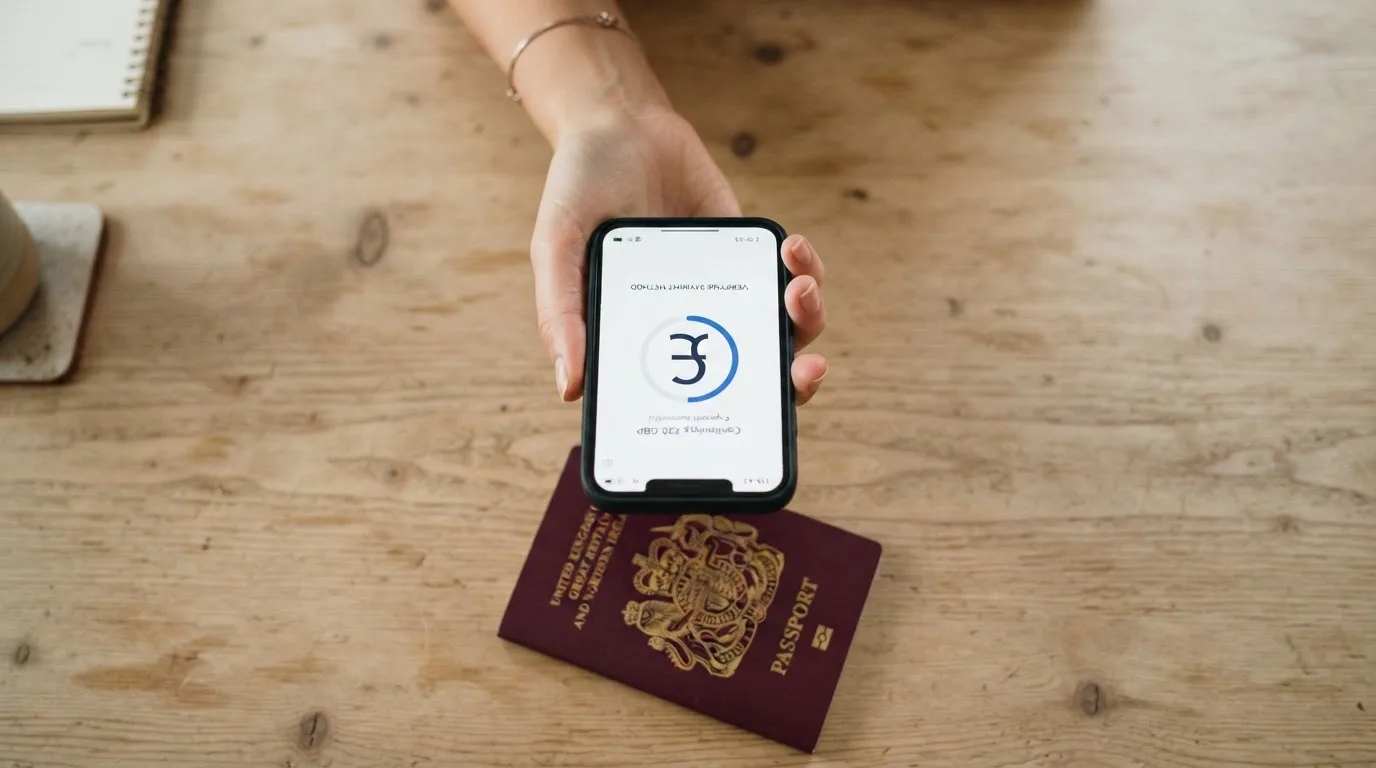
The point that follows from those fundamentals is mechanical, and it is the entire page in one sentence: a deposit made through Litecoin moves value over a public blockchain rather than through a card network, but the casino accepting it still sits inside the UK’s licensed, GAMSTOP-linked system regardless of which currency reaches its account. The currency changes the rail, not the regulator. The licence on the wall, the identity check at the door, the slot stake cap on every spin, the £150 net-deposit trigger for a financial vulnerability check, the 10x wagering cap on bonus funds — all of these apply whether the pounds arrived from a debit card, a bank transfer, a PayPal wallet or a Litecoin address. Anyone who came to this page because a Litecoin deposit sounded like a way around those rules is about to read why it isn’t.
What the Gambling Commission’s register actually lists
The Commission’s public register of gambling businesses is the test of whether a brand holds a Great Britain licence. On 18 September 2026 it listed 139 businesses holding an active remote casino operating licence; the file is searchable online and downloadable as a CSV or Excel file. The register’s domain list records each website against the licence account that runs it, with a status of Active, Inactive or White Label; the same download held 1065 active and 361 white-label domain entries, and a white-label site trades under another company’s licence rather than its own. A remote casino licence number on the register follows the shape account-R-number-suffix — the leading six digits repeat the licence holder’s account number and the “R” marks a remote (online) licence.
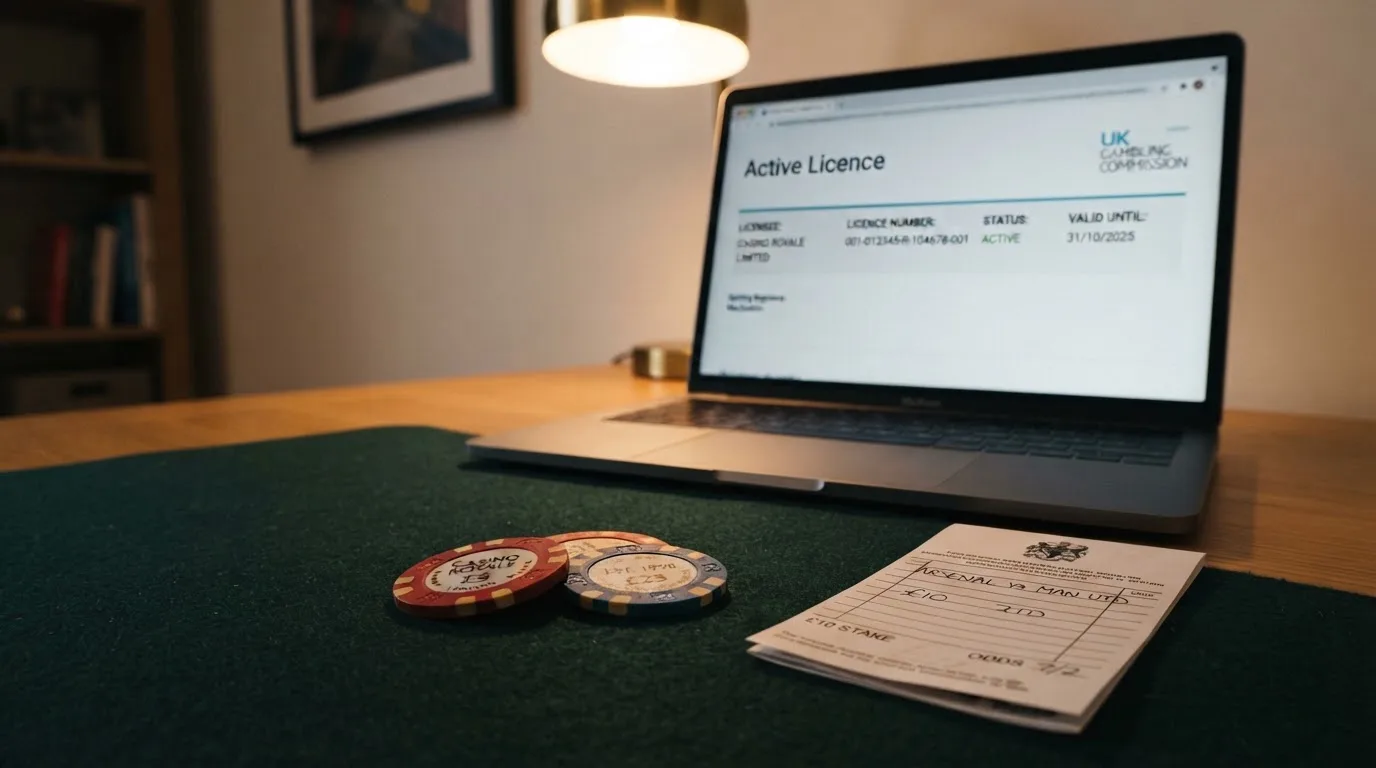
That file is the source the rest of this page leans on. It is also the source a reader can lean on themselves, and that matters more than the brand list itself: anyone who can search the register by domain or company name can confirm, in the same afternoon, that the casino they were about to deposit with is the operator the licence says it is. The marketing does not get to choose which one of two near-identical names appears on the screen — the register does. Two of those names are particularly worth flagging. Petfre (Gibraltar) Limited runs Betfred under licence 039544-R-319290-010 (account 39544), bet365 is held by Hillside (UK Gaming) ENC under 055149-R-331499-004 (account 55149), and Jackpotjoy is the domain of Gamesys Operations Limited under 038905-R-319430-022 (account 38905). Each one of those licence numbers is searchable as a string on the Commission’s own register page.
Three of the names on the featured list below — Gala Bingo, Ladbrokes and Coral — are not three operators. They are three domains of one operator, LC International Limited (account 54743), all running under the same active remote casino operating licence 054743-R-330863-014. Reading them as three independent businesses is the common mistake a register search corrects in a few seconds. Unibet (unibet.co.uk) sits under Platinum Gaming Limited, MrQ under Tek Fox Ltd, and Betfair under PPB Games Limited, and BetVictor under BV Gaming Limited. The pattern that emerges from the register is not a list of brands — it is a short list of licensees, several of whom hold more than one domain.
The £5 and £2 stake caps, the 10x wagering cap, and where Litecoin makes no difference
The online slot stake limit is the rule a Litecoin-funded account cannot dodge. Players aged 25 and over face a £5 maximum stake per game cycle; players aged 18 to 24 face £2. The £5 tier took effect on 9 April 2025, the £2 tier on 21 May 2025, and a game cycle here is one full spin — the unit the software measures from stake to result, not a betting round or a session. Auto-play is banned since 31 October 2021, a slot spin may not resolve faster than 2.5 seconds, and “losses disguised as wins” — a presentation that celebrates a smaller-than-stake return with the audio cues of a jackpot — are banned outright.
The bonus side of the same licence has been tightened more recently. Since 19 December 2025 wagering requirements on bonus funds are capped at 10x and mixed-product bonuses are banned — the kind of offer where a sports bet unlocks casino free spins. The 10x cap is the number to keep in mind when comparing a Litecoin-eligible welcome offer against anything older, because anything still carrying a 40x or 50x multiple on its bonus page is either displaying a term that should not be there or has not refreshed its terms since the rule came in. Where this lands for a reader: a Litecoin deposit that triggers a bonus is now bound by the same cap as a debit-card deposit that triggers the same bonus. The currency on the way in does not loosen the rule on the way out.
The £150 vulnerability trigger, which has run from 28 February 2025, applies to every funding method on the licensed side. The check uses public data only at the moment; wider financial risk assessments are announced but not yet in force. The point is the trigger: it does not care what currency the player used, only what the rolling 30-day net deposit figure says. A player who funded an account in Litecoin and then in pounds from the same card sits in the same single trigger window.
Identity verification, GAMSTOP and the limits a Litecoin account cannot escape
Identity verification is the first thing a licensed British casino does after the registration form, and it predates any deposit by any method. Since 7 May 2019 the rules require name, address and date of birth to be confirmed before the first deposit or any play. A Litecoin transfer cannot short-circuit this step, because the casino’s onboarding software does not see Litecoin until it sees a verified identity — the two systems run in that order. This is what blocks the “Litecoin casinos that don’t ask for ID” search. On the licensed side, they all ask for ID, and they all do it at the same moment in the flow. The only casinos in this market that don’t ask for ID are the ones operating outside the Commission’s licence regime, and the section below on offshore addresses what that costs the player.
GAMSTOP, the national online self-exclusion scheme, is a mandatory condition of every online GB licence since 31 March 2020. A player who has registered for self-exclusion — six months, one year or five years, with no early cancellation — is blocked from opening a new account at every Commission-licensed operator during the exclusion period, regardless of how the new account is funded. Funding a new account with Litecoin does not route around the check, because GAMSTOP runs on the player record, not on the payment rail. The player record is set by the same KYC flow that confirmed the player’s date of birth. What follows from that is straightforward: any operator in this market that takes Litecoin deposits while remaining outside GAMSTOP is, by definition, not licensed by the Commission.
The deposit-limit prompt has been mandatory before the first deposit since 31 October 2025 — the operator must invite the player to set a financial limit before money moves. Reality checks still tick over during play. Time-outs and full self-exclusion at the operator level remain available, on top of the national GAMSTOP registration. National Gambling Helpline (GamCare), GambleAware and the Commission’s complaints route round out the safety net. None of these look at the funding method.
What crypto regulation in the UK adds on top of the gambling licence
Litecoin sits inside a second regulatory frame that does not belong to the Commission, and a British player who treats the gambling licence as the whole picture will misread the tax and consumer sides. UK businesses providing cryptoasset services, including firms dealing in Litecoin, must register with the FCA under the Money Laundering, Terrorist Financing and Transfer of Funds (Information on the Payer) Regulations 2017 before carrying on business. That registration covers only money-laundering and counter-terrorist-financing supervision: it does not give customers access to the Financial Ombudsman Service or the Financial Services Compensation Scheme. The exchange or wallet service the player uses to acquire Litecoin is the firm the FCA registers; the casino they then deposit at is the firm the Commission licences. The two registrations cover two different activities and leave the gap between them — the moment value moves from a wallet to a casino account — outside both.
HMRC treats cryptoassets such as Litecoin as property rather than currency, so individuals are generally liable to Capital Gains Tax on gains when they dispose of them, for example by selling for pounds or exchanging for another cryptoasset. That is the tax position the player carries, not the operator. The casino’s own tax position is Remote Gaming Duty, which the operator pays on its gross gaming yield and which the player does not see on a withdrawal; Remote Gaming Duty rose from 21% to 40% from 1 April 2026, and a reader who needs the exact figure for a current return should check with HMRC rather than rely on this page.
The Commission’s own guidance closes the loop on its side. Any GB licensee considering accepting cryptocurrency payments, such as Litecoin, must notify it under “Key event 8” and supply a full and complete source-of-funds history before approval. Operators must also review their anti-money-laundering risk assessment before doing so. The practical consequence for a player is that a licensed casino accepting Litecoin is one that has been through that approval process — the licence number is on the register, the operator has answered the source-of-funds question, and the Commission has not objected. A licensed site that has not gone through that process is not licensed to take crypto, however prominently the marketing uses the word. An unlicensed site is, by the same token, one the Commission has no record of approving for any payment method.
How a Litecoin-eligible casino actually differs from a pound-eligible one
The differences a player actually meets on a licensed site that accepts Litecoin are small, and most of them are below the surface.
| Brand | Licence holder | GB remote casino licence | Domain status on the register | Subject support |
|---|---|---|---|---|
| Betfred | Petfre (Gibraltar) Limited | 039544-R-319290-010 | Active | — |
| bet365 | Hillside (UK Gaming) ENC | 055149-R-331499-004 | Active | — |
| Betfair | PPB Games Limited | 039411-R-319335-010 | Active | — |
| Gala Bingo | LC International Limited | 054743-R-330863-014 | Active | — |
| MrQ | Tek Fox Ltd | 060629-R-337532-004 | Active | — |
| BetVictor | BV Gaming Limited | 039576-R-319370-028 | Active | — |
| Jackpotjoy | Gamesys Operations Limited | 038905-R-319430-022 | Active | — |
| Ladbrokes | LC International Limited | 054743-R-330863-014 | Active | — |
| Coral | LC International Limited | 054743-R-330863-014 | Active | — |
| Unibet | Platinum Gaming Limited | 045322-R-324275-019 | Active | — |
The “subject support” column is the one a reader naturally reaches for first, and it is the one this page cannot fill. The featured operators are listed by the Commission’s register, and the register does not record which payment methods each domain accepts. A licensed casino accepting Litecoin is one that has notified the Commission under Key event 8, and the Commission’s own register does not surface that notification in the same column as the licence number. The honest reading of the table is that every row is a brand that holds the licence, holds the active domain, and has passed every check the Commission’s domain list records; which of them actually takes Litecoin at the cashier is a fact the register does not record and that this page cannot confirm from research. The column carries an em dash on every row on purpose.
Three rows of the table are also three domains of one operator. Gala Bingo, Ladbrokes and Coral are all LC International Limited under licence 054743-R-330863-014; what that means for a player comparing them is that the bonus terms, the safer-gambling tools, the GAMSTOP integration and the customer support channels are likely to be set by the same compliance team across all three. They are still three brands to the public, and they are three domains on the register, but they are not three independent operators when something goes wrong. The same is true of MrQ, which sits alone under Tek Fox Ltd; the rest of the table is a short list of licensees, several of whom hold more than one consumer-facing domain.
The differences that matter at the cashier are narrower than the marketing suggests. A Litecoin deposit moves value over a public blockchain rather than through a card network, so the rail is auditable by anyone holding a block explorer and the settlement window runs at roughly two and a half minutes. A debit-card deposit moves through Faster Payments or a card scheme and clears in seconds to minutes. From the casino’s side, both have to pass the same source-of-funds check, both feed into the same GAMSTOP record, both trigger the same £150 vulnerability-check window at the same threshold, both earn the same wagering treatment if a bonus is attached. What this page can say honestly is that the licence is the same, the limits are the same, the safer-gambling tools are the same — and that the rail the money arrives on is the only thing that changes.
What “no licence” actually costs a player
The other path through this market is the path the Commission’s register does not cover. An offshore casino accepting British customers on a Curaçao, Malta or Gibraltar licence only is, since the Gambling (Licensing and Advertising) Act 2014, providing gambling to people in Great Britain without a Commission licence. Section 33 of the Gambling Act 2005 makes that an offence for the operator; the Commission disrupts illegal sites through cease-and-desist notices, search-engine delisting referrals, and payment and hosting referrals, but it has no ISP-blocking power. No penalty is aimed at the player. What the player loses is protection — no GAMSTOP coverage, no Commission complaints route, no approved alternative dispute resolution, no access to the safer-gambling tools the licensed side is required to run, and no recourse through the Financial Ombudsman if the operator does not pay out.
It is the offshore side that markets “no verification” and “no KYC” as a feature of Litecoin play, and the reason it can do that is precisely that it is not licensed by the Commission. The licensed side cannot offer no-verification play, because the Commission’s rules require verification before the first deposit, and the licensed side has not been approved by the Commission to take Litecoin at all if it has not been through the Key event 8 process. The unlicensed side has no Commission rules to obey, and that is the whole point it sells. The page makes the choice plain: the feature the marketing emphasises is the feature the licence makes impossible. The player pays for the missing licence by losing the safer-gambling frame around their play.
What the 10x wagering cap means for a bonus claimed after a Litecoin deposit
The 19 December 2025 cap on wagering requirements — 10x the bonus, no more — is the single change that recasts what a bonus costs a British player. The arithmetic belongs to the bonus, not to the funding method, but it is worth running because it is the rule that determines whether any offer is worth taking and is the same offer regardless of how the qualifying deposit was made. A £100 bonus at the 10x cap carries a required turnover of £1,000 before the bonus funds convert to withdrawable cash; a £250 bonus carries £2,500; a £500 bonus carries £5,000. The wider the bonus, the wider the turnover the player has to work through, and the £5 or £2 slot stake cap sits on top of that turnover as a ceiling on how fast the player can clear it.
The cap is not a per-spin number — it is a multiplier on the bonus. A player who deposits Litecoin, claims a £100 welcome bonus, and works through the wagering on slots faces £1,000 of qualifying stakes regardless of whether the slot pays out 96% or 88%, because the requirement is on stakes, not on losses. A player who clears the requirement on blackjack, where a smaller share of each hand counts toward wagering, sees the £1,000 turn into a longer session, and the bonus’s effective cost on the player is the difference between the slot’s RTP and 100%, applied to the turnover the bonus requires. The cap does not stop a casino from setting a maximum cashout on bonus winnings; it stops the casino from setting a wagering multiple above 10x.
What this means for a player comparing offers is that any bonus presented without an explicit multiplier has to be read as 10x by default since 19 December 2025, because anything higher would be non-compliant on the licensed side. A welcome package that promises “up to £500” without naming the wagering figure is not, as it would have been in 2023, a mystery box waiting to be opened — it is a 10x box. The marketing still dresses it up; the licence now defines its size.
A practical sequence for a player funding an account in Litecoin
The sequence a player actually goes through on a licensed site runs the same way regardless of payment method, and writing it as a sequence is the only way to see where the rail matters and where it does not.
The first step is the Commission’s register. Search the domain the player intends to use, confirm the licence number, confirm the licence status reads Active. If the domain is not on the register, or sits under a status of Inactive or White Label and is not the listed primary domain, the player stops. If the licence number on the casino’s own footer does not match the register’s licence number, the player stops. The register is the test, and the footer is a convenience.
The second step is registration. Name, address and date of birth. The casino’s KYC system runs a document check and an age check before the first deposit; this is the moment a player who has registered with GAMSTOP is rejected. A Litecoin deposit that arrives in a closed account is a deposit that does not credit, and the exchange rate between Litecoin and the operator’s house currency does the same thing on either side of the door.
The third step is the deposit. The casino’s cashier shows the available funding methods, and if Litecoin is among them the deposit is initiated to a wallet address controlled by the casino’s payment processor. The transfer settles when the Litecoin network confirms it — the block target of roughly two and a half minutes is the floor on this, and the casino’s own confirmation window sits on top of that. The deposit feeds into the player’s account balance in pounds (or whatever currency the casino runs in) at the spot rate the cashier quoted when the deposit was initiated.
The fourth step is the bonus decision. The 10x cap applies, the deposit-limit prompt has to be answered before the first deposit clears, and any bonus claimed multiplies the work the player has to do before bonus funds become withdrawable. The bonus is independent of the funding method, which is itself the point: a Litecoin-funded bonus has the same wagering cap as a pounds-funded one.
The fifth step is play, and the £5 or £2 slot stake cap, the 2.5-second minimum spin interval, the auto-play ban and the reality checks all run on the play session rather than on the deposit. The sixth step is withdrawal, and the casino pays out in whatever method the cashier supports for withdrawals — not necessarily Litecoin, and not necessarily the same method the player used to deposit. The withdrawal triggers the same source-of-funds review the deposit did, and a player who deposited £1,000 in Litecoin and is withdrawing £1,200 will be asked where the difference came from.
The sequence reads the same on every licensed site because the licence defines it; what changes between brands is the size of the welcome offer, the depth of the game catalogue, the responsiveness of the support team and the speed of the withdrawal. The rail does not.
What a player comparing brands on this market should actually weigh
The comparison a player has to make on the licensed side comes down to four things, none of which is “does the casino take Litecoin”.
The first is the licence and its active status. This page has named the licence for each featured operator, and the register is the source. A reader who takes nothing else from the page takes the licence. The second is the bonus structure under the 10x cap. A welcome package of £100 with a 10x wagering requirement and a max-cashout clause is one offer; a deposit-gated package with a 10x requirement and a longer shelf life is another; the comparison is on size, on the qualifying deposit, on the game weighting and on the expiry. The third is the game catalogue and the live-dealer depth, which differ more sharply between brands than the bonus page does. The fourth is the support and the withdrawal: live chat hours, withdrawal time after KYC is complete, and the channels available for a complaint if something goes wrong. The Commission’s complaints route is the backstop the licensed side offers; an offshore site has no backstop at all.
Why the marketing around crypto casinos reads the way it does
The marketing around Litecoin play tends to talk about speed, anonymity and lower fees as though they were benefits the licensed side had decided to do without. They are not. Speed is the network’s block target and is real — a Litecoin transfer settles in roughly two and a half minutes. Anonymity is not available on the licensed side and is the property the unlicensed side sells. Fees are the network’s transaction fee, paid in the same Litecoin the player is sending, and they sit on top of whatever spread the casino’s payment processor charges. None of these is a benefit the licence forbids. The licence forbids the part that does not fit on a banner — the verification step, the GAMSTOP integration, the £5/£2 cap, the 10x wagering cap, the £150 vulnerability-check threshold, the source-of-funds review, the ADR route, and the Commission’s enforcement power.
The point is mechanical. The marketing sells the rail because the rail is what differentiates a Litecoin deposit from a debit-card deposit. The licence sells the safer-gambling frame because the safer-gambling frame is what differentiates a Commission-licensed casino from any other. A reader who came to this page looking for the rail will find that every brand they pick is licensed; a reader who came looking for the safer-gambling frame will find that the rail is optional on top of it.
A note on alternatives and on what “Litecoin casino” has come to mean
Searches in the same pool include phrases like “alternatives to Litecoin for online casinos UK”, “Binance Coin casinos UK” and “best crypto casinos UK”, and they sit on the same market the licensed casinos occupy. Binance Coin (BNB) launched in July 2017 as an Ethereum-based token issued by the Binance exchange, raised about $15 million through an initial coin offering of Binance Coin in 2017, migrated from Ethereum to Binance Smart Chain when BSC launched in September 2020, and was rebranded BNB Smart Chain in 2022. BNB Smart Chain runs on a proof-of-stake consensus mechanism, and BNB’s maximum supply is capped at 200,000,000 tokens. By 2021 Binance Coin had the third-highest market capitalisation among cryptocurrencies.
The regulatory frame around BNB is the same frame around Litecoin: UK firms carrying out cryptoasset activities, including those dealing in tokens such as Binance Coin, must register with the Financial Conduct Authority under the Money Laundering Regulations, and the FCA’s new authorisation regime under the Financial Services and Markets Act opens for applications on 30 September 2026. HMRC does not treat cryptoassets such as Binance Coin as currency; it treats them as property, so individuals owe Capital Gains Tax when they sell them and Income Tax when they receive them from mining or staking. The Commission’s own rule applies symmetrically: Great Britain-licensed gambling operators must notify the Gambling Commission of any change in payment methods, including the introduction of crypto-asset acceptance, and must review their anti-money-laundering risk assessment before doing so.
Bitcoin’s place on the same map is the original reference. Bitcoin’s genesis block was mined on 3 January 2009 by its pseudonymous creator, Satoshi Nakamoto. Litecoin’s design choices — the scrypt hash function, the 2.5-minute target, the 84-million supply cap — were deliberate departures from Bitcoin’s design, made eight months after Bitcoin’s code went live. Both currencies sit in the same FCA registration regime for cryptoasset firms; both are property for HMRC; both trigger the Commission’s Key event 8 process at a licensed casino; both move over a public blockchain that the player and the casino can audit. The differences between them are speed, fee level and the optional privacy feature Litecoin activated in May 2022 with the MWEB upgrade. None of those differences change the licensing picture.
What this page does not promise
This page does not promise that any of the ten featured operators is currently accepting Litecoin deposits at the cashier. The Commission’s public register records the licence, the licence holder and the active domain; it does not record the payment methods each domain accepts. A licensed casino accepting Litecoin is one that has notified the Commission under Key event 8 and supplied a full source-of-funds history; whether any of the brands above has done so is a fact this page cannot confirm from the register, and the register does not say. A reader who needs the answer for a specific brand should ask the brand’s support team, check the cashier page, or contact the Commission directly.
This page also does not promise that any bonus presented by a featured operator is available to a Litecoin-funded account. The 10x wagering cap binds the bonus; the funding method is independent. A casino that markets a welcome offer to debit-card depositors may apply the same terms to Litecoin depositors, or it may not; the answer is in the bonus terms on the brand’s site, and a reader who claims an offer without reading those terms is the player the 10x cap is not there to protect. What the 10x cap does protect the player from is a 40x or 50x requirement that quietly inflates the cost of a bonus the marketing presents as a gift.
This page does not promise that an unlicensed casino is unsafe in the sense of being a scam. The Commission’s enforcement is real — cease-and-desist notices, search-engine delisting referrals, payment and hosting referrals — and the player’s protection on the unlicensed side is the absence of that frame, not the certainty of fraud. Some unlicensed operators are well-run; some are not; the player has no Commission route to complain to if something goes wrong, and that is the structural cost.
What follows from the picture
What follows, and what the rest of this page has been building toward, is a market in which the payment rail is a thin layer over a regulatory frame that does not move. The £5/£2 slot stake cap, the 10x wagering cap on bonus funds, the £150 vulnerability trigger, the deposit-limit prompt before the first deposit, the auto-play ban, the GAMSTOP integration, the KYC check at the door, the FCA registration of the cryptoasset firm the player uses to acquire Litecoin, the HMRC treatment of Litecoin as property — none of these bend to the marketing word the player typed into a search box. The rail changes; the rules do not.
A player choosing on this market is choosing on licence, on game catalogue, on bonus terms under the 10x cap, on support and on withdrawal speed. The Litecoin deposit is a rail; it is not a different casino. Where the rail is unavailable at a specific brand’s cashier, the player picks a different funding method and ends up at the same game. Where the player wants a rail outside the Commission’s frame, the player picks an unlicensed site and gives up the safer-gambling tools the licensed side is required to run. The marketing sells the rail as though it were a different product; it is the same product with a different delivery address.
Frequently asked questions
Is it legal for a licensed UK casino to accept Litecoin?
Yes, but only after it has notified the Gambling Commission under Key event 8 and supplied a full source-of-funds history. A licence on the Commission’s public register does not automatically cover cryptoassets — it covers whatever payment methods the operator has approval for, and crypto acceptance is a separate approval. A Curaçao, Malta or Gibraltar licence on its own does not cover players based in Great Britain; since the Gambling (Licensing and Advertising) Act 2014 any operator taking customers in Great Britain needs a Commission licence.
Is there a minimum deposit when paying with Litecoin?
The minimum deposit is set by the individual casino’s cashier rather than by the Commission, and the figure varies by brand. What the Commission does require is that the player set a financial limit before the first deposit, that the deposit be verified through the casino’s KYC process, and that any deposit feeds into the same £150 vulnerability trigger regardless of funding method. A Litecoin deposit below the brand’s minimum will be rejected at the cashier; a Litecoin deposit above the £150 rolling 30-day threshold will trigger the vulnerability check on the same schedule as a pounds deposit.
How long does a Litecoin deposit take to show up in my account?
Litecoin targets a block time of roughly two and a half minutes, four times faster than Bitcoin’s ten-minute average, and most transfers confirm within that window. The casino’s own confirmation window sits on top of the network confirmation — a brand that waits for additional confirmations or that runs the deposit through an exchange step will add minutes to that floor. From the player’s side the deposit appears once the casino credits it; the network’s part of the delay is the two and a half minutes, the casino’s part is whatever its cashier page promises, and a withdrawal in pounds back to a UK bank will then run Faster Payments.
Do I need to verify my identity before depositing with Litecoin?
Yes. Since 7 May 2019 the rules require name, address and date of birth to be confirmed before the first deposit or any play, regardless of funding method. A Litecoin transfer cannot short-circuit this step, because the casino’s onboarding software does not see the deposit until it sees a verified identity — the two systems run in that order. Any licensed casino accepting Litecoin has run KYC on the player; any site that markets itself as not requiring verification is, by that fact, not licensed by the Commission.
Does GAMSTOP self-exclusion cover an account funded with Litecoin?
Yes. GAMSTOP has been a mandatory condition of every online GB licence since 31 March 2020, and it runs on the player record rather than on the payment rail. A player who has registered for self-exclusion — six months, one year or five years, with no early cancellation — is blocked from opening a new account at every Commission-licensed operator during the exclusion period, regardless of how the new account is funded. Funding a new account with Litecoin does not route around the check, because GAMSTOP sits on the same KYC flow that confirms the player’s date of birth.
Are there any fees for depositing with Litecoin?
The network’s transaction fee is paid in the same Litecoin the player is sending and is set by the network rather than by the casino; on top of that, the casino’s payment processor may apply a spread between the spot rate the cashier quoted and the rate the deposit is credited at. Neither the Commission nor the FCA sets a maximum on these fees, and the player’s total cost of funding an account in Litecoin is the network fee plus the spread plus whatever the exchange charges to acquire the Litecoin in the first place. A reader comparing rails should add these three figures together before assuming the Litecoin deposit is cheaper than the debit-card deposit.