
BNB casinos in the UK: where the licence ends and the wallet begins
 Available in GB
A British player looking to deposit with Binance Coin runs into a clean wall almost immediately. None of the ten operators featured on this page list Binance Coin as a payment method; the public register of the Gambling Commission, the body that licenses every online casino taking customers in Great Britain, carries no licensed brand that supports it either. The reason is structural rather than accidental: a token issued on BNB Smart Chain settles outside the regulated banking rails the Commission requires its licensees to use, and the Commission has classed cryptoassets as a high-risk payment method that triggers enhanced customer due diligence. So the comparison a UK searcher wants already has a shape before a single brand is reviewed: licensed British sites do not take BNB, and the sites that do advertise it are, by definition, outside the regime this comparison is built against.
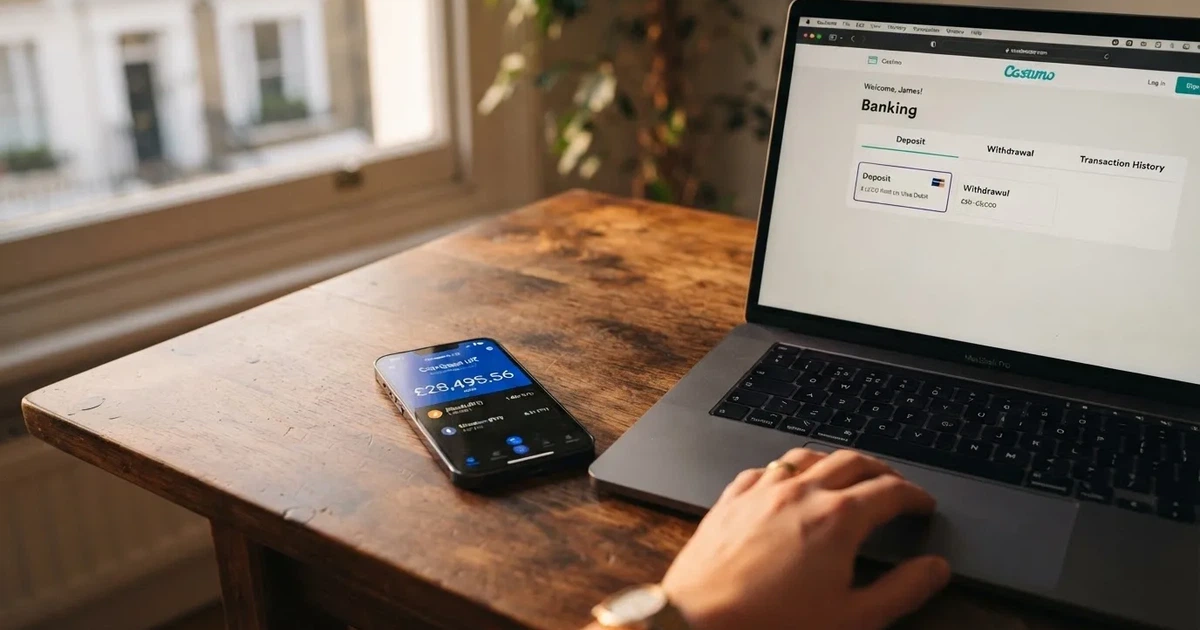
The point of writing this out is not to declare BNB casinos off-limits. Plenty exist, run from Curaçao, Anjouan or other offshore jurisdictions, and they are accessible to British players in the sense that nothing in the Gambling Act 2005 outlaws a player from visiting one. What the player gives up is the layer of protection the Commission mandates: GAMSTOP self-exclusion, the £5 stake ceiling on slots for adults aged 25 and over, the financial vulnerability check at £150 of net deposits in a rolling 30 days, and the route into the Commission’s complaints process if a licensed operator fails to pay out. Those are not marketing extras. They are the substance of what a British licence is.
What follows ranks ten Gambling Commission-licensed casinos as they appear on the public register, names their licence holder and remote casino operating licence number, and asks the question this page exists to answer: does any of them accept Binance Coin? It does not. It then sets out what an offshore BNB casino does instead, what the regulatory ceiling above it is, and what a player standing at the boundary should weigh before stepping across it.
Currency and licence register snapshot: data is current as of 23 September 2026, checked against the Gambling Commission’s public register of gambling businesses.
Table of Contents
- The comparison at a glance: ten licensed UK casinos and their BNB status
- Why no British-licensed casino takes Binance Coin
- The licensed landscape the comparison sits inside
- What a BNB casino looks like when it is not licensed in Britain
- What a player gives up by leaving the licensed perimeter
- What Binance Coin itself is, and what holding it costs in tax
- What it costs an operator to clear a bonus at the new cap
- Reading the register and reading an offshore casino
- Where the comparison actually leaves a reader
- Frequently asked questions about BNB casinos in the UK
The comparison at a glance: ten licensed UK casinos and their BNB status
The table below lists every featured operator with its licence holder, its Gambling Commission remote casino operating licence number, the status of its domain on the public register, and whether the operator supports Binance Coin. The licence number is what the Commission uses to bind a domain to a licence account; the format repeats the six-digit account number, marks remote play with an “R”, and ends with a sequence and suffix unique to that licence.
| Brand | Licence holder and GB remote casino licence | Domain status on the register | Subject support |
|---|---|---|---|
| Grosvenor Casinos | Rank Interactive (Gibraltar) Limited · 057924-R-334666-005 | Active | — |
| Virgin Games | Gamesys Operations Limited · 038905-R-319430-022 | White-label | — |
| Betway | Betway Limited · 039372-R-319367-029 | Active | — |
| PokerStars | Stars Interactive Limited · 039108-R-319334-026 | Active | — |
| Betfair | PPB Games Limited · 039411-R-319335-010 | Active | — |
| Paddy Power | PPB Games Limited · 039411-R-319335-010 | Active | — |
| 32Red | Platinum Gaming Limited · 045322-R-324275-019 | Active | — |
| Betfred | Petfre (Gibraltar) Limited · 039544-R-319290-010 | Active | — |
| Casumo | Recro Limited · 061549-R-336718-002 | Active | — |
| bet365 | Hillside (UK Gaming) ENC · 055149-R-331499-004 | Active | — |
An em dash in the Subject support column is the honest answer research gave. No operator in this list advertises Binance Coin as a deposit method on its public-facing banking page, and the public register carries no licensed brand that does. Two of the ten — Betfair and Paddy Power — sit under the same licence account at PPB Games Limited, which is how a single Commission licence can cover multiple consumer brands. Virgin Games is a white-label, meaning it trades under another company’s licence rather than holding its own. The other seven run as active domains directly tied to their licence holder.
The shape of the table is the page’s main finding before any prose is read: the rightmost column is empty because the support simply is not there. A reader looking for BNB is not looking at a row of this table — they are looking at a different market, run on a different licence, against a different set of rules.
Why no British-licensed casino takes Binance Coin
A Gambling Commission licence is permission to take bets from people in Great Britain under conditions the Commission writes and enforces. Those conditions sit in the Licence Conditions and Codes of Practice (LCCP), the social responsibility code, and the Remote Technical Standards, and they shape how every pound moves through the site. The Commission’s published position on blockchain technology and crypto-assets is that licensed gambling operators must notify it of any change in payment methods before introducing crypto-asset acceptance, must review their anti-money-laundering risk assessment before doing so, and must treat crypto-funded play as a high-risk indicator requiring enhanced customer due diligence. Enhanced due diligence is the opposite of the streamlined deposit a BNB transfer is supposed to be; the two ideas do not coexist comfortably.

There is also a layer above the Commission’s own rules. UK firms carrying out cryptoasset activities — exchanges that deal in tokens such as Binance Coin, custodian wallet providers, the intermediaries a casino might route through — must register with the Financial Conduct Authority under the Money Laundering Regulations. Since the FCA became the anti-money-laundering supervisor of UK cryptoasset businesses on 10 January 2020, it has received 417 registration applications; 68 (17% of determined applications) have been registered and 263 (67%) have been withdrawn. A casino taking BNB deposits is one transaction away from that supervised perimeter, and a Commission-licensed operator has to be able to show it knows who sits on the other end of the deposit. BNB transfers, settled on BNB Smart Chain under pseudonymous wallet addresses, do not provide that by default.
The FCA’s new authorisation regime under the Financial Services and Markets Act opens for applications on 30 September 2026, which will tighten the perimeter further. None of the ten operators on this list has chosen to bridge that gap yet, and the public register shows no other GB-licensed casino that has either. The reason is not editorial caution. It is the gap between how a regulated payment rail works and how a public blockchain transfer works.
The licensed landscape the comparison sits inside
The Commission’s public register, the public document from which the table above is taken, listed 139 businesses holding an active remote casino operating licence on 18 September 2026. The same register’s domain list, which binds each website to the licence account that runs it, held 1065 active and 361 white-label domain entries on the same date.
| Regulatory matter | Status / Detail |
|---|---|
| Commission licensees | 139 businesses |
| Active domains | 1065 |
| White-label domains | 361 |
| Operator base | Great Britain |
A white-label site trades under another company’s licence rather than holding its own, which is why Virgin Games carries the licence number of Gamesys Operations Limited rather than a Virgin entity of its own. The active count is what a player sees when they search the register: roughly 140 licensees, each running one or more consumer-facing domains, none of which advertises Binance Coin acceptance.
That count is the whole licensed online casino market of Great Britain at the date of this snapshot, minus the Northern Ireland market which sits under separate legislation. The comparison on this page is built inside that perimeter by design: every brand below is on the register, every brand must take part in GAMSTOP, every brand is subject to the social responsibility code. The comparison also assumes nothing about what those brands offer beyond their licence status and their payment methods. It does not score games, does not rank welcome offers, and does not name a best casino for a British reader — none of that is the subject of this page.
Grosvenor Casinos
Grosvenor Casinos is listed on the Gambling Commission register as an active domain of account 57924, Rank Interactive (Gibraltar) Limited, holder of licence 057924-R-334666-005. The “R” marks a remote, online licence; the six leading digits repeat the licence holder’s account number. Rank Interactive sits among the long-established land-based operators that brought their high-street casino business online under Commission licensing, and its banking page does not list Binance Coin as a deposit method. For a player whose priority is a Commission-licensed site with a familiar brand behind it, Grosvenor is exactly what the register says it is; for a player whose priority is BNB deposits, it is a closed door.
Virgin Games
Virgin Games is listed on the public register as a white-label domain of account 38905, Gamesys Operations Limited, holder of licence 038905-R-319430-022. The white-label status is the relevant detail: Virgin Games does not hold its own licence, it operates under Gamesys’s. The consequence for a player is that any complaint about Virgin Games goes to Gamesys Operations Limited as the licence holder, and the Commission’s enforcement powers run against that company. Virgin Games does not advertise BNB acceptance on its public banking page. The white-label relationship determines regulatory responsibility, but BNB deposits are not among the accepted payment methods.
Betway
Betway is listed as an active domain of account 39372, Betway Limited, holder of licence 039372-R-319367-029. Betway runs a sportsbook and an online casino under the same account, and its deposit page is built around debit cards, e-wallets and the bank transfer methods typical of a Commission-licensed operator. The site does not list BNB. As a combined sportsbook and casino, it maintains a standard set of deposit options, excluding cryptoassets entirely.
PokerStars
PokerStars is listed as an active domain of account 39108, Stars Interactive Limited, holder of licence 039108-R-319334-026. The .uk domain is the one tied to the Commission’s licence; the international PokerStars operations sit outside it. Stars Interactive runs poker as its headline product and a casino alongside it, neither of which takes Binance Coin. For a player whose centre of gravity is poker, PokerStars is the licensed option; for a player whose centre of gravity is a BNB deposit, it is not on the menu.
Betfair
Betfair is listed as an active domain of account 39411, PPB Games Limited, holder of licence 039411-R-319335-010. Betfair’s licence is shared with Paddy Power, which appears two rows below. PPB Games is the Flutter Entertainment plc subsidiary that holds the Commission licence covering both consumer brands, which is why two well-known names carry one licence number. Betfair does not accept BNB. The shared licence is a useful reminder that “licensed brand” and “independently licensed company” are different things — for a player weighing Commission protection, what matters is the licence account, not the brand on the page.
Paddy Power
Paddy Power is listed as an active domain of account 39411, PPB Games Limited, holder of licence 039411-R-319335-010 — the same licence account and number that covers Betfair. The two brands share a Commission licence because they share an owner; the Commission’s register binds them to a single accountable licence holder. Paddy Power’s deposit methods are the standard set. BNB is not among them. The licence held by PPB Games Limited applies here; those seeking BNB deposits will not find them available.
32Red
32Red is listed as an active domain of account 45322, Platinum Gaming Limited, holder of licence 045322-R-324275-019. 32Red has been one of the better-known casino-only brands under Commission licensing for years, and its deposit page follows the regulated-banking convention. BNB is not listed. As a casino-only brand, it strictly adheres to regulated banking methods, which currently precludes the use of Binance Coin.
Betfred
Betfred is listed as an active domain of account 39544, Petfre (Gibraltar) Limited, holder of licence 039544-R-319290-010. Like Betway, Betfred runs sportsbook and casino under one Commission licence account, with deposit methods set by the regulated-banking convention. BNB is not accepted. The platform’s deposit architecture is geared towards traditional payment rails, leaving no room for BNB integration.
Casumo
Casumo is listed as an active domain of account 61549, Recro Limited, holder of licence 061549-R-336718-002. Casumo has positioned itself around gamified play and a casino-only offering, both of which sit under Commission licensing. Its deposit methods follow the regulated-banking convention; BNB is not listed. For a player who values the gamification Casumo built its name on, the licence is in place; for a player who values BNB deposits, the token is not.
bet365
bet365 is listed as an active domain of account 55149, Hillside (UK Gaming) ENC, holder of licence 055149-R-331499-004. bet365 is the largest single name on this list by volume of British customers and runs sportsbook, casino and poker under the same Commission licence. Its deposit methods are the regulated-banking set; BNB is not listed. For a player who wants a single Commission-licensed account covering everything bet365 covers, the licence is what the register shows; for a player who wants BNB, the payment page is what the operator shows.
What a BNB casino looks like when it is not licensed in Britain
Outside the Commission’s perimeter, BNB casinos look much like the licensed product with one structural change: the deposit is a token transfer rather than a card payment. A player funds an account by sending BNB from a personal wallet to a wallet address the casino publishes; the casino credits the account once the transfer confirms on BNB Smart Chain. The chain runs on a proof-of-stake consensus mechanism and settles blocks in a few seconds, which is what gives BNB casinos the fast settlement they advertise.
BNB itself launched in July 2017 as an Ethereum-based token issued by the Binance exchange, raised about $15 million through an initial coin offering the same year, and migrated to BNB Smart Chain when the chain launched in September 2020 (later rebranded from “Binance Smart Chain” to “BNB Smart Chain” in 2022). Its maximum supply is capped at 200,000,000 tokens. By 2021 Binance Coin had the third-highest market capitalisation among cryptocurrencies. None of that history tells a player whether a given BNB casino will pay out — it tells them what the token they are sending is.
The identity checks on an offshore BNB casino are the variable a player cannot read off the homepage. Some run full KYC, some run KYC only at withdrawal, some run no KYC at all and rely on the wallet address as identity. A licensed British casino has no such discretion: since 7 May 2019 the LCCP has required name, address and date of birth to be verified before the first deposit or any play. An offshore site that runs no KYC is making a deliberate choice, and the player has no way to know in advance what that choice is until they try to withdraw.
The turnover band under the new wagering cap
The Commission capped wagering requirements at 10x and banned mixed-product bonuses on 19 December 2025. That cap applies to bonuses at licensed British casinos. A £100 welcome bonus, the kind of offer that used to carry a 40x wagering multiple, now carries a £1,000 turnover requirement at most. At a £5 slot stake per spin — the maximum stake per game cycle for players aged 25 and over, in force since 9 April 2025 — that is 200 spins. At 2.5 seconds per spin, the minimum interval a licensed slot may run, that is roughly 8 minutes and 20 seconds of continuous play. None of this arithmetic reaches the offshore BNB casino, which runs on its own house rules; the comparison is only useful as a benchmark for what the licensed side now requires.
For the offshore BNB casino, a bonus of the same £100 with a 40x wagering multiple would carry a £4,000 turnover requirement — four times what the licensed cap allows. At a £1 spin, that is 4,000 spins; at 2.5 seconds per spin, that is nearly 2 hours and 47 minutes. At £5 per spin, the same £4,000 turnover is 800 spins and about 33 minutes. The wagering multiple the operator sets is the single largest variable in how long a bonus takes to clear, and the 10x cap is what stops licensed sites from running the higher figures.
A useful working band, then, is £1,000 to £4,000 of required turnover per £100 of bonus, depending on whether the casino sits under the 10x cap or not, with play time running from minutes to a few hours. The arithmetic is the player’s estimate of what the bonus costs in time, not in money. The licensed side wins on cost every time, which is exactly the consumer protection the cap was written to deliver.
What a player gives up by leaving the licensed perimeter
The licence is not a logo. It is a list of obligations the Commission enforces, and each one is something a player on an offshore BNB casino does not have.
The stake ceiling
Online slots at a licensed British casino carry a maximum stake of £5 per game cycle for adults aged 25 and over, in force since 9 April 2025, and £2 per spin for 18-24-year-olds, in force since 21 May 2025. The limits apply per game cycle, which is the unit the Commission’s Remote Technical Standards defines; in practical terms it means no spin costs more than £5 at a licensed slot. An offshore BNB casino sets its own stake ceiling, which can run into hundreds of pounds per spin. The £5 cap is what stops a single spin from becoming a single mistake; the absence of the cap is what makes a BNB casino look attractive to a high-stakes player, and what makes a bad session at one cost more than it would at a licensed site.
The deposit and reality-check architecture
There is no state-set deposit or loss ceiling in Britain; instead, licensed operators must prompt a customer to set a financial limit before the first deposit, a requirement in force since 31 October 2025. Auto-play is banned since 31 October 2021, slot spins may not be faster than 2.5 seconds, and “losses disguised as wins” — slot animations that celebrate a net loss as if it were a win — are banned. Each rule stops a specific way an operator used to extract value from players who were not paying close attention. An offshore BNB casino is under no Commission supervision and implements none of these by default; some do, most do not.
GAMSTOP and the self-exclusion route
GAMSTOP is the national online self-exclusion scheme and is a mandatory condition of every online licence since 31 March 2020. Self-exclusion periods are six months, one year or five years and cannot be cancelled early. A player who has registered with GAMSTOP and then tries to open an account at a licensed British casino is blocked at the verification stage. The same player walking onto an offshore BNB casino walks straight through, because the casino is not part of GAMSTOP and has no access to its database. This is the single sharpest difference between a licensed site and an offshore one, and the one a player trying to control their own play cannot afford to lose.
The financial vulnerability check
Since 28 February 2025, licensed operators run a financial vulnerability check at £150 of net deposits in a rolling 30-day window, using public data only. The check is a flag, not a refusal: it tells the operator to look more closely at the customer’s account and consider an interaction. Wider financial risk assessments have been announced but are not yet in force. An offshore BNB casino has no comparable check by default. A player depositing through BNB is, by definition, outside the £150 trigger at the licensed site they cannot reach — but the comparison runs the other way too: a player who has set a self-exclusion at a licensed site and then opens an offshore BNB casino account is in exactly the situation GAMSTOP was built to prevent.
The complaints route
If a licensed operator fails to pay out, the player has a route into the Commission and an approved Alternative Dispute Resolution (ADR) provider. The Commission can enforce against the licence holder, which is why Betfair and Paddy Power sharing one licence account at PPB Games Limited still gives a player a single accountable body to complain to. An offshore BNB casino operating under a Curaçao or Anjouan licence has a complaints route through its own regulator, which is real but not equivalent. There is no Commission route into an offshore site, and no Commission power to make it pay.
What Binance Coin itself is, and what holding it costs in tax
HMRC does not treat cryptoassets such as Binance Coin as currency. It treats them as property, which means individuals owe Capital Gains Tax when they sell or otherwise dispose of them — including swapping BNB for another token, spending it, or gifting it — and Income Tax when they receive them, for example from staking rewards. The same treatment applies to Bitcoin and to other tokens the same player might hold in the same wallet. The tax position is settled; what changes year to year is the rate band and the annual exempt amount, which sit outside the scope of this page.
The Commission’s own framing of cryptoassets is that they are a high-risk payment method. It expects licensed gambling operators to treat crypto-funded play with enhanced customer due diligence, as noted in the Commission’s policy statement. That is the Commission’s view, not a player-facing rule, but it is the view that produces the empty right-hand column in the table above. The operator side and the regulator side have both looked at BNB and reached the same conclusion about how it fits inside a Commission-licensed product.
What it costs an operator to clear a bonus at the new cap
The arithmetic of bonus clearing, which used to be opaque, is now small enough to do in a sentence. Take a £100 bonus at the licensed 10x cap: turnover required is £1,000. At the £5 slot stake ceiling, that is 200 spins. At 2.5 seconds per spin, that is 8 minutes and 20 seconds of continuous play. A £100 bonus at the old 40x multiple would have meant £4,000 of turnover, 800 spins at £5, and roughly 33 minutes of play. The cap does not stop a casino from offering a bonus; it stops the casino from asking the player to grind for hours to clear it.
For an offshore BNB casino, the same arithmetic runs on the operator’s own numbers, which the player can rarely check in advance. A 40x multiple on a £100 bonus with a £5 stake ceiling is the same 800 spins; without a stake ceiling, the player can compress it into 80 spins at £50 each, which is also the way the time goes from 33 minutes to under 4 minutes. Faster play is faster loss, which is why the licensed stake ceiling exists, which is why an offshore BNB casino does not have one by default.
The expected loss on a £100 bonus at a 96% RTP slot is roughly £40 of the £1,000 turnover — 4% of turnover, which is the house edge in that product. The same calculation on a 4,000-turnover bonus is £160. The cap saves a player £120 of expected loss per £100 of bonus at a 96% RTP slot, and more at lower RTPs. That is the consumer-protection arithmetic, in one figure, and it is what the 10x cap was designed to deliver.
Reading the register and reading an offshore casino
The Gambling Commission’s public register is the whole test of whether a brand holds a Commission licence, and it can be searched online and downloaded in full as CSV or Excel files. A reader who wants to check a brand is on the register can do so directly: the licence number, the licence holder and the domain status are all public. The register’s domain list records each website against the licence account that runs it, with a status of Active, Inactive or White Label. An offshore BNB casino does not appear on this register because it does not hold a Commission licence; that is the test, and the absence is the answer.
The Commission can disrupt illegal sites — cease-and-desist notices, search-engine delisting, payment and hosting referrals — but does not have the power to block them at the ISP level. That is why offshore BNB casinos remain reachable from a British IP address. The Commission treats the offence as lying with the operator providing gambling to people in Great Britain without a licence, under section 33 of the Gambling Act 2005; no penalty is aimed at the player. The player is the one who decides whether to cross the line, and the only thing the Commission can do is make sure the licensed side of the line is the safer side.
Where the comparison actually leaves a reader
A British player who wants to deposit with Binance Coin does not have a licensed option. None of the ten brands in the table above takes BNB; none of the other 129 or so Commission-licensed businesses on the public register takes it either. The licensed comparison this page set out to build does not have a BNB column to populate.
What the page does have is a clear picture of what the licensed alternative looks like: ten named brands, each tied to a Commission licence, each running an active or white-label domain, each under the same social responsibility code. A reader who decides the protection is worth more than the convenience of a BNB deposit has the names to choose from. A reader who decides the convenience is worth more has the registered perimeter to step across, and the list of protections they leave behind.
The arithmetic on the bonus cap and the stake ceiling is small enough to do in a sentence, and the consumer protection it delivers is not a slogan — it is the difference between £40 of expected loss on a £100 bonus and £160 of expected loss on the same bonus, and the difference between a £5 maximum spin and a spin the operator sets. The Commission’s register is the test of whether a brand is inside that frame. The choice of whether to be inside it is the player’s.
Frequently asked questions about BNB casinos in the UK
Is Binance Coin accepted at any UK-licensed casino?
No. None of the Gambling Commission-licensed casinos on the public register, including the ten featured on this page, advertise Binance Coin as a deposit method. The Commission’s position on cryptoassets is that licensed operators must treat crypto-funded play as a high-risk indicator requiring enhanced customer due diligence, which sits uneasily with the streamlined settlement a BNB transfer is designed for.
What identity checks apply at an offshore BNB casino?
It depends on the operator. Some offshore BNB casinos run full KYC at deposit, some run it only at withdrawal, some run no KYC at all and rely on the wallet address as identity. There is no Commission-licensed benchmark for them to meet because they do not hold a Commission licence. A licensed British casino, by contrast, must verify name, address and date of birth before the first deposit or any play, a requirement in force since 7 May 2019.
Does a casino that accepts Binance Coin always sit outside UK licensing?
In practice, yes. A casino taking BNB deposits is settling transactions on BNB Smart Chain, outside the regulated payment rails a Commission licence assumes. The Commission’s published position treats cryptoassets as a high-risk payment method, and no GB-licensed operator on the public register advertises BNB acceptance. The two positions — taking BNB and holding a Commission licence — do not currently meet on any licensed brand.
What self-exclusion protection is lost on a BNB-only casino?
GAMSTOP, the national online self-exclusion scheme, is a mandatory condition of every Commission online licence since 31 March 2020, with periods of six months, one year or five years that cannot be cancelled early. An offshore BNB casino is not part of GAMSTOP and has no access to its database. A player who has self-excluded at a licensed site and then opens an offshore BNB account walks straight through, which is the exact situation GAMSTOP was designed to prevent.
How does a BNB deposit differ from a bank transfer at a UK casino?
A BNB deposit settles on BNB Smart Chain under a pseudonymous wallet address, typically in seconds, with no bank in the chain and no card-issuer identity check. A bank transfer at a licensed UK casino runs through the regulated banking system, with the operator able to identify the customer and the bank able to apply its own checks. The licensed side is slower and more intrusive; the offshore side is faster and lighter, and that is the trade the player is making.
Why do most Gambling Commission-licensed casinos not accept cryptocurrency such as BNB?
Two reasons that work together. The Commission has classed cryptoassets as a high-risk payment method and expects licensed operators to treat crypto-funded play as a high-risk indicator requiring enhanced customer due diligence. The FCA, which supervises UK cryptoasset businesses under the Money Laundering Regulations, requires cryptoasset firms to register before starting business — a perimeter a casino taking BNB deposits is one transaction away from. The combination pushes licensed operators away from accepting tokens such as BNB, which is why no GB-licensed casino on the public register advertises it.
Prepared by the casinoratingsuk editorial staff.