
Welcome bonuses at UK-licensed casinos in 2026: how the offer converts to withdrawable cash
The welcome bonus at a UK-licensed casino is no longer the wide-open marketing figure it was a few years ago. Since 19 December 2025, a wagering requirement in Great Britain cannot exceed ten times the bonus amount, and the offer’s headline sum is now read against a ceiling set by the Gambling Commission rather than by the operator. On 18 September 2026 the Commission’s public register listed 139 businesses holding an active remote casino operating licence, with 1065 active and 361 white-label domain entries recorded against those accounts. Those numbers are the framework for any welcome offer a British player sees, including the Highbet welcome bonus and every alternative a comparison page lines up beside it.
Data current as of 23 November 2026 according to the Gambling Commission register.
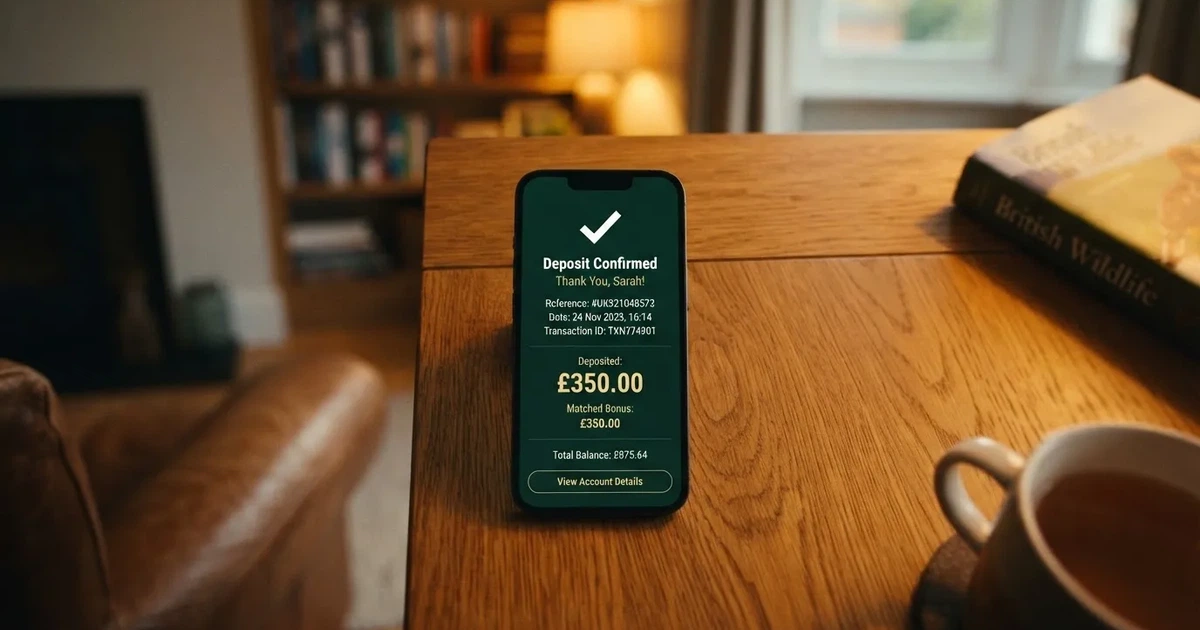
A welcome bonus is a marketing match between the casino and the new account. The casino credits bonus funds, sometimes alongside free spins, in exchange for a first deposit of qualifying cash; the bonus cannot be withdrawn until a defined amount has been wagered through eligible games. The size of that required turnover, the game weighting that determines how much each spin counts, and any cap on cashout from the bonus are the three figures that decide whether the offer is worth anything at all once the marketing has worn off.
This page walks through what a welcome bonus actually does in 2026, the rules the Gambling Commission now applies to every licensed offer, the responsible-gambling framework that sits behind the offer, the place of crypto and no-deposit variants, payment methods that affect how a bonus is paid and cleared, and the comparison of ten UK-licensed brands taken from the Commission’s own register. The aim is consequence: every shelf ends with what the rule costs the player who meets it.
Table of Contents
- How a welcome bonus works in 2026
- The legal and regulatory frame
- Responsible gaming behind the offer
- Crypto and anonymity at UK-licensed casinos
- Payments and payout speed
- Welcome bonuses and free spins
- The 10x wagering cap in practice
- Comparing UK-licensed welcome bonuses in 2026
- What the comparison leaves out
- Frequently asked questions about welcome bonuses at UK-licensed casinos in 2026
How a welcome bonus works in 2026
A welcome bonus has three parts: an entry trigger, a clearing condition, and a withdrawal ceiling. The entry trigger is normally a first deposit of at least £10, sometimes £20, with the offer expressed as a percentage match up to a stated maximum — 100% up to £100, for instance. The clearing condition is the wagering requirement: the bonus amount must be staked a set number of times before the resulting balance becomes withdrawable. The withdrawal ceiling is either the absence of a cap, a maximum cashout figure for bonus-derived winnings, or a free-spins cap on winnings from a bundled spin package.

Before 19 December 2025, a wagering requirement of thirty, forty, even fifty times the bonus was routine at UK-licensed brands. That ceiling is gone. The Commission set the cap at ten times the bonus amount, and it applies to every casino operating under a British licence. Mixed-product bonuses — the kind that paid a sports free bet alongside casino spins — are also banned. What is left is simpler to read: a stated match, a stated wagering multiple up to ten, and the rest is in the small print.
The clearing process itself is mechanical. A £50 bonus at a 10x requirement means £500 of qualifying wagers. Game weighting usually assigns 100% to slots, 10-20% to table games, and 0% to a long list of excluded titles. On a slot at full weighting, that £500 clears at the rate of the stake per spin. A £1 stake at 2.5 seconds per spin, the slowest allowed under Commission rules since 31 October 2021, would clear the requirement in roughly twenty-one minutes of continuous play — but no bonus clears that fast in practice because stake limits, eligible games and time-outs slow the process down.
A bonus is a marketing tool, not a gift. The matched funds are the casino’s money until the wagering is complete, and the player cannot withdraw them. What the player can withdraw is winnings earned while playing through the bonus, subject to any cashout cap the terms set. Reading the cap before claiming is the only honest way to know what the offer is worth.
The legal and regulatory frame
Every welcome offer a British player sees in 2026 sits on a Gambling Commission licence. The Commission licenses under the Gambling Act 2005, which covers Great Britain (England, Scotland and Wales) but not Northern Ireland, and since the Gambling (Licensing and Advertising) Act 2014 any operator taking customers in Great Britain has needed a Commission licence regardless of where it is incorporated. A Curaçao or Malta registration is not a substitute. The Commission’s public register is the test of whether a brand is licensed, and the register can be searched online or downloaded in CSV or Excel form.
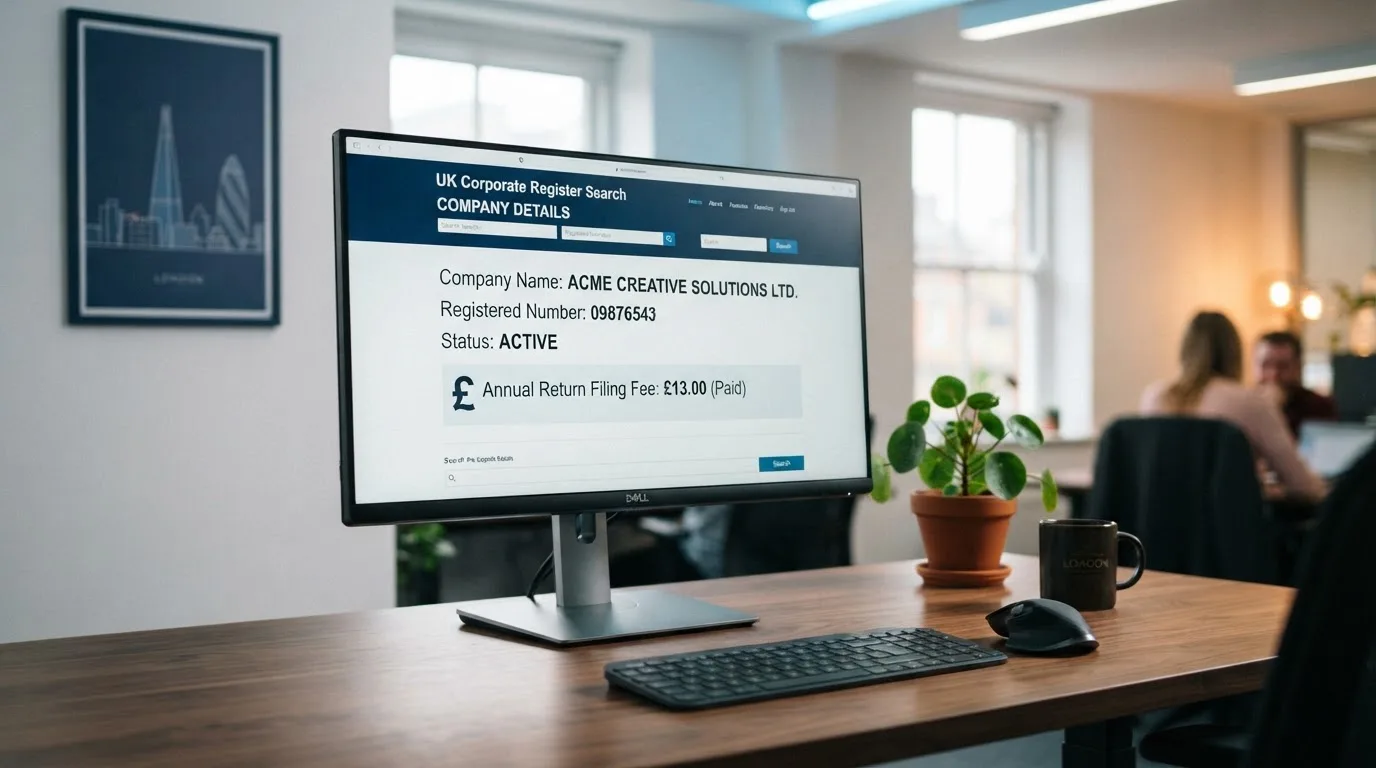
MrQ is listed on the Gambling Commission register under operating licence 060629-R-337532-004.
The register is more than a list of names. Each remote casino licence number has the form account-R-number-suffix, where the first six digits are the licence holder’s account number and the “R” marks the licence as remote. The domain list pairs every website the Commission knows about with the licence account that runs it, and tags each domain Active, Inactive or White Label. A white-label site trades under another company’s licence; it is not itself the licence holder. On 18 September 2026, the register held 1065 active and 361 white-label domain entries against 139 active licence accounts.
The licence is the licence-holder’s, not the brand’s. Ladbrokes, Coral and Gala Bingo all sit under LC International Limited, account 54743, with one remote casino licence covering all three. Treating them as independent operators is a common mistake a comparison page makes by lining up their welcome offers side by side as if each were its own house.
Beyond the licence, the Commission sets the rules the bonus has to clear within. They run as follows:
- Stake limits per spin. £5 for players aged 25 and over (from 9 April 2025), £2 for players aged 18 to 24 (from 21 May 2025). The limit is per game cycle, not per spin button press, and applies to every online slot.
- No auto-play. Since 31 October 2021, auto-play is banned. A spin may not complete faster than 2.5 seconds.
- No credit-card gambling. Since 14 April 2020, credit cards cannot be used to fund any gambling in Great Britain, including credit cards routed through e-wallets. Debit cards and bank transfers are unaffected.
- Wagering cap. Since 19 December 2025, no wagering requirement may exceed 10x the bonus amount. Mixed-product bonuses are banned.
- Identity and age checks. Name, address and date of birth have been verified before the first deposit or any play since 7 May 2019. Anonymous play is not possible at a licensed site.
- Deposit prompts. Since 31 October 2025, operators must prompt a customer to set a financial limit before the first deposit. There is no state-set deposit or loss ceiling, but the operator cannot let a new account skip the prompt.
The 10x cap is the single most consequential of these rules for the welcome bonus. A £200 matched bonus at 10x is £2,000 of qualifying turnover; at the 50x figure some offshore brands still publish, the same bonus would be £10,000 of turnover before the player sees a penny. On a £1 slot stake at the 2.5-second floor, that is a 5,000-spin gap between the two offers, or roughly three and a half hours of continuous play at the legal spin rate. The cap closes most of that distance.
The credit-card ban shapes how the bonus is funded. A player who only carries credit cards cannot deposit at a UK-licensed casino at all, and an e-wallet that lets the player top it up with a credit card runs into the same prohibition. Debit cards, bank transfers, and e-wallets loaded from a debit source are the realistic routes to a welcome bonus in 2026. The Commission’s 2018 estimate that around 800,000 UK consumers used credit cards to gamble, and its finding that 22% of online gamblers who used credit cards were classed as problem gamblers, are the figures behind the rule.
Responsible gaming behind the offer
A welcome bonus is the start of a relationship between the casino and the player, and the responsible-gambling framework is the part of that relationship the bonus cannot talk its way out of. GAMSTOP, the national online self-exclusion scheme, has been a mandatory condition of every online licence since 31 March 2020. A player on GAMSTOP cannot deposit at a UK-licensed casino and cannot claim a welcome bonus. Self-exclusion periods are six months, one year or five years, and cannot be cancelled early. The scheme covers every brand in this comparison and every other GB-licensed brand the Commission lists.
Financial vulnerability checks run at £150 in net deposits over a rolling 30-day window using public data only, in force since 28 February 2025. The check does not read a bank statement; it uses credit-reference and public-records data to flag markers that warrant a closer look. The Commission’s wider financial-risk assessments have been announced but are not yet in force. The point of the £150 trigger is to put a soft checkpoint inside what would otherwise be a smooth path from first deposit to a bonus clear.
The National Gambling Helpline (run by GamCare) and GambleAware are the two support channels the Commission’s framework points a player toward. Neither charges for the call; both are reachable from inside any licensed casino’s safer-gambling pages. The GamCare number and the GambleAware website are the only two organisations named on the Commission’s own signposting.
A trusted welcome offer, in the sense the responsible-gambling shelf uses the word, is one a player has checked against their own planned budget before claiming. The bonus’s wagering requirement is the largest single number on the page, and clearing it always costs more than the headline match looks. The £2,000 turnover on a £200 bonus at 10x is real money that has to pass through eligible games before the bonus balance becomes withdrawable, and on slots the player is paying a house edge on every spin. A 96% RTP, a common figure for a modern slot, takes £80 of that £2,000 in expectation. The arithmetic does not punish the player who reads it; it rewards them for knowing what they are paying to clear the offer.
The Commission has no power to block an unlicensed site at the ISP level. What it can do is issue cease-and-desist notices, refer sites to payment and hosting providers for disruption, and pursue search-engine delisting. None of that reaches the player directly; the player who lands on an offshore brand loses the protections the licence is supposed to bring — no GAMSTOP, no Commission complaints route, no approved alternative dispute resolution. The penalty is not aimed at the player; the loss is the absence of the framework. The Commission puts it bluntly: providing gambling to people in Great Britain without a licence is an offence under section 33 of the Gambling Act 2005.
Crypto and anonymity at UK-licensed casinos
A crypto-funded welcome bonus and a no-deposit welcome bonus are both topics with real player interest, and both sit awkwardly inside a UK-licensed frame. The Commission’s identity-check rule has been in force since 7 May 2019: name, address and date of birth are verified before the first deposit or any play. Anonymous play is not possible at a licensed site. That single line of the framework closes the door on every crypto casino that markets itself as anonymous, and on every no-deposit bonus that asks only for an email address and lets the player straight in.
The crypto cluster is real for offshore brands and largely imaginary for the UK-licensed set. Bitcoin, Ether and stablecoin deposits at a licensed UK casino are possible where the operator runs an FCA-registered payments partner, but the operator still has to verify the depositing player against the Commission’s rules. A crypto deposit does not exempt the bonus from the 10x wagering cap. It does not exempt the player from the £2 or £5 stake limit on slots. It does not exempt the casino from GAMSTOP. The crypto angle survives at a UK-licensed brand only as a payment rail; the licence’s rules apply to the deposit regardless of how it is funded.
A no-deposit welcome bonus is closer to the standard frame. The Commission’s rules do not ban no-deposit offers; they cap the wagering requirement at 10x on any bonus credited, including one credited without a deposit. A small no-deposit bonus — £5 or £10 — at 10x wagering is a £50 or £100 turnover requirement before the winnings convert, and that figure is far more realistic for a player to clear than the offshore equivalent at higher multiples. The catch is verification. A no-deposit bonus still requires the player to pass the Commission’s identity checks before any winnings can be withdrawn, and a player who fails verification at that point loses the bonus balance and any winnings from it. The offer is genuine; the framework is the same as for a deposit-funded bonus.
The offshore contrast is the part the marketing often skips. A crypto casino licensed in Curaçao or another offshore jurisdiction can offer a higher bonus and a higher wagering multiple and skip the identity check, and the marketing is built around those three gaps. What it cannot offer is the protections the GB licence brings: no GAMSTOP, no Commission complaints route, no approved ADR, no recourse if the operator declines to pay. The Commission’s enforcement works against the operator, not the player, and the player who plays unlicensed is the one paying the cost of the absence.
Payments and payout speed
Payment method is the layer most players meet first, and the one the Commission’s rules shape most directly. Since 14 April 2020, credit cards cannot be used to fund any gambling in Great Britain. Debit cards, bank transfers, and e-wallets loaded from a debit source are the realistic deposit routes. Apple Pay is a special case: it is a wallet that holds tokenised card data, and the transaction authenticates through Face ID or Touch ID rather than through a card number — but the underlying card is still the funding source, and a credit card in Apple Pay remains a credit-card deposit for the purposes of the ban.
Bank transfers within the UK typically move through the Faster Payments Service, which launched in 2008 and is operated by Pay.UK. The service runs 24 hours a day, seven days a week, and most payments arrive instantly or within a couple of minutes; transfers can occasionally take up to two hours. The Faster Payments scheme sets a £1,000,000 per-transaction limit, though individual banks can and do impose lower limits on their customers. The Bank of England oversees the system and provides final settlement but is not itself a direct participant. For a casino withdrawal, Faster Payments is the route that delivers a same-day payout where the operator is willing to release funds promptly.
The Commission’s bonus rules do not set a payout time, but they do require the operator to verify the player before the first withdrawal — name, address, date of birth, and since 28 February 2025 the financial-vulnerability check at £150 in net deposits over a rolling 30 days. A withdrawal before verification is held until the check is complete. A withdrawal after verification on a cleared bonus is the path the framework is built around, and the time it takes is the operator’s own policy plus the payment rail’s own settlement window.
Apple Pay’s mechanics are worth a sentence because they illustrate what tokenisation does at a checkout. Apple Pay replaces the actual card number with a device-specific tokenised Device Primary Account Number and generates a dynamic security code for each transaction; in-store payments use near-field communication with contactless terminals; on an iPhone with Face ID, in-store purchases are authenticated by double-clicking the side button, on a Touch ID model by double-clicking the Home button. For an online casino, the tokenisation is invisible to the player: the deposit button charges a tokenised card, the bank approves the underlying debit, and the casino never sees the card number itself. Apple itself states that a supported card from a participating issuer is required and that Apple Pay is not available in all markets — for a UK player, the relevant question is whether the issuing bank supports Apple Pay and whether the underlying card is a debit card, not a credit card.
AstroPay is a different shape: an e-money institution rather than a card tokeniser. AstroPay was founded in 2009 and is headquartered in Uruguay; the UK entity, Larstal Limited, is authorised by the Financial Conduct Authority under the Electronic Money Regulations 2011. AstroPay operates as a global digital wallet offering online payments, virtual and physical debit cards, and peer-to-peer transfers, and serves users across markets including Argentina, Australia, Brazil, Canada, Colombia, Denmark, Spain, the United Kingdom, the United States and Uruguay. For a UK player, the relevant detail is that the FCA authorisation sits underneath the e-money licence, which means customer funds are held under EMI rules rather than as a bank deposit. AstroPay spun off its payment-processing business, dLocal, as a separate company in 2016.
The shape of the question, for a player comparing welcome bonuses, is which method funds the deposit and clears the withdrawal fastest. A debit card on Faster Payments is the typical same-day path. Apple Pay routes through a debit card and inherits that path. AstroPay deposits and withdrawals move on the e-money rails, and the operator’s processing time still applies. None of these methods changes the 10x wagering cap. None changes the GAMSTOP check. None changes the stake limit on slots.
Welcome bonuses and free spins
The current shape of the welcome bonus at a UK-licensed casino is constrained. A 100% match up to a stated maximum, a 10x wagering requirement at most, an eligible-games list that weights slots at 100% and table games at 10-20%, and sometimes a free-spins bundle. Free spins are a separate offer credited to specific slot titles; winnings from the spins may carry their own wagering requirement, and they may carry a maximum-cashout cap, which is the part of the terms a player should read before spinning.
The size of the offer has compressed since the 10x cap landed. A 200% match at 30x wagering would be £6,000 of turnover on a £100 deposit and is no longer legal at a GB-licensed brand. A 100% match at 10x on the same £100 is £1,000 of turnover. The headline match has come down to match the ceiling, and the marketing has shifted from sheer size to the eligible-game list and the spin bundle. A brand that bundles 50 free spins on a popular slot with a £100 matched deposit is competing on the spin package as much as on the cash match.
The free-spin bundle is the section of the offer where the marketing most often writes a number and the terms read a smaller one. A 50-free-spin package that carries a 10x wagering requirement on the spin winnings and a £100 maximum cashout produces a different kind of value than a 50-free-spin package with no wagering and a £20 maximum cashout. The second is more generous on the spin side and weaker on the headline. Both are legal. Both need reading.
Bonus funds and real funds are kept separate at a licensed casino. The player deposits £100 of real cash; the casino credits £100 of bonus funds; the £100 bonus sits in the bonus balance until the wagering is complete, and any winnings earned while playing through the bonus flow into the withdrawable balance subject to the terms. Some operators split the wagering across cash and bonus; others require the bonus to be cleared before any cash winnings become withdrawable. Reading the order of operations in the bonus terms is the only way to know which model applies at a specific brand.
A bonus is a marketing offer with a clearing path attached. The clearing path has a cost — the house edge on every spin — and the cashout cap is the limit on what the clearing path can return. None of those facts are hidden in the terms, but none of them are on the headline either. The page they appear on is the comparison below.
The 10x wagering cap in practice
The 10x cap that took effect on 19 December 2025 is the rule that decides what every welcome bonus in this comparison is worth. The arithmetic is mechanical: required turnover equals the bonus amount multiplied by the wagering factor, and the factor cannot exceed 10. The result is a band rather than a single figure, because the bonus amount is the variable that changes between offers.
A £50 matched bonus at 10x wagering is £500 of qualifying turnover. A £100 matched bonus at 10x is £1,000. A £200 matched bonus at 10x is £2,000. A £500 matched bonus at 10x is £5,000. Each of these is the same shape of offer, on different scales; what changes is the time it takes to clear the bonus on slots at the slowest legal spin rate. At £1 per spin, 2.5 seconds per spin, the £500 figure is about twenty-one minutes of continuous play; the £5,000 figure is about three hours and twenty-eight minutes. The figures assume the player wagers only the bonus amount, not their own cash, and that every spin is on an eligible slot at full game weighting. Neither assumption holds in practice — a player will lose some of their own deposit to the house edge during the clear — but the band is the right shape for thinking about what an offer demands.
The point of writing the band rather than the figure is that the offer’s real cost depends on the bonus amount and the games the player chooses, and a single number would hide that. The arithmetic also shows what the cap has done to the marketing. The £50-to-£500 band fits comfortably inside a normal play session; the £200-to-£2,000 band is an evening; the £500-to-5,000 band is a weekend. Before the cap, those figures multiplied by three or four at the higher wagering multiples some offshore brands still publish, and the same offer would have been a fortnight of continuous play. The cap has not removed the cost; it has shortened the runway.
Clearing a £100 bonus at the 10x cap
A £100 matched bonus at the 10x wagering requirement means £1,000 of qualifying turnover before the bonus balance converts to withdrawable funds. On an eligible slot with a 100% game weighting, a £1 stake clears £1 of the requirement. At the legal spin rate of 2.5 seconds per spin, the player is looking at 1,000 spins, or roughly forty-two minutes of continuous play. The legal spin rate is the slowest allowed; the player can play faster than 2.5 seconds only by staking less per spin or by playing a non-slot game at partial weighting.
The hidden figure is the house edge. A modern slot at a 96% RTP takes 4% of every spin in expectation, and on £1,000 of turnover that is £40. The bonus pays £100 of matched funds; the player pays £40 of expected edge to clear them, leaving £60 of net bonus value on a £100 deposit. Add the deposit itself — the player still has £60 of their own deposit on average after the £40 of edge — and the combined expected loss against a £200 starting balance is £40. The arithmetic is statistical: it is an average over many spins under the stated assumptions, not a guaranteed outcome. The shape of the offer, in plain terms, is that the player pays to convert the casino’s £100 of bonus money into their own.
The same £100 bonus at a 50x offshore multiple would be £5,000 of turnover, and on the same 96% RTP that is £200 of expected edge — twice the matched bonus’s value. That is the difference the 10x cap makes. The Commission did not remove the cost of clearing a bonus; it capped it at a multiple where the player’s expected loss is roughly half the matched amount on a typical slot.
Comparing UK-licensed welcome bonuses in 2026
The table below compares the ten UK-licensed operators in this ranking on the four matters the comparison is built around: the brand itself, the licence holder and the GB remote casino licence number, the status of the operator’s primary domain on the Gambling Commission register, and any subject-specific support the operator has confirmed for a welcome bonus cluster. Every operator in the table is taken from the Commission’s public register; every licence number is in the form the register uses, with the operator’s account number at the front and the “R” marking a remote licence.
| Brand | Licence holder and GB remote casino licence | Domain status on the register | Subject support |
|---|---|---|---|
| Ladbrokes | LC International Limited (account 54743) — 054743-R-330863-014 | Active (Ladbrokes.com) | — |
| PokerStars | Stars Interactive Limited (account 39108) — 039108-R-319334-026 | Active (Pokerstars.uk) | — |
| Betway | Betway Limited (account 39372) — 039372-R-319367-029 | Active (Betway.com) | — |
| Unibet | Platinum Gaming Limited (account 45322) — 045322-R-324275-019 | Active (unibet.co.uk) | — |
| MrQ | Tek Fox Ltd (account 60629) — 060629-R-337532-004 | Active (Mrq.com) | — |
| kwiff | Eaton Gate Gaming Limited (account 44448) — 044448-R-323408-017 | Active (Kwiff.com) | — |
| Sky Vegas | Bonne Terre Gaming Limited (account 65519) — 065519-R-339675-002 | Active (Sky Vegas) | — |
| 888casino | 888 UK Limited (account 39028) — 039028-R-319297-014 | Active (888casino) | — |
| BetVictor | BV Gaming Limited (account 39576) — 039576-R-319370-028 | Active (Betvictor.com) | — |
| William Hill | WHG (International) Limited (account 39225) — 039225-R-319373-015 | Active (William Hill) | — |
The “subject support” column is the welcome-bonus angle. The Commission’s register lists each brand against its licence account, but it does not list a welcome bonus; the Commission’s role is to license, not to publish the marketing terms. None of the ten operators in this ranking has, in the register, a confirmed statement about the welcome bonus’s exact match, wagering multiple or spin bundle, and the gap is honest: the bonus terms are negotiated on the operator’s own pages, not the Commission’s. A comparison table that lined up headline matches and free-spin counts would be inventing figures the register does not carry. What the register does carry is the licence, the licence holder and the domain status, and that is the part of the offer the Commission actually polices.
Ladbrokes, Coral and Gala Bingo all sit under LC International Limited. That is one licence-holder account (54743), one remote casino licence (054743-R-330863-014), and three brand names. Treating them as three independent operators is the kind of mistake a comparison page makes when it lists their welcome offers as if each were its own house; in fact they share a licence, a payments back-office and a responsible-gambling team, and any bonus change at one reaches the others inside the same quarter.
MrQ is the smallest licence-holder account in the table, in the sense that the licence was issued more recently than most of the others. Tek Fox Ltd holds account 60629 and the remote casino licence 060629-R-337532-004; the brand’s primary domain, Mrq.com, is the address named on the register. The account number is higher than Ladbrokes’ 54743, PokerStars’ 39108 or William Hill’s 39225, which is a register artefact rather than a quality signal: the Commission has issued new accounts through the 60000s in recent years.
The ten brands on the table are not a ranking. They are ten operators who all hold an active remote casino operating licence on the Commission’s register, all run an active primary domain, and all participate in GAMSTOP because every GB-licensed online operator must. There is no claim here that one is safer, faster-paying or more generous than another; the comparison is the framework, not the verdict.
Ladbrokes
Ladbrokes trades under LC International Limited, which holds the remote casino operating licence 054743-R-330863-014 on the Commission’s public register. The brand’s primary domain, Ladbrokes.com, is listed as an active entry on that register. The licence-holder account is 54743, shared with Coral and Gala Bingo, which means the three brands sit inside one compliance and payments operation rather than three independent houses.
The licence-holder account number is one of the older entries on the Commission’s register, reflecting the brand’s history in British high-street betting before the move online. That history is the operational reason the payments and KYC stack is mature rather than new. The brand carries the same Commission-set rules as every other entry in this table: 10x wagering cap, no credit-card deposits, £5 stake limit on slots for players 25 and over, £2 for 18-24, GAMSTOP membership mandatory. Nothing in the register distinguishes the brand’s welcome bonus from any other licensed operator’s offer on those terms.
A player looking at Ladbrokes for a welcome bonus is choosing the LC International Limited stack — the same stack Coral and Gala Bingo run on — and any difference between the three brands’ welcome offers is marketing rather than licence. The terms page on the brand’s own site is where the headline match, the spin bundle and the wagering figure live.
PokerStars
PokerStars runs on Stars Interactive Limited, account 39108, which holds the remote casino operating licence 039108-R-319334-026. The brand’s primary domain on the register is Pokerstars.uk, the UK-specific address that signals Stars Interactive Limited is the UK-facing entity rather than a broader European operation. The domain is listed as active.
The PokerStars brand carries a poker heritage that the casino side of the site inherits, and the casino’s welcome offer is part of a portfolio that includes poker and sports book rather than a stand-alone casino product. The Commission’s framework applies to the casino side in the same shape it applies to every other brand in this table. The 10x wagering cap, the stake limits on slots, the GAMSTOP check and the credit-card ban are not negotiable at the brand level.
A player comparing PokerStars against a pure-play casino brand is comparing the brand’s poker heritage and poker player base against the casino-only operator’s narrower focus. The Commission’s rules do the rest of the work. The brand’s welcome offer is whatever the terms page says it is, on the licence Stars Interactive Limited holds.
Betway
Betway Limited holds the remote casino operating licence 039372-R-319367-029 on account 39372, and the brand’s primary domain, Betway.com, is listed as active on the Commission’s register. Betway is a brand that has run a casino alongside its sports book for years, and the casino’s welcome bonus sits inside the same operator stack as the sports free bet that used to accompany it — though mixed-product bonuses were banned on 19 December 2025 and the two offers are now separate.
The Commission’s 10x cap is the ceiling on the casino welcome bonus’s wagering requirement. The £5 stake limit for players 25 and over, £2 for 18-24, and the GAMSTOP check apply to every deposit at Betway’s casino the same way they apply to every other brand. The credit-card ban shapes the deposit options: debit cards, bank transfers, Apple Pay loaded with a debit card, and e-wallets loaded from a debit source are the paths to a Betway welcome bonus in 2026.
A player choosing Betway is choosing the Betway Limited stack: the same KYC, payments and responsible-gambling operation that runs the sports book and the casino. Betway Limited’s account 39372 is on the register, confirming the licence status.
Unibet
Platinum Gaming Limited holds the remote casino operating licence 045322-R-324275-019 on account 45322, and Unibet’s primary domain, unibet.co.uk, is listed as an active entry on the register. The .co.uk address is the UK-specific domain the Commission records against the licence, and the choice of a UK-specific address rather than a .com signals that the operator has built a UK-facing site rather than redirecting an international brand to a UK player.
The Commission’s framework applies to Unibet the same way it applies to every other brand in this table. The 10x wagering cap, the slot stake limits, the GAMSTOP check, the credit-card ban, and the deposit prompt are universal requirements for GB-licensed brands. What changes between Unibet and the other brands is the marketing: the headline match, the spin bundle, the eligible-games list, and the maximum-cashout cap. These terms are set on Unibet’s own site.
Platinum Gaming Limited’s stack is the operational layer the Commission’s rules apply to, and that stack is what a player is choosing when they open a Unibet account. This operator account is a well-established entry on the register.
MrQ
Tek Fox Ltd holds the remote casino operating licence 060629-R-337532-004 on account 60629, and MrQ’s primary domain, Mrq.com, is listed as active on the register. Tek Fox is one of the smaller licence-holder accounts by history: the 60000-range account numbers reflect newer entries on the Commission’s register, and MrQ is part of a generation of brands that launched directly into the GB-licensed frame rather than converting from an offshore licence.
A newer licence-holder account does not mean a thinner offer. The Commission’s rules apply identically to Tek Fox Ltd and to the older entries on the register. The 10x cap on wagering, the £2 and £5 stake limits, the GAMSTOP check, the credit-card ban — these are the rules the licence-holder has to operate inside, and the size of the marketing budget behind a welcome bonus does not change the rules. MrQ’s welcome offer is whatever the terms page says it is, on the licence Tek Fox Ltd holds.
A player choosing MrQ is choosing the Tek Fox Ltd stack: the same KYC, payments and responsible-gambling operation that runs the casino. The brand is a newer entry on the register, reflecting its launch directly into the GB-licensed frame.
kwiff
Eaton Gate Gaming Limited holds the remote casino operating licence 044448-R-323408-017 on account 44448, and kwiff’s primary domain, Kwiff.com, is listed as active on the register. Eaton Gate Gaming’s account number sits in the 44000s, which places it among the mid-generation licence holders on the register rather than the oldest or newest.
kwiff brands itself around surprise mechanics — boosted odds, unexpected payouts — that the Commission’s framework still applies to. A surprise boost on a casino bonus is still a casino bonus, and the universal rules — the 10x wagering cap, slot stake limits, GAMSTOP, and credit-card ban — apply in full. The marketing may be louder, but the regulatory obligations remain the same.
A player choosing kwiff is choosing the Eaton Gate Gaming stack. This registration entry confirms the licence holder’s status on the Commission’s public register.
Sky Vegas
Bonne Terre Gaming Limited holds the remote casino operating licence 065519-R-339675-002 on account 65519, and Sky Vegas’s primary domain, Sky Vegas, is listed as active on the register. The account number is in the 65000s, placing it among the newest entries on the Commission’s register. The Sky brand name carries an existing broadcast subscription audience into the casino, and the casino’s welcome bonus is positioned against that audience.
The Commission’s framework applies identically to Bonne Terre Gaming Limited and to the older entries on the register. Sky Vegas’s welcome offer is whatever the terms page says it is, on the licence Bonne Terre Gaming Limited holds, subject to the standard 10x wagering cap and stake limits.
A player choosing Sky Vegas is choosing the Bonne Terre Gaming stack: the same KYC, payments and responsible-gambling operation that runs the casino. This entry on the Commission’s public register marks the operational oversight of the licence holder.
888casino
888 UK Limited holds the remote casino operating licence 039028-R-319297-014 on account 39028, and 888casino’s primary domain, 888casino, is listed as active on the register. 888 UK Limited is part of a longer-running brand family, and the licence-holder account number places it among the older entries on the Commission’s register.
The universal rules apply identically to 888 UK Limited and to the other brands in this table. The 888 brand has historically run a multi-product casino, and the Commission’s mixed-product bonus ban took effect on 19 December 2025 — meaning any sports-and-casino bundle the brand used to run is now two separate offers.
A player choosing 888casino is choosing the 888 UK Limited stack. The brand’s registration details are maintained within this specific operator account.
BetVictor
BV Gaming Limited holds the remote casino operating licence 039576-R-319370-028 on account 39576, and BetVictor’s primary domain, Betvictor.com, is listed as active on the register. The account number places BV Gaming among the older entries on the Commission’s register, reflecting the brand’s history in British betting.
BetVictor runs a casino alongside its sports book, and the casino’s welcome bonus sits inside the same BV Gaming stack as the sports free bet. The Commission’s mixed-product bonus ban took effect on 19 December 2025, and the two offers are now separate. The standard regulatory requirements apply here as they do across all GB-licensed operators.
A player choosing BetVictor is choosing the BV Gaming Limited stack. This entry provides the official record of the operator’s compliance structure.
William Hill
WHG (International) Limited holds the remote casino operating licence 039225-R-319373-015 on account 39225, and William Hill’s primary domain, William Hill, is listed as active on the register. The account number places WHG (International) among the older entries on the Commission’s register, alongside Ladbrokes’ LC International, PokerStars’ Stars Interactive and BetVictor’s BV Gaming.
The universal regulatory framework applies identically to WHG (International) Limited and to the other brands in this table. William Hill’s casino welcome bonus is part of a multi-product operation that includes the sports book and the bingo side, and the Commission’s mixed-product bonus ban took effect on 19 December 2025 — meaning the brand’s bundled offers are now separate.
A player choosing William Hill is choosing the WHG (International) stack. The licence record provides the official documentation of the brand’s compliance status.
What the comparison leaves out
The Commission’s register is the test of whether a brand is licensed; it is not the test of whether a welcome bonus is worth claiming. The headline match, the spin bundle, the eligible-games list, the maximum-cashout cap and the order in which bonus and cash balances clear are all on the operator’s own terms page, not the register. None of the ten operators in this ranking has, in the register, a statement on those matters, and a comparison page that filled in the gaps from operator pages would be reading marketing copy into a regulatory framework. The honest comparison is the licence, the licence holder and the domain status, which is what the table carries.
The audit a player runs before claiming a welcome bonus is the same audit on every brand in the table. The 10x wagering cap is the same on every brand. The £2 and £5 stake limits are the same on every brand. The GAMSTOP check is the same on every brand. The credit-card ban is the same on every brand. The difference between the brands is the marketing, and the marketing is what the player reads before they deposit.
The offshore contrast is the part the comparison leaves out for a reason. A crypto casino licensed in Curaçao or another offshore jurisdiction can offer a higher bonus and a higher wagering multiple and skip the identity check, and the marketing is built around those three gaps. What it cannot offer is the protections the GB licence brings: no GAMSTOP, no Commission complaints route, no approved ADR, no recourse if the operator declines to pay. The Commission’s enforcement works against the offshore operator, not the player, and the player who plays unlicensed is the one paying the cost of the absence.
The 10x cap has compressed the headline numbers on UK-licensed welcome offers. A 200% match at 30x wagering would be £6,000 of turnover on a £100 deposit and is no longer legal at a GB-licensed brand; a 100% match at 10x on the same £100 is £1,000 of turnover. The headline match has come down to match the ceiling, and the marketing has shifted from sheer size to the eligible-game list and the spin bundle. The shape of the offer is now standard; the substance is in the small print.
Frequently asked questions about welcome bonuses at UK-licensed casinos in 2026
What does a welcome bonus look like at a UK-licensed casino in 2026?
A percentage match on the first deposit, usually 100% up to a stated maximum, plus sometimes a free-spin bundle on named slot titles. The bonus is credited as bonus funds that cannot be withdrawn until a wagering requirement is met, and since 19 December 2025 that wagering requirement cannot exceed 10x the bonus amount. Eligible-game weighting, maximum-cashout caps on bonus-derived winnings, and the order in which bonus and cash balances clear are set on the operator’s own terms page.
Is there a no-deposit version of a UK welcome bonus?
The Commission’s rules do not ban no-deposit offers; they cap the wagering requirement at 10x on any bonus credited, including one credited without a deposit. A small no-deposit bonus at 10x wagering is a realistic turnover figure, and the offer is genuine. The catch is verification: a no-deposit bonus still requires the player to pass the Commission’s identity checks before any winnings can be withdrawn, and the verification step is where most no-deposit bonuses end up being declined.
Can a UK welcome bonus be claimed using cryptocurrency?
Bitcoin, Ether and stablecoin deposits at a licensed UK casino are possible where the operator runs an FCA-registered payments partner, but the operator still has to verify the depositing player against the Commission’s rules. A crypto deposit does not exempt the bonus from the 10x wagering cap, the £2 and £5 slot stake limits, or the GAMSTOP check. The crypto angle survives at a UK-licensed brand only as a payment rail; the licence’s rules apply to the deposit regardless of how it is funded.
What wagering requirement applies to a UK welcome bonus?
Since 19 December 2025, no wagering requirement at a UK-licensed casino may exceed 10x the bonus amount. A £100 matched bonus at 10x wagering is £1,000 of qualifying turnover before the bonus balance converts to withdrawable funds. The Commission’s 10x cap closed the gap between GB-licensed brands and the higher multiples some offshore brands still publish, and it is the single most consequential rule on the welcome bonus in 2026.
How long do I have to use a UK welcome bonus once claimed?
Bonus expiry windows are set on the operator’s terms page rather than the Commission’s register, and they vary from a few days to a month from the date the bonus is credited. The Commission’s rules do not set a fixed window; the player reads the terms before claiming to know how long the bonus has to clear. A bonus that expires before the wagering is complete is forfeited along with any bonus-derived winnings, so the expiry window is part of the cost of the offer rather than a side detail.
Are UK-licensed casinos required to be on the Commission’s public register?
Yes. Every business holding an active remote casino operating licence appears on the Gambling Commission’s public register, which is searchable online and downloadable in CSV or Excel form. On 18 September 2026 the register listed 139 businesses holding an active remote casino licence, with 1065 active and 361 white-label domain entries recorded against those accounts. The register is the only public test of whether a brand is licensed, and it pairs every website with the licence account that runs it, tagging each domain Active, Inactive or White Label.